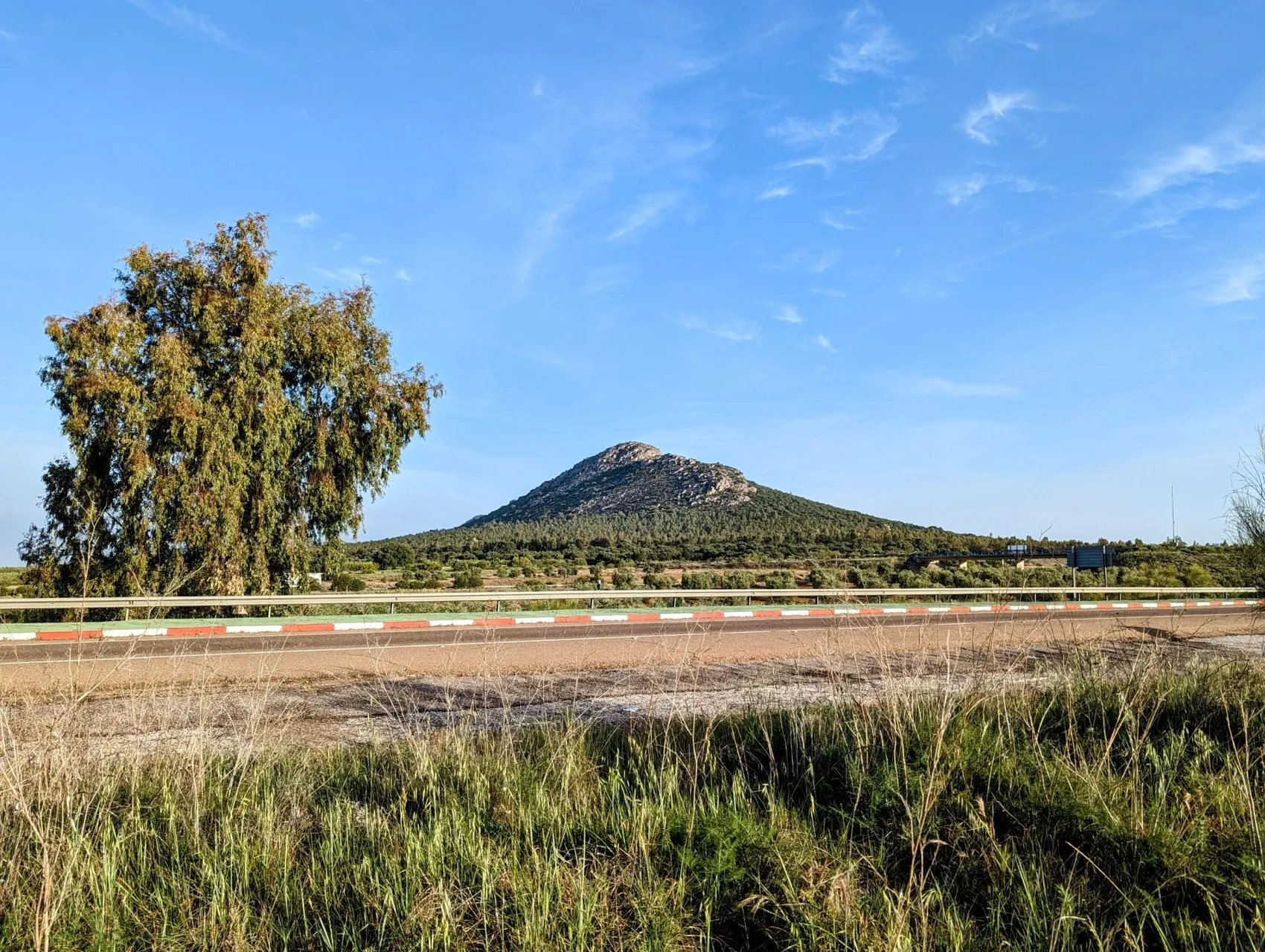
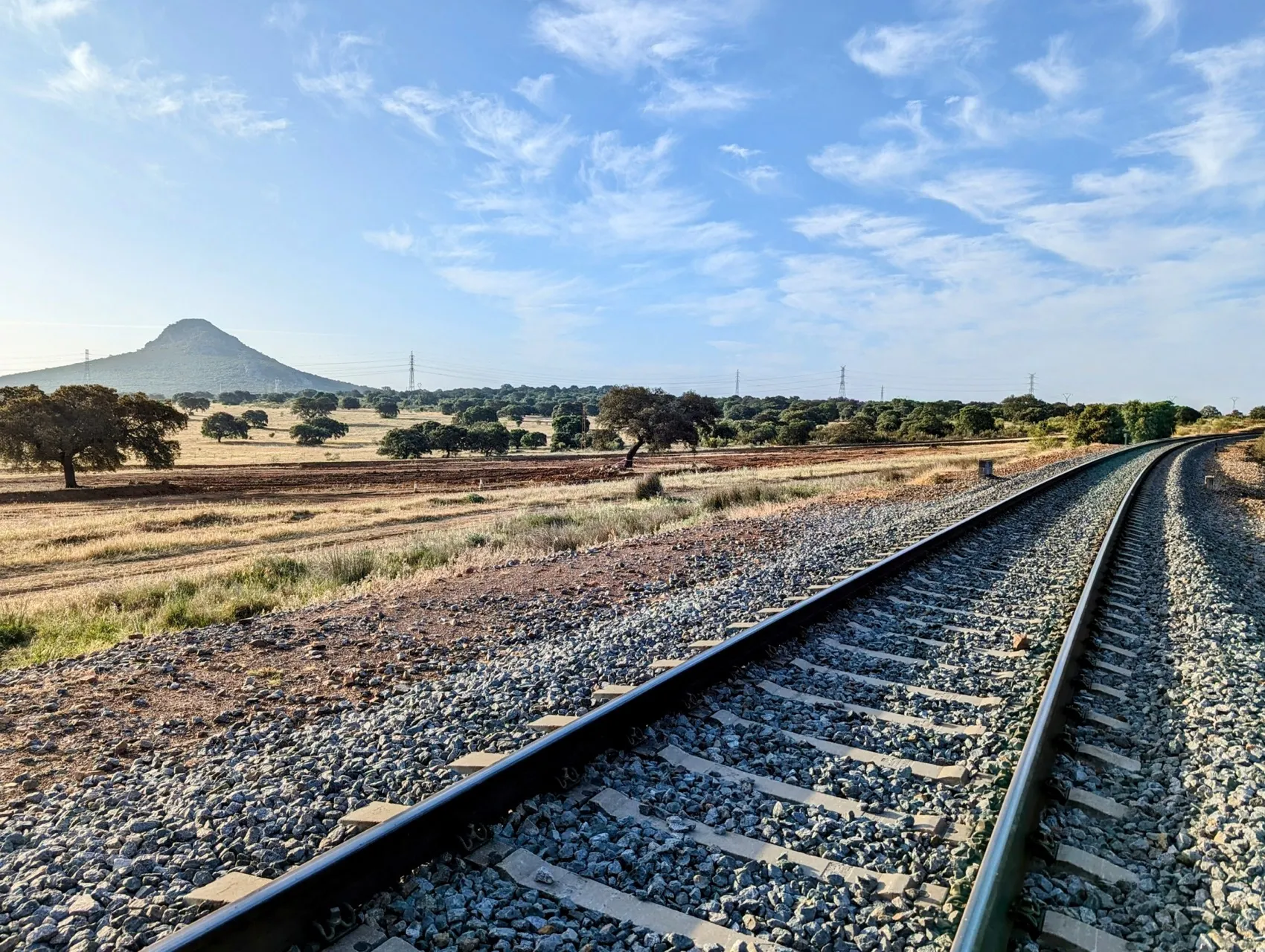
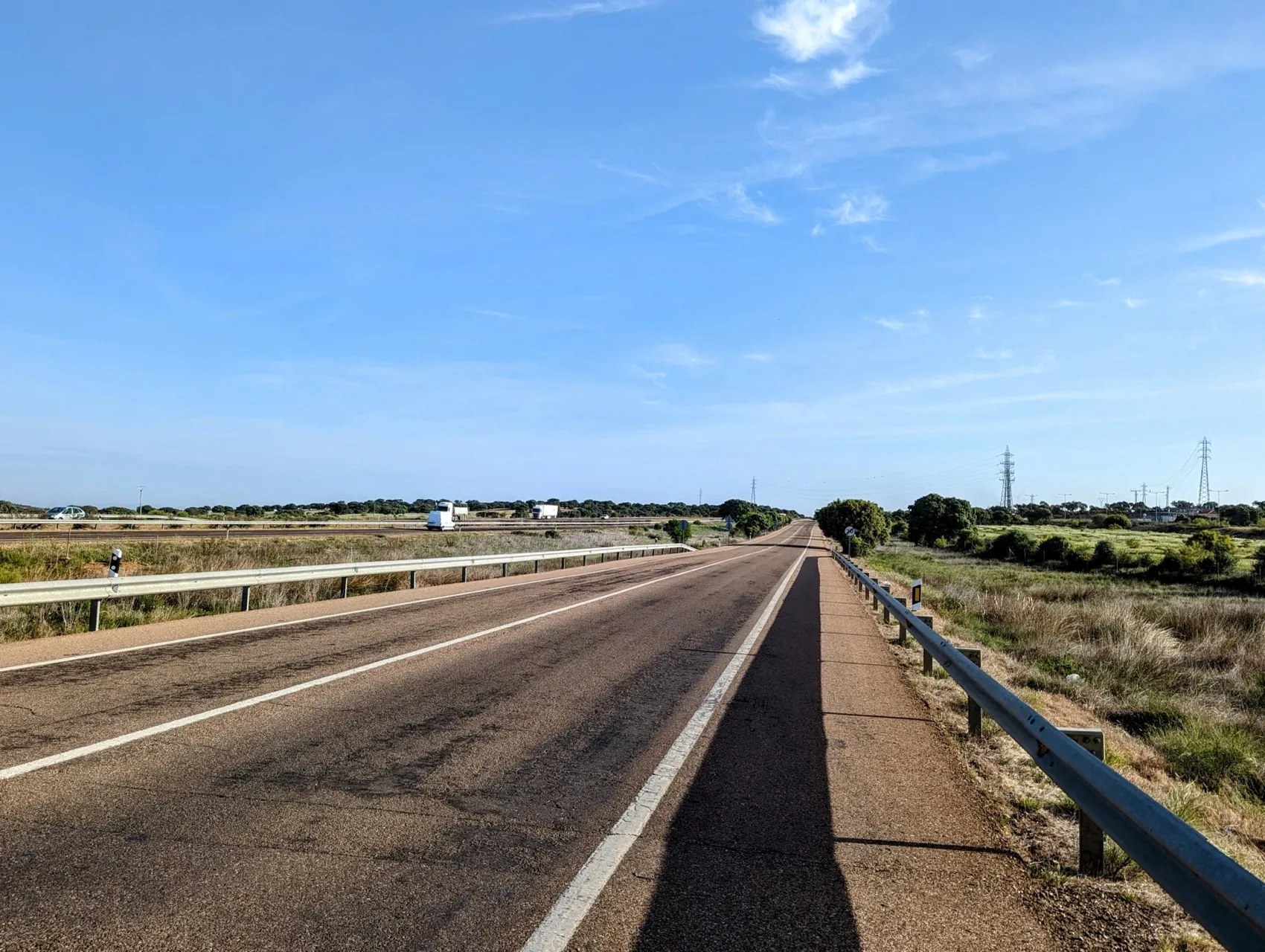
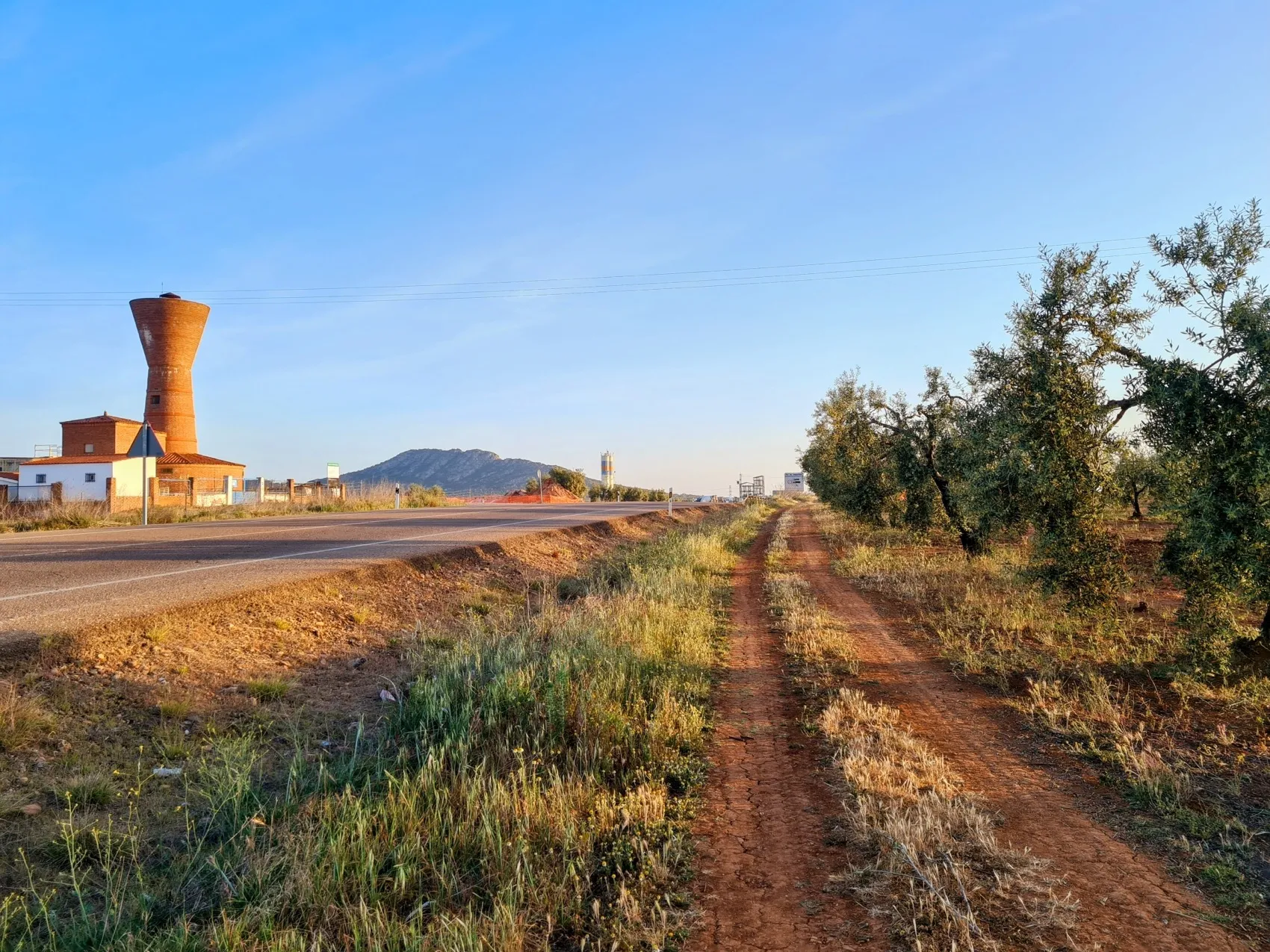
Today's stage is a short one at over 15 kilometers. But because we are walking to Mérida, we will get up early again to reach the city in time to visit it this afternoon. It's a city rich in history and full of antiquities, so we'll need our time. We spent the night on the edge of Torremjía so we are out of the built-up area quickly. Unfortunately, the start of the route is not quite what we're used to. For the first half, we follow a wide two-lane road with the motorway right next to it, which runs from Seville to the northern coast near Gijón. The N-road we walk on, the N630 and also called the 'Ruta de la Plata', also runs up to Gijón. This road was among the first to be paved and made suitable for motorised traffic from 1926 onwards. Until the 1950s, it was a narrow winding road with no bridges and the motorway next to it wasn't there at all; it has only been there since the 1990s. Strange to realise that 100 years ago there was no paved road here, nor further in Spain. Good for the development of the area, but it draws a wide trail through the landscape. Unfortunately, there are no paths through the meadows here, but we walk 7 kilometers just beside or on the wide road. There are many businesses, factories and a rubbish dump so there are quite a few trucks. We use the road, where you don't have to pay as much attention to every step, to learn some Spanish.
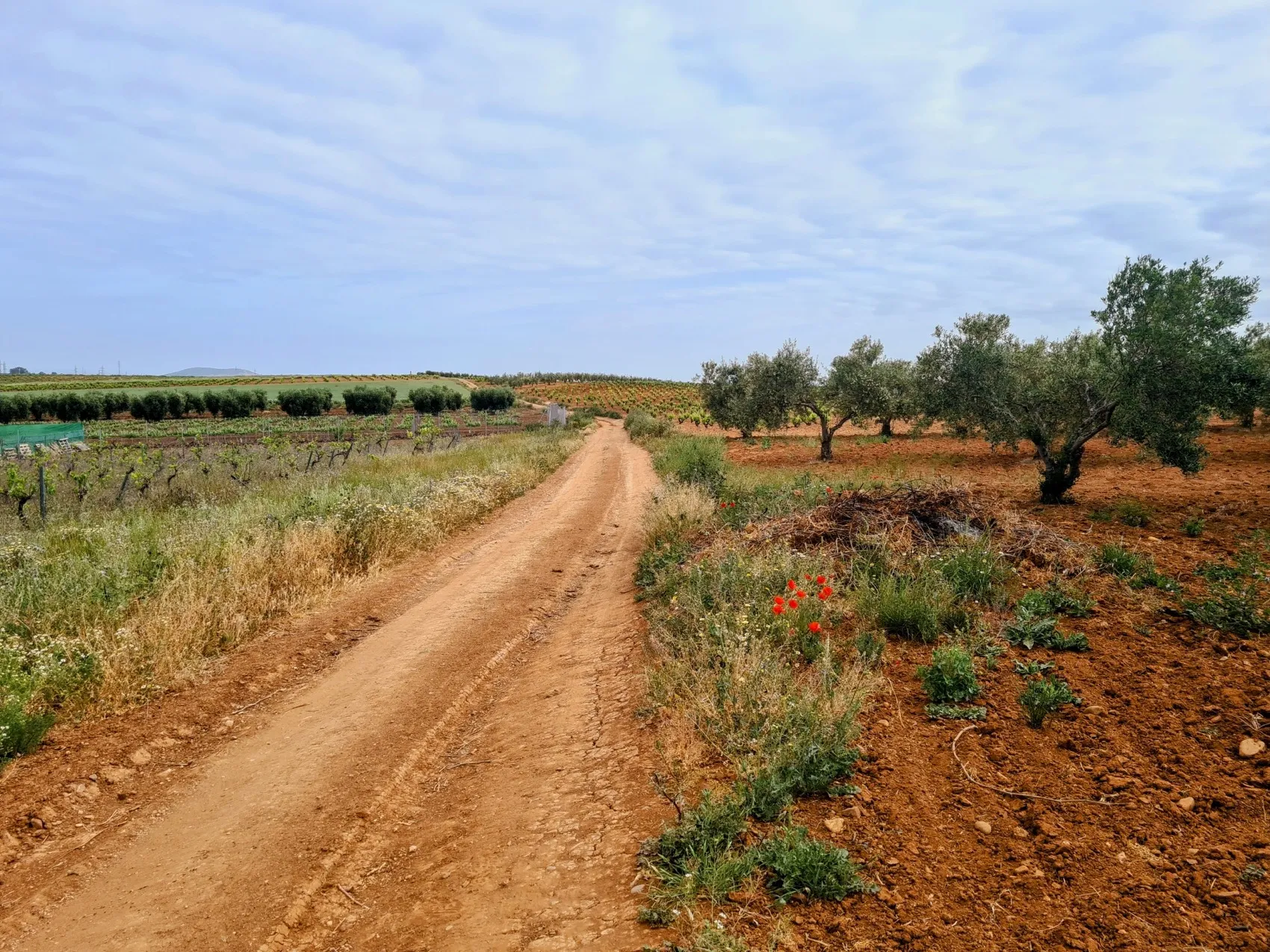
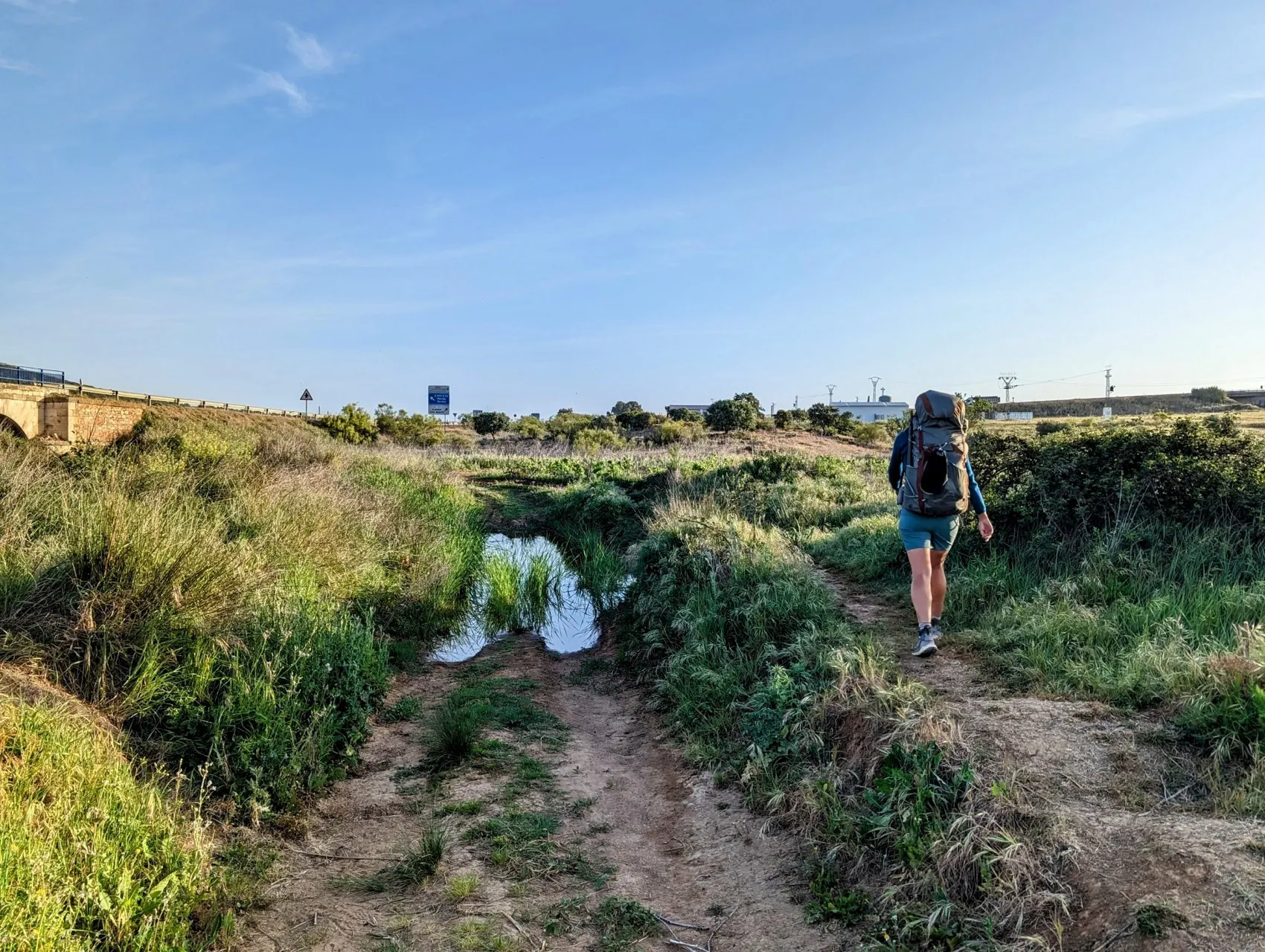
We use a translation app to make fun phrases that are easy to remember: 'La cigueña vuela en el cielo' (the stork flies in the sky), 'La manzana no cae lejos del arbol' (the apple doesn't fall far from the tree). It's not of much use, but you do learn some words and a bit of sentence structure. But we are still glad when, after 7 kilometers, we can leave the road and continue on a paved path, between the fields as we have been walking them for the past few days. It's immediately lovely quiet among the wheat, olive trees and grape fields. We see many storks again and groups of black ibises fly over. We haven't seen these before, but we immediately recognise them by the long crooked beak. We are clearly approaching water. Past Mérida flows the Guadiana rover, an old acquaintance. We crossed it by ferry when we entered Spain from Portugal. From here it flows towards Portugal and forms the national border all the way to the ocean.
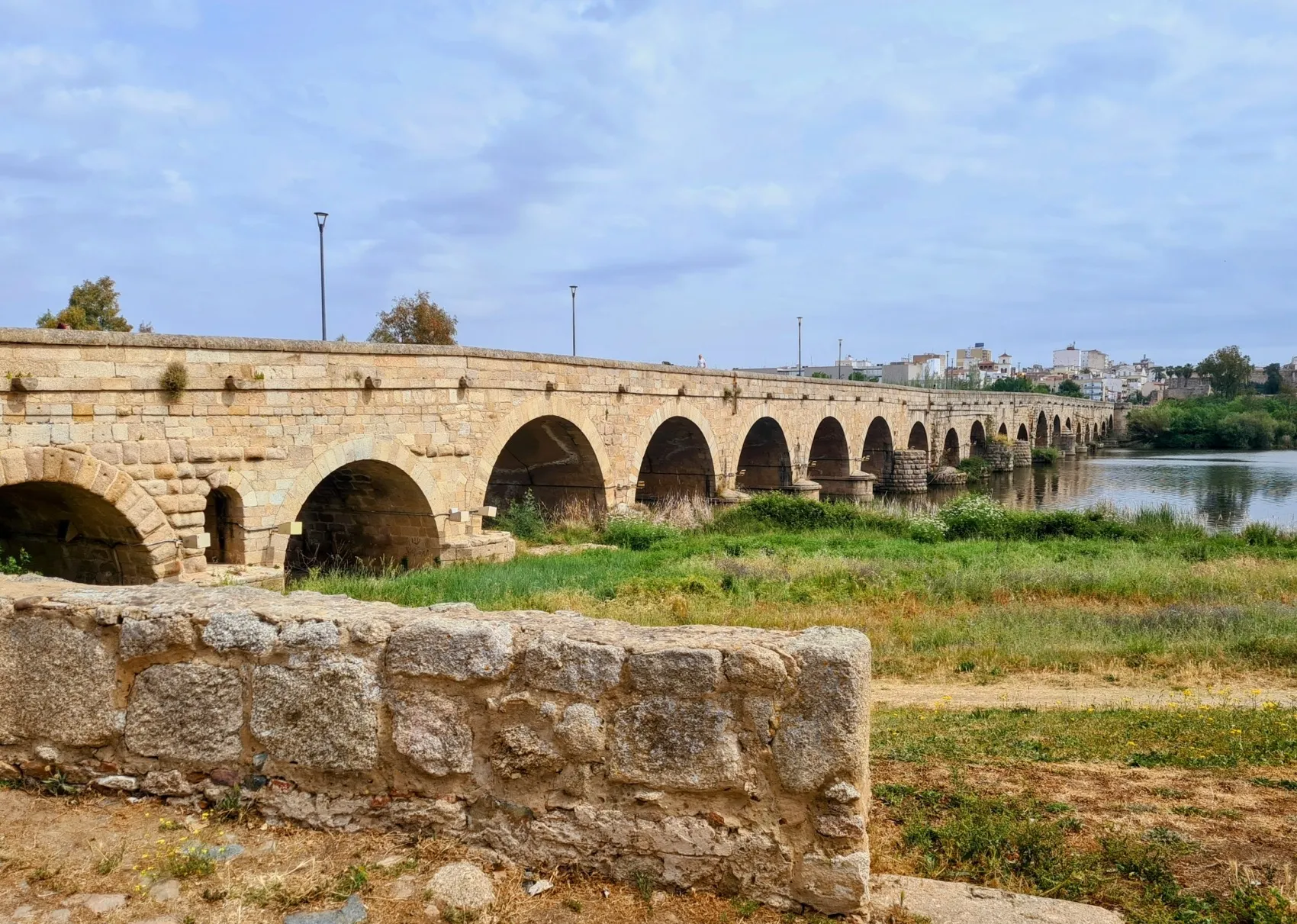
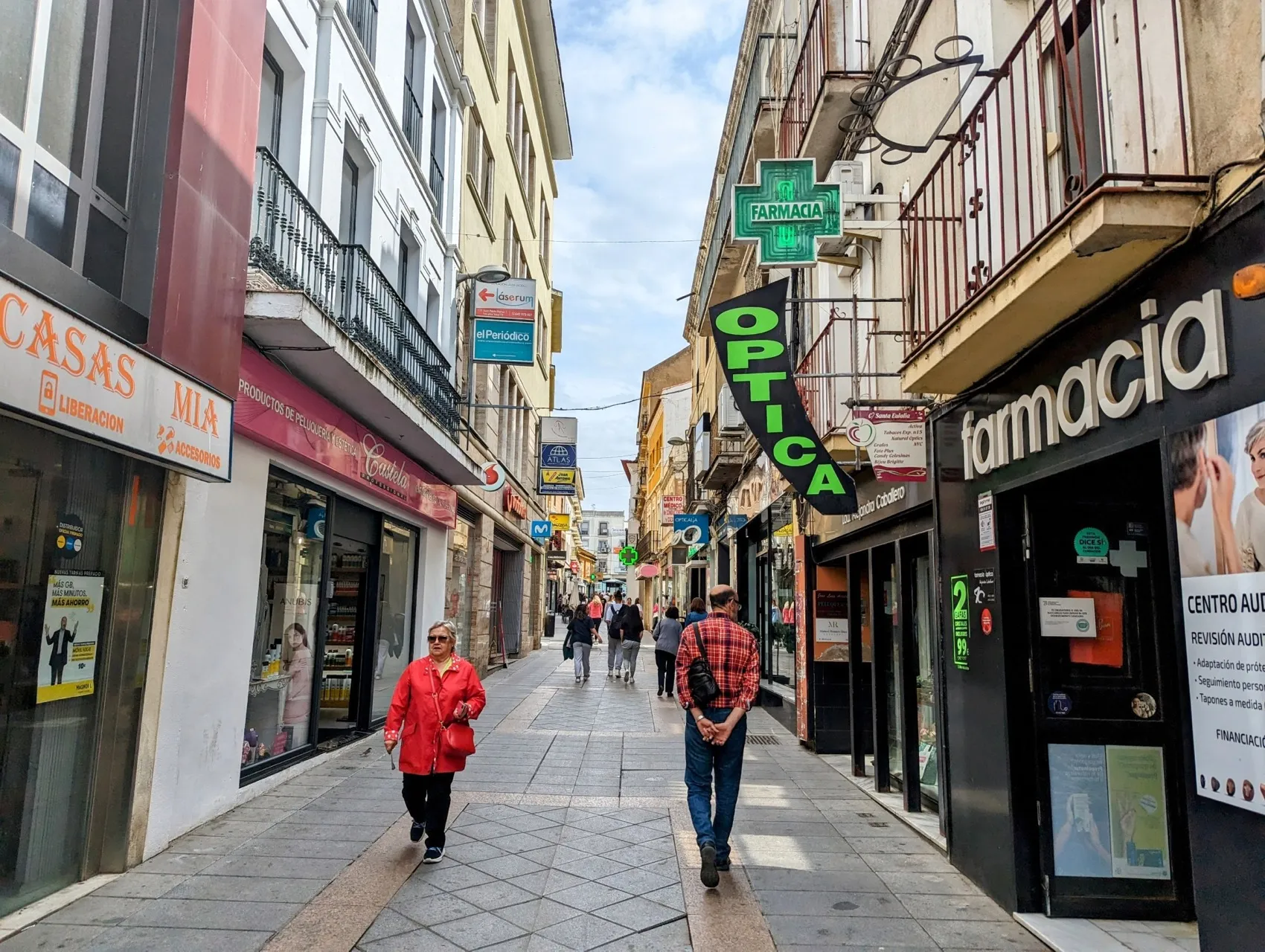
The last part of the stage is the best. We arrive at the river and can already see the city and the beautiful old Roman bridge the 'Puerto Romano de Mérida', which we'll cross to reach the city. It was built in the 1st century BC and the 790-meter-long arched bridge does impress and, of course, is also UNESCO heritage. Immediately across is another antiquity: Alcazaba de Mérida. A Moorish castle built on Roman foundations. From there, we walk down the busy shopping streets to our hotel. The streets look cosy. You'd almost forget that right here you're in the middle of endless, dry and dusty farmlands as well. Once in the city, it has immediately the "city" feel. Fortunately, we can already go to the hotel to freshen up and have lunch, leaving us with plenty of time to see the city. At least the sneak-preview looked very promising! We have time, as we'll stay here tomorrow, before heading further north.