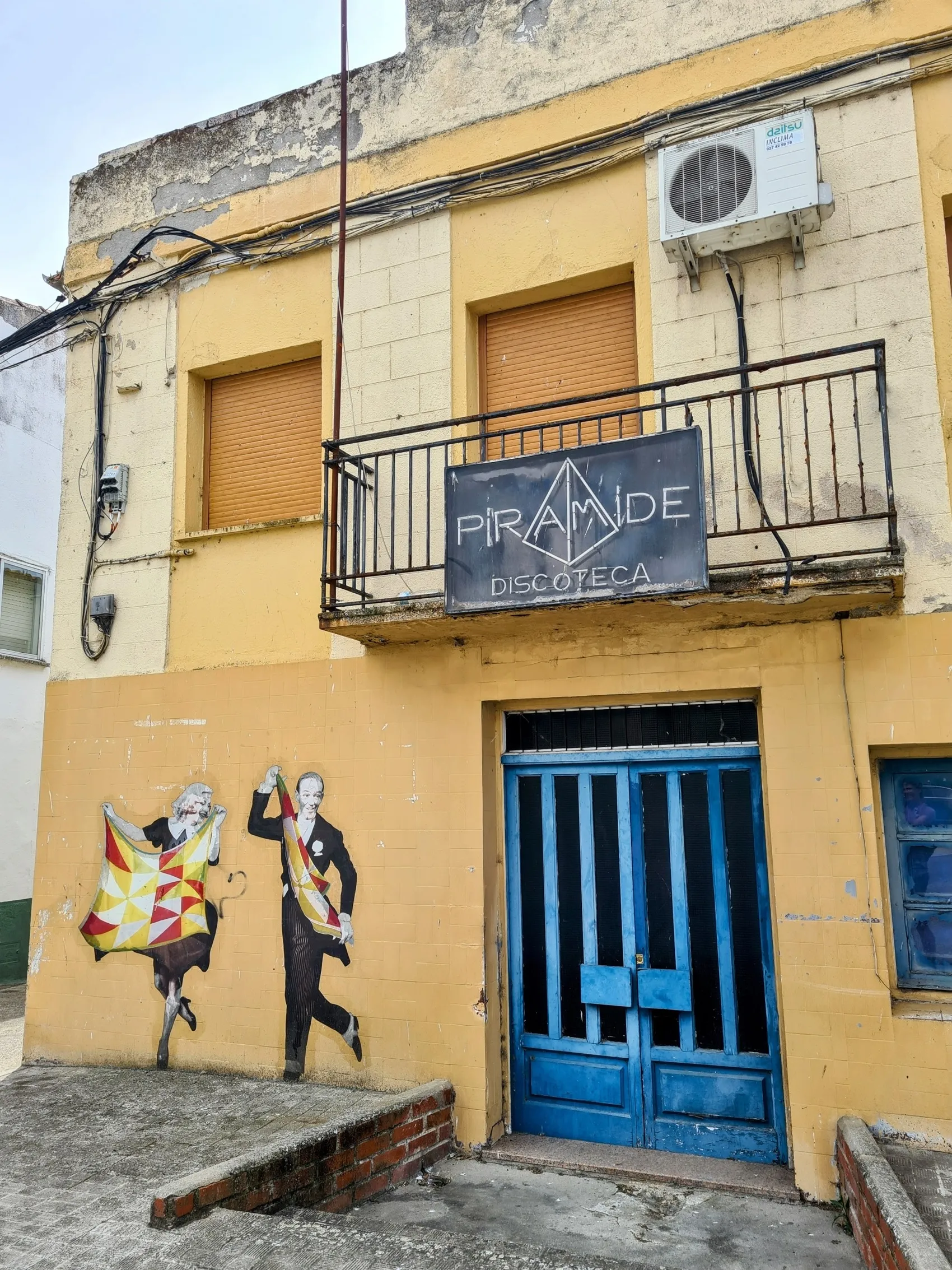
After two wonderful days at the campsite in Riolobos, we pack the tent again this morning and head for Carcaboso. Because May 1st fell on a Monday, it was a long weekend and that's when Spaniards like to go outside. The campsite was full, but cosy. We couldn't walk any further because the accommodation in Carcaboso was full as well. We did a nice little hike on our extra rest day and in the evening we made a round through the 'bustling' Riolobos. There were a few cafes and a terrace open, but the place where people really danced to loud music and where young and old sat on picnic benches outside with beer and cigarettes was the 'Hogar del Pensionista' the 'home for pensioners' or retirement home. Teenagers, senior citizens and everything in between were happily swinging to the music inside and outside the home. So cool to see!
We walk outside the gates to hike the 22 kilometers to Carcaboso. We got up at 6 am, as it will be 30+ degrees again today. This morning we were sitting in front of the tent eating breakfast in our vests, but by now a warm wind has picked up, so it's already quite warmed up when we leave.
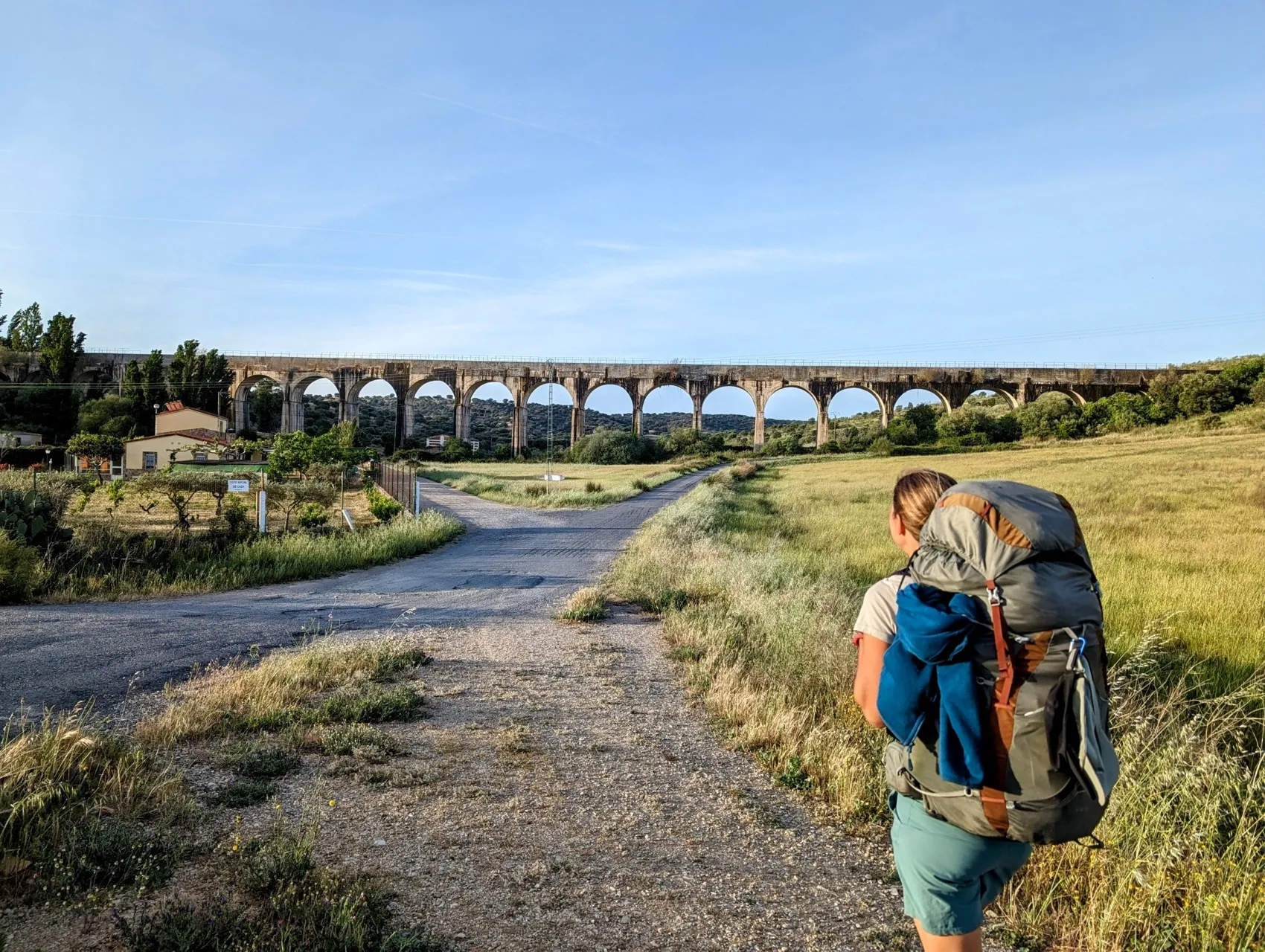
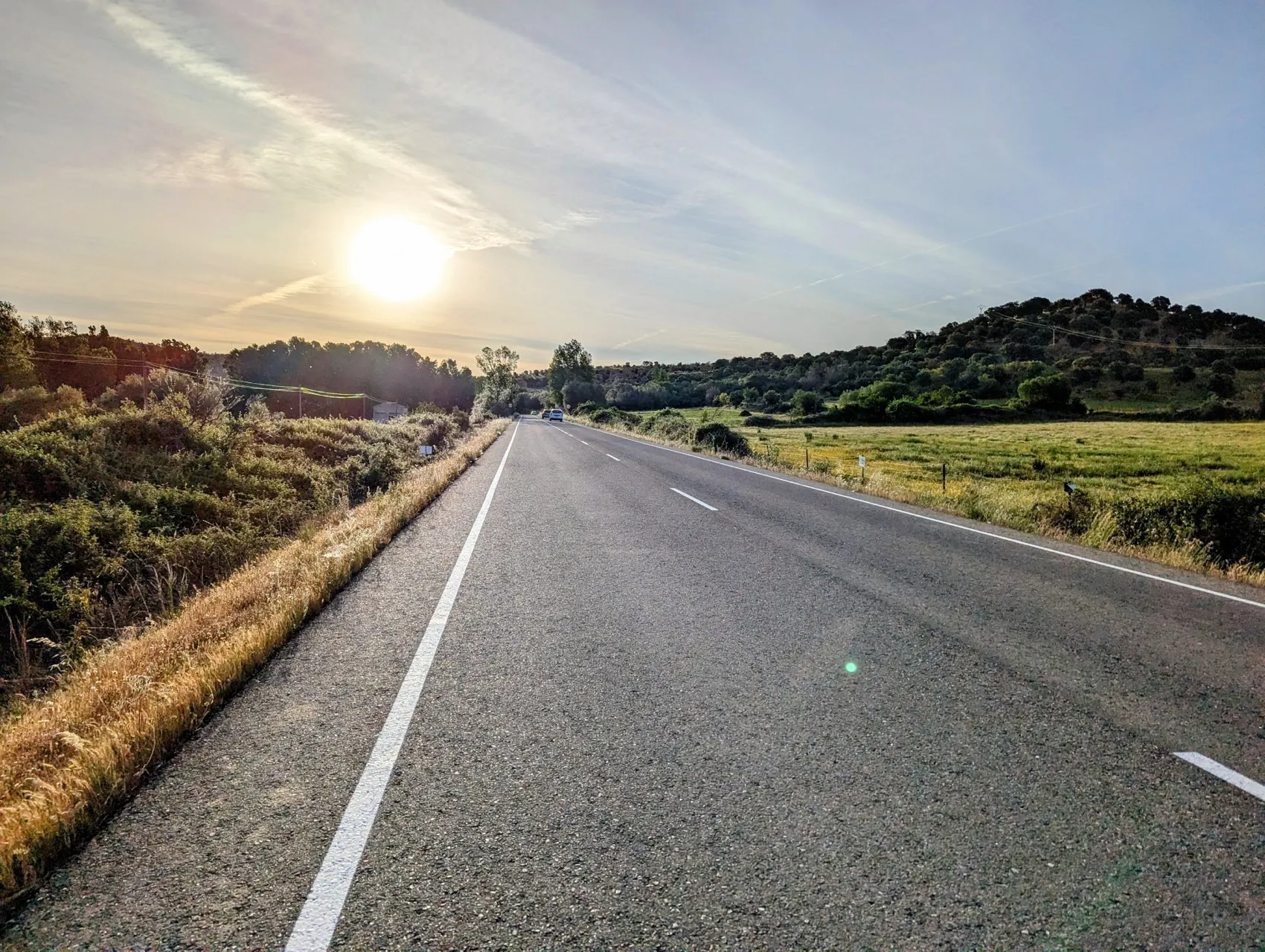
For the first 3 kilometers, we follow a paved road back to the Via de la Plata. A friendly lady walks in the same direction and joins us for a bit. She makes a round trip along the canal every day, telling us all kinds of things very detailed. We only understand a little bit of it, it's really unfortunate that our Spanish is nowhere near good enough to have on a conversation like this, but that doesn't seem to bother her much. She continues to babble on when we point out that our Spanish is really bad. Fortunately, we understand more and more. Anyway, the conversation is about our route, the canal and her morning commute. After a while, she turns right, we say goodbye and walk on heading left.
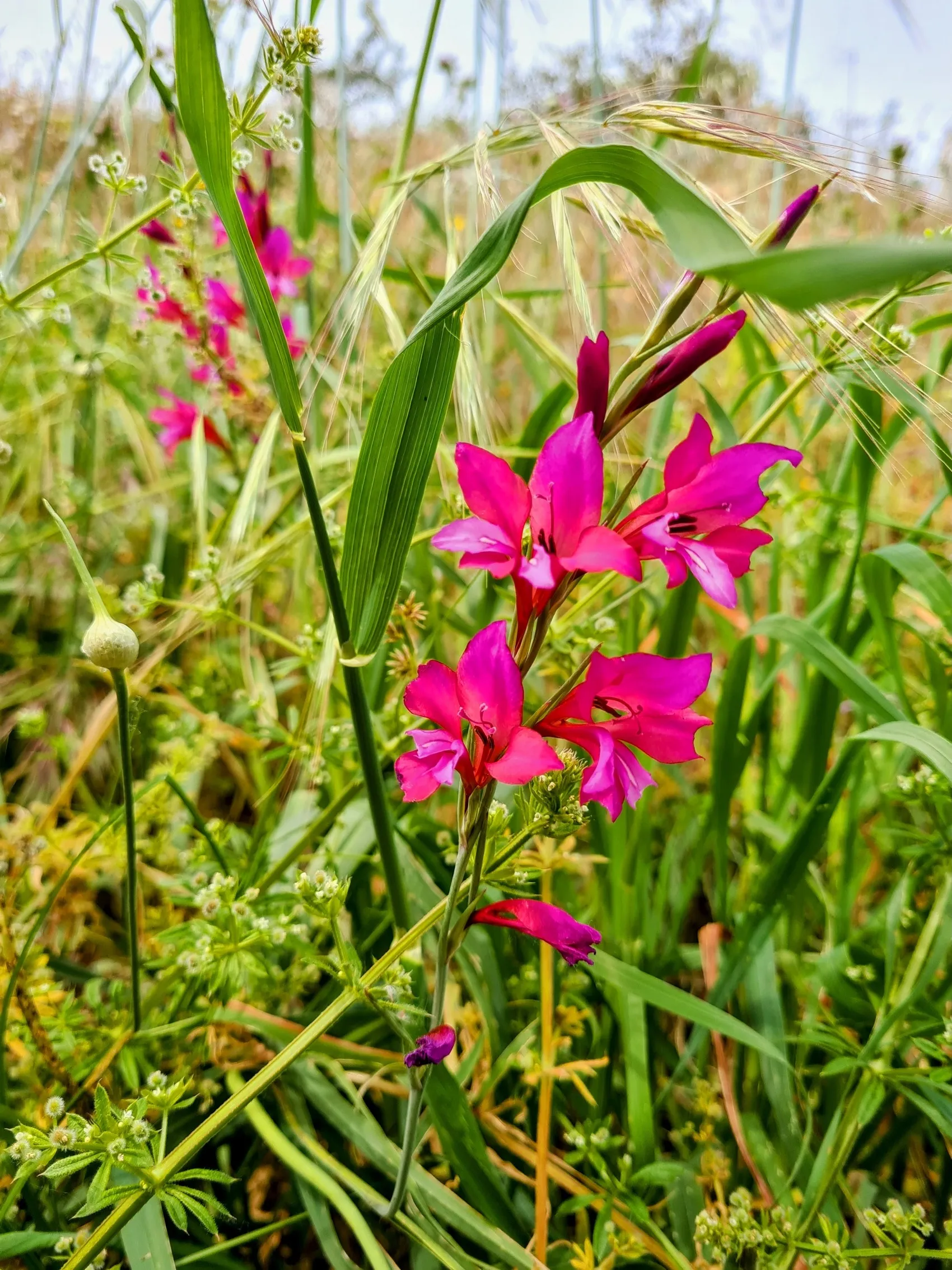
As we turn off the road and walk up a path, we once more see one vulture after another flying over. First there are 3, eventually 10 of them circle above us. We also see a few small birds of prey, red kites, which are already really big when you see them separately from the vultures, but they seem like small birds compared to the giant vultures. The stretch of dirt road runs beautifully between hills with a wealth of flowers here too. Cows and horses are in the meadow, together with an occasional donkey. A grumpy and weathered St Bernard who's taking himself for a walk walks past us, and we meet many cyclists who are cycling the bike variant to Santiago de Compostella. We also share the route with Euro Velo 1 here, so perhaps they are on their way to Nordkapp.
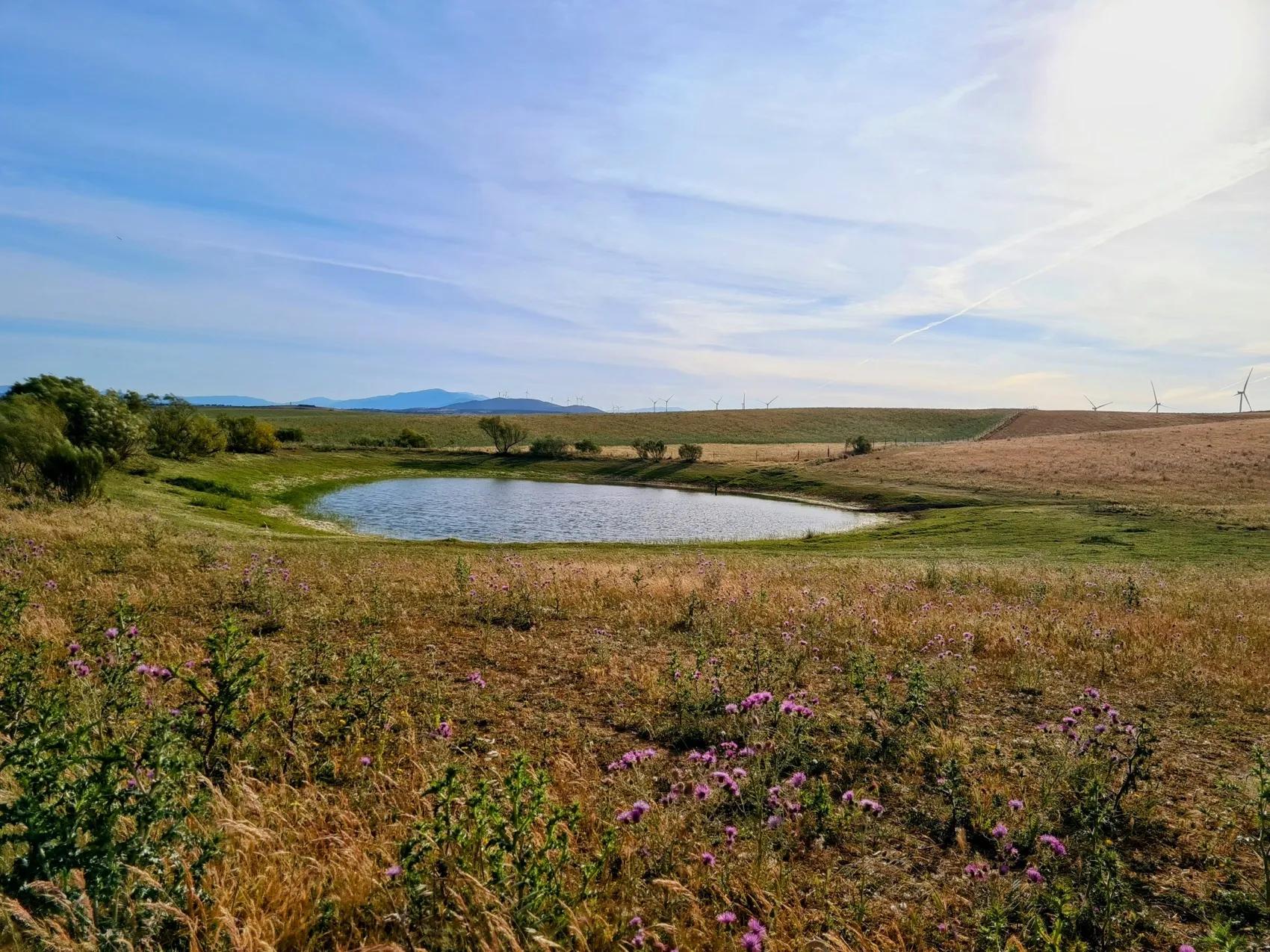
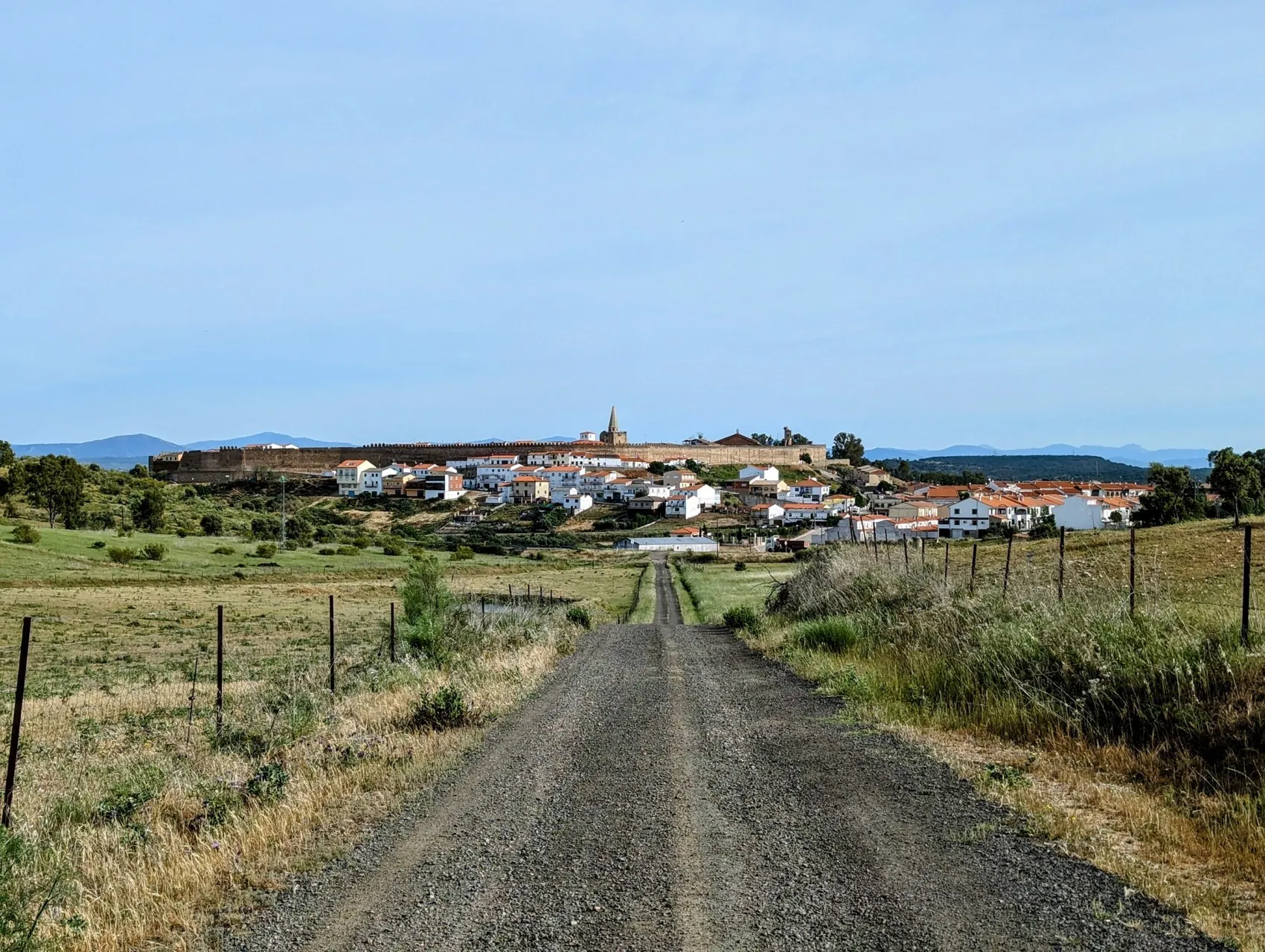
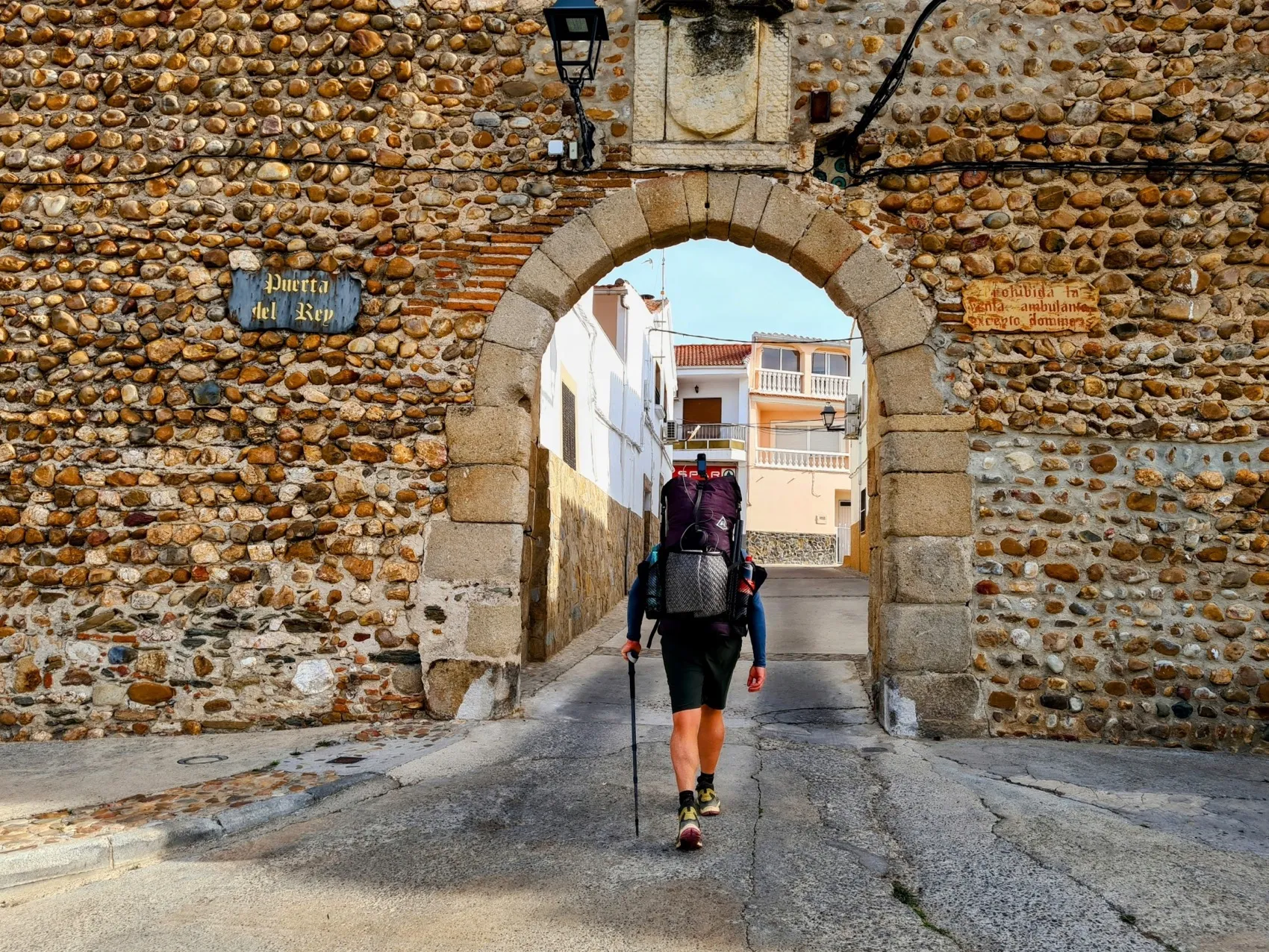
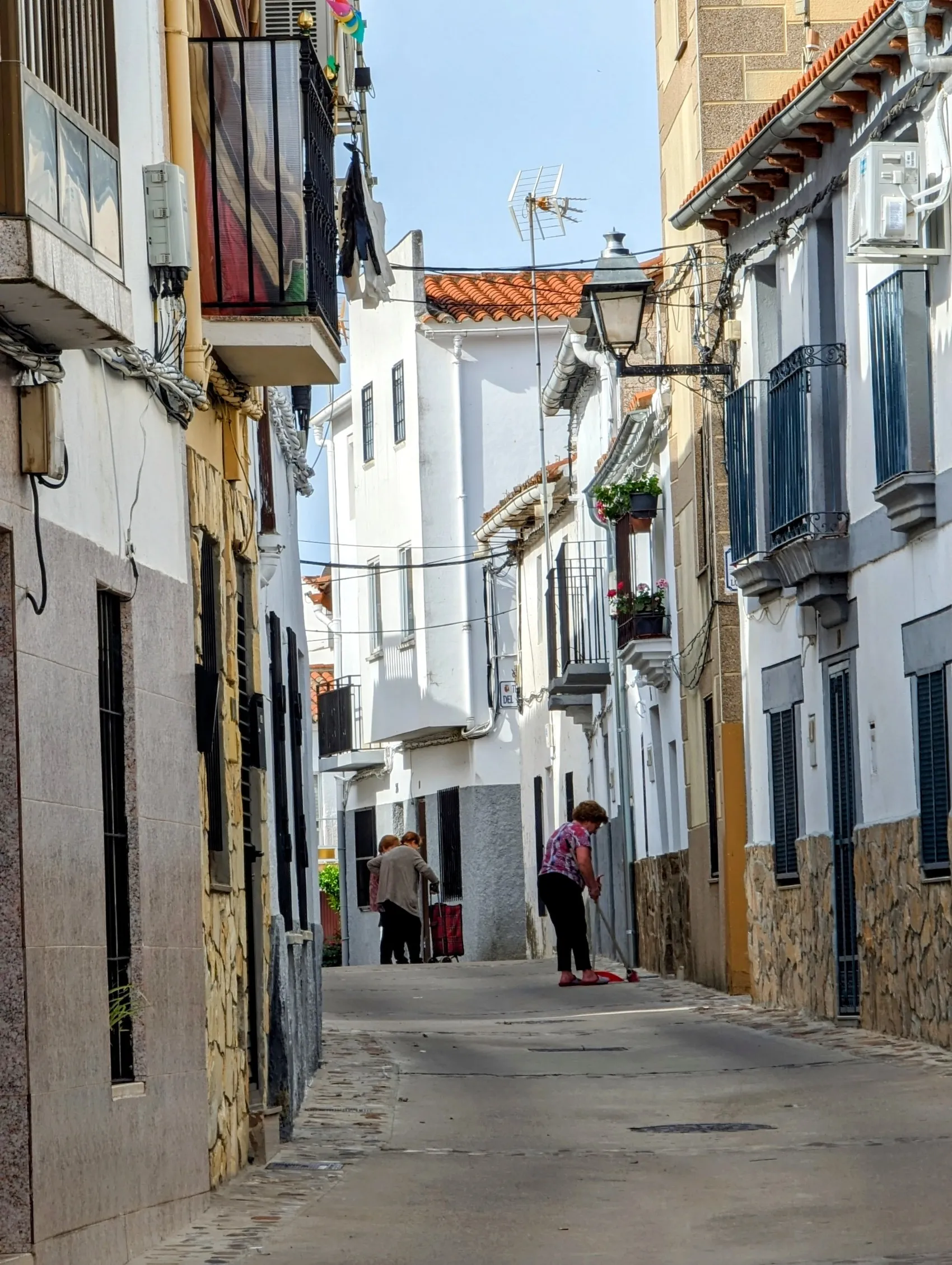
There are some nice hills in between. They aren't long, but some sections are equally steep. At the top of the last hill, to our surprise, we are treated to a magnificent view of a large, completely walled town: Galisteo. The village with a castle is completely walled with a 1,200-metre-long city wall. On the outside, some houses were built against it for the people who were not allowed to live inside the city walls, or for whom there was no room left. The village has hardly grown since the city wall was built and has remained completely intact. As a result, it feels like you walk right into the Middle Ages. The route goes past the village, but of course we can't resist to walk through it. Even inside the gates, the town is beautiful and authentic, but it really is a village where the almost 1,000 inhabitants just work and live, and not at all the tourist place you would expect from outside.
The town is situated on one of the last hills, above a beautiful green valley with lots of well-irrigated farmland. A river flows through it, the Rio Jerte, which flows pretty hard even in this dry season. This river and the nearby 'Gabriel y Galán Reservoir' provide enough water for these fertile lands. And it shows. Through a network of canals and small rivers, the water flows into the fields. This is indeed the greenest and most water-rich area since we walk inland. Nice, because this allows us to see different flowers and animals than in recent days. Lots of dragonflies and butterflies, as well as yellow camomile and the 'greater coltsfoot broom', a parasitic plant without chlorophyll that lives on the roots of the greater coltsfoot. This makes the stretch of walking a bit more interesting, because from Galisteo the last 10 kilometers to Carcaboso we walk on a paved two-lane road. But we are hikig among greenery and we have views of the beautiful, high mountains where we will arrive in a few stages. The kilometers go fast until we reach Carcaboso, which is just a bit smaller and more quiet than Riolobos. There are supposedly some Roman remains to be found next to the church, so we will look for them this afternoon. In any case, it will be a quiet evening in the Auberge we share with some Spanish pilgrims, who, like us, will also be up early tomorrow.