Today's stage is just under 18 kilometers, so we are not in a hurry this morning. But starting late isn't a good idea either, as it will be far too hot again by the end of the afternoon. In the next village, a shop opens at 10 o'clock. It's about an hour's walk away, so we decide to get up at 7, have a leisurely breakfast, pack our things and leave the campsite around 9 o'clock. It's still pretty cool at the start of the stage, which we start with a stretch along the busy road. Fortunately, most cars are heading in the same direction as we are walking, so they drive on the other side of the road. The 4.5 kilometers to Baños de Montemayor are almost entirely on asphalt. Only for some small stretches we can leave the road for a while, by walking on a dirt track parallel to the N630. It's a beautiful stretch, though, with views over the mountains to the left, right and in front of us. Looking back, we can see the large reservoir Embalse de Baños, with even further back the plain in which the Arc lies, where we started yesterday. Along the road are a number of closed hotels and auberges that look dilapidated. There were times, certainly before the highway was finished, when more people stopped here, about halfway inland, to spend the night.
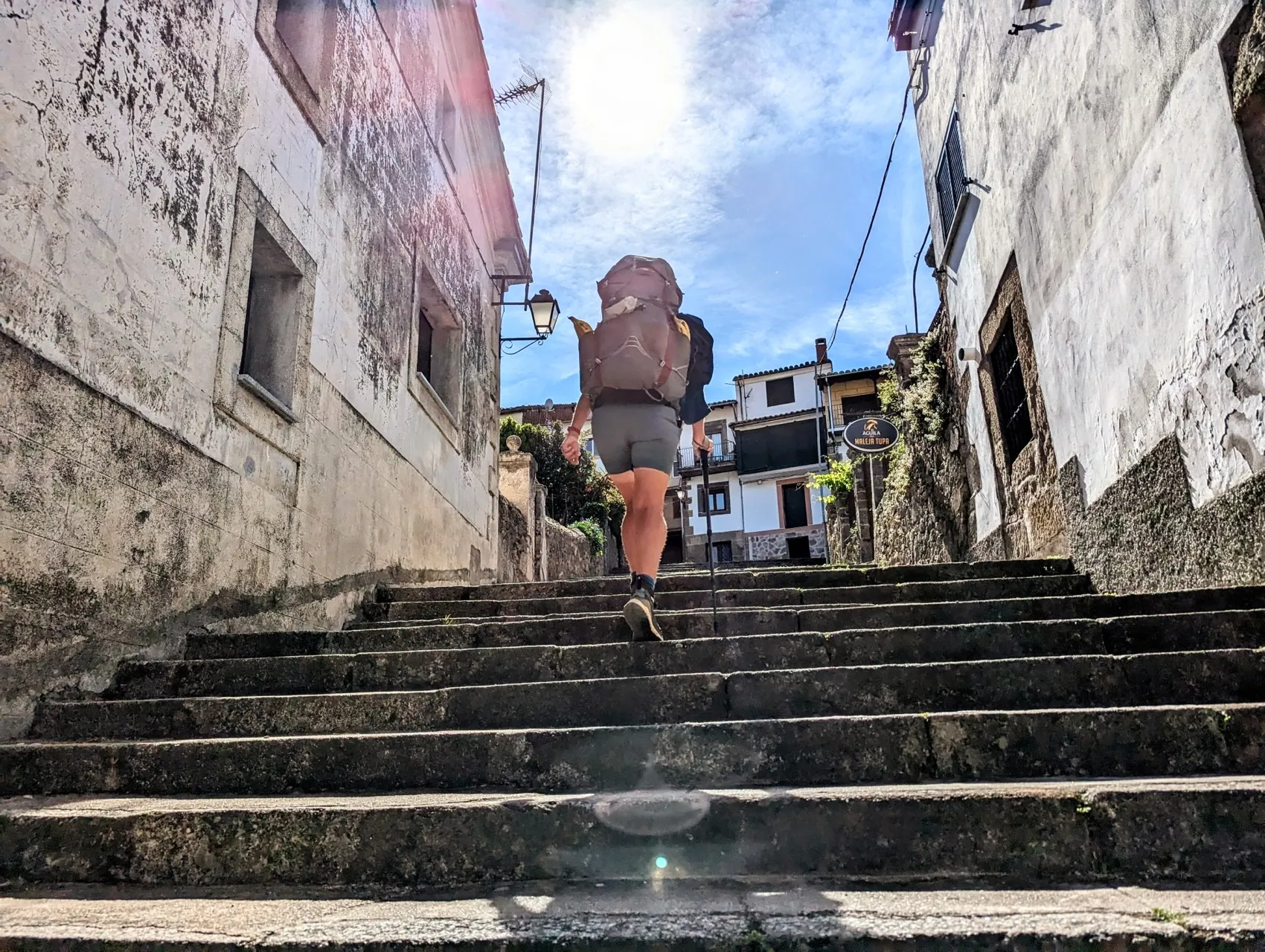
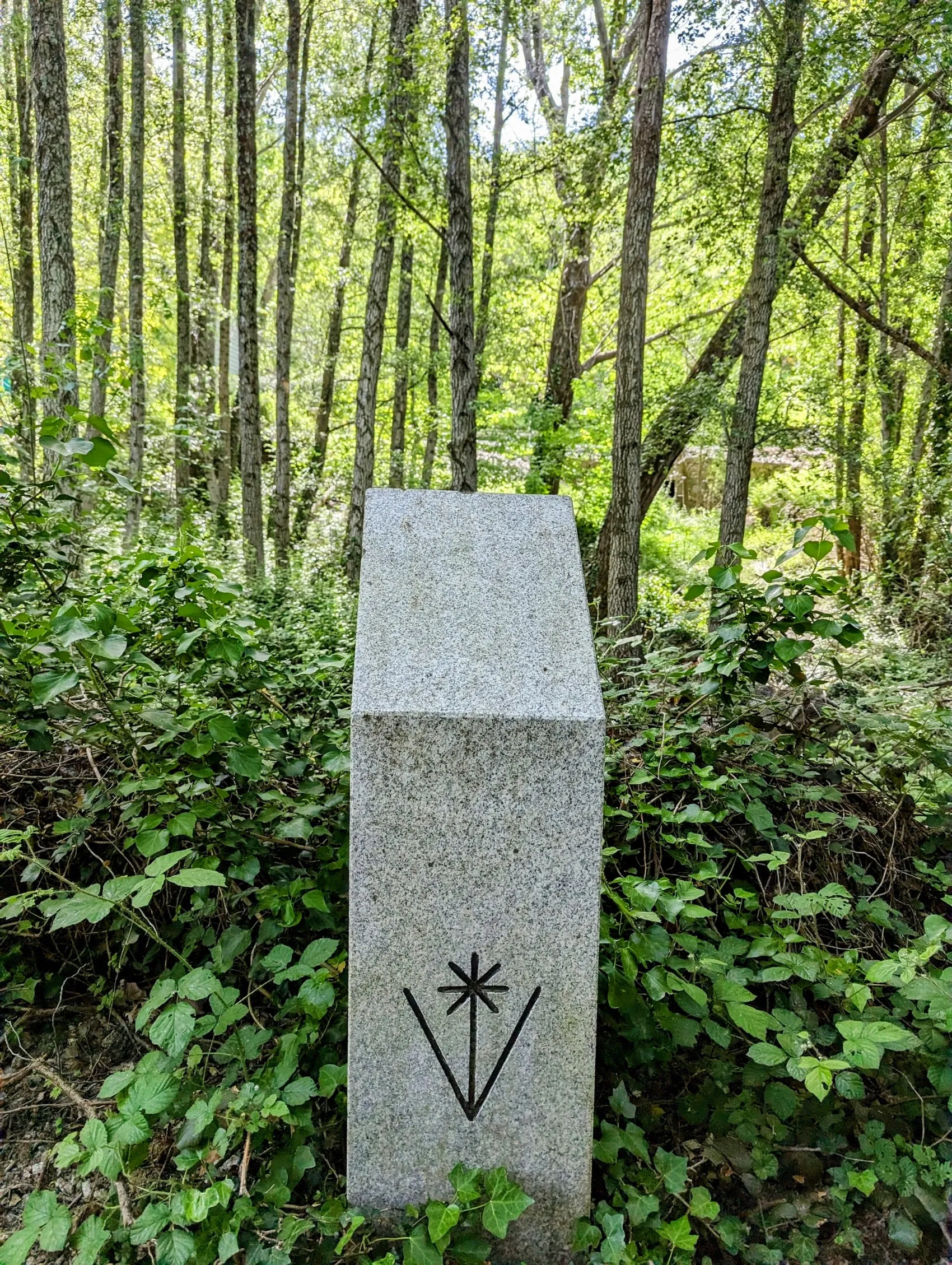
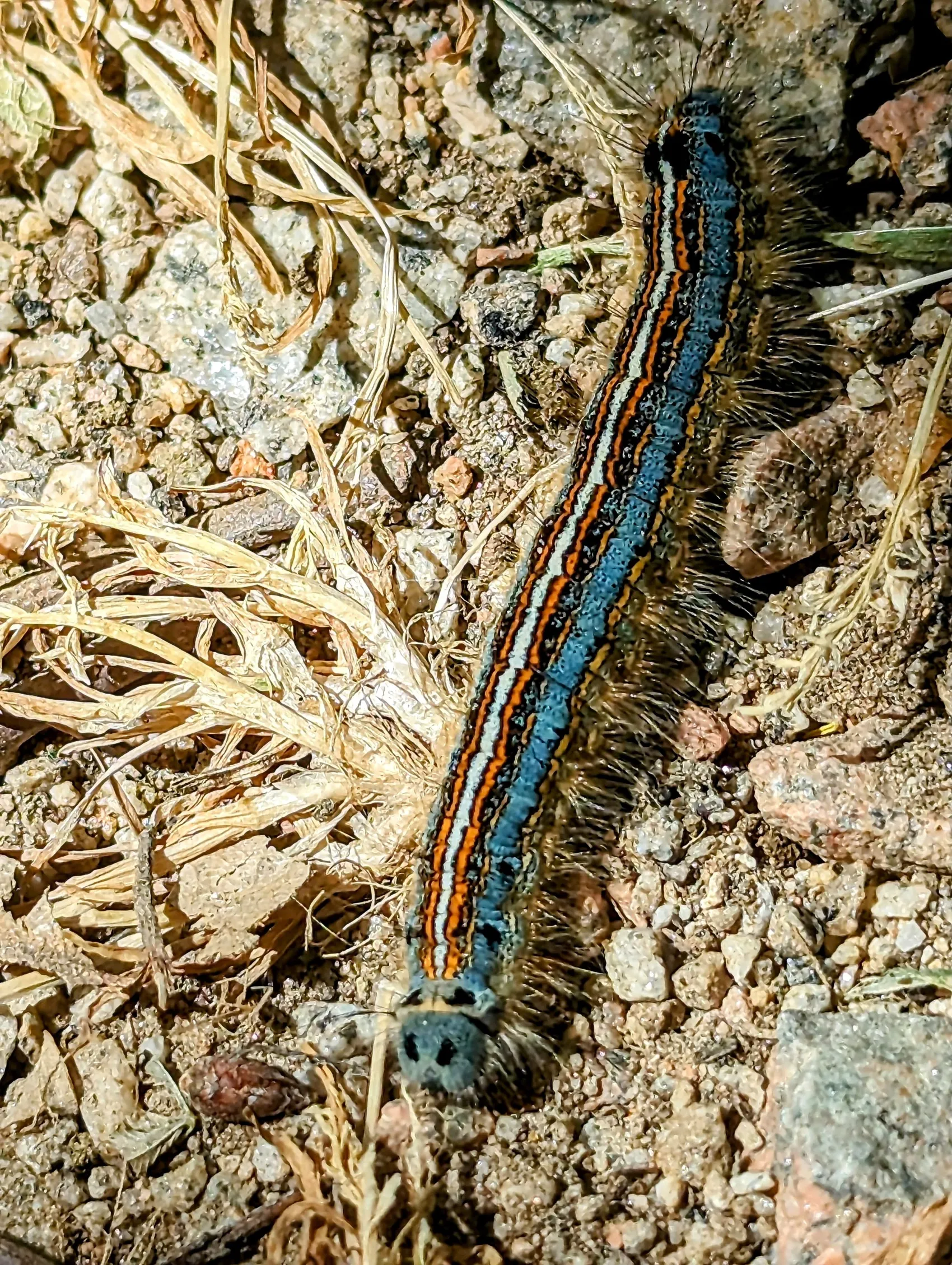
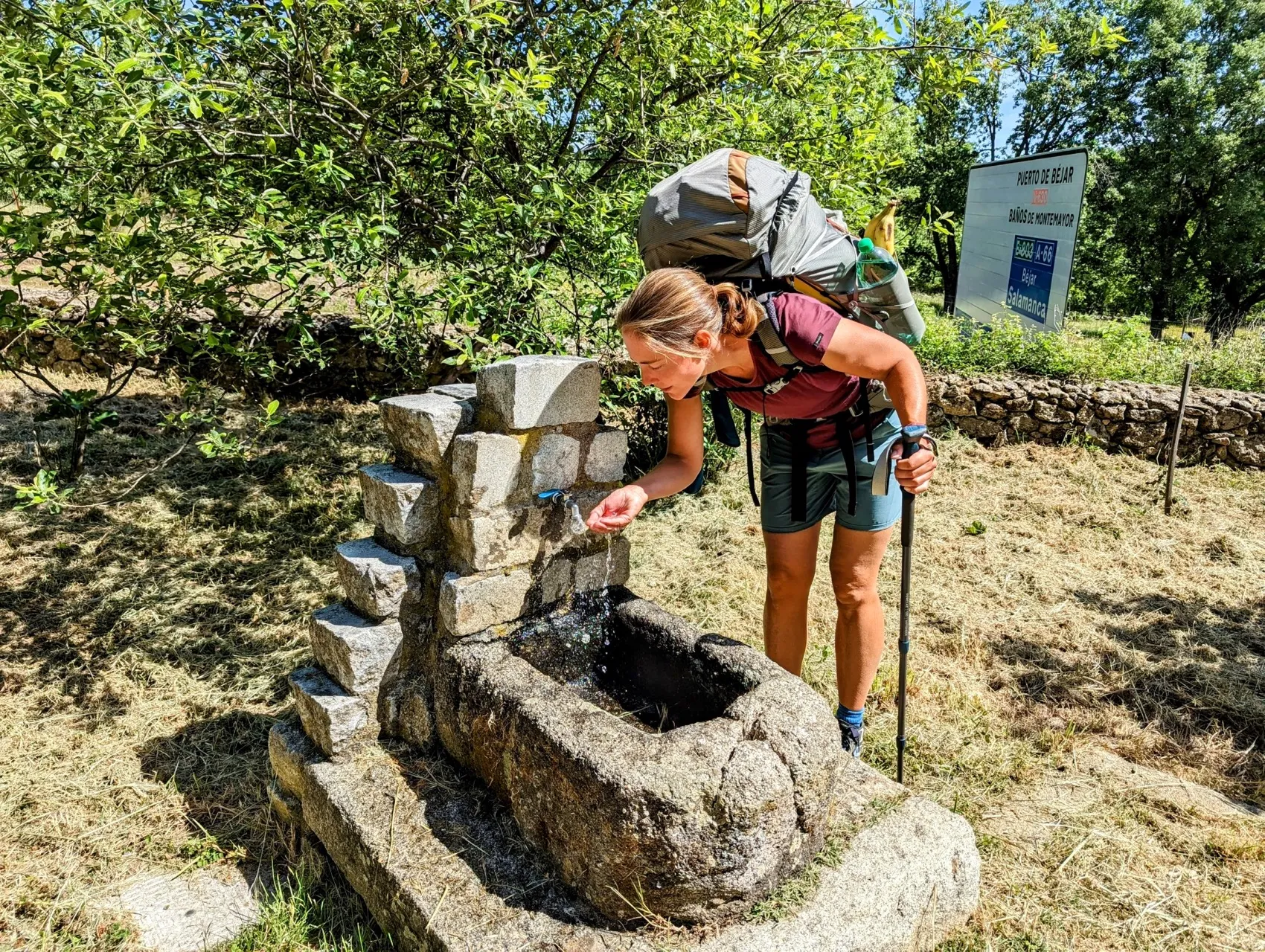
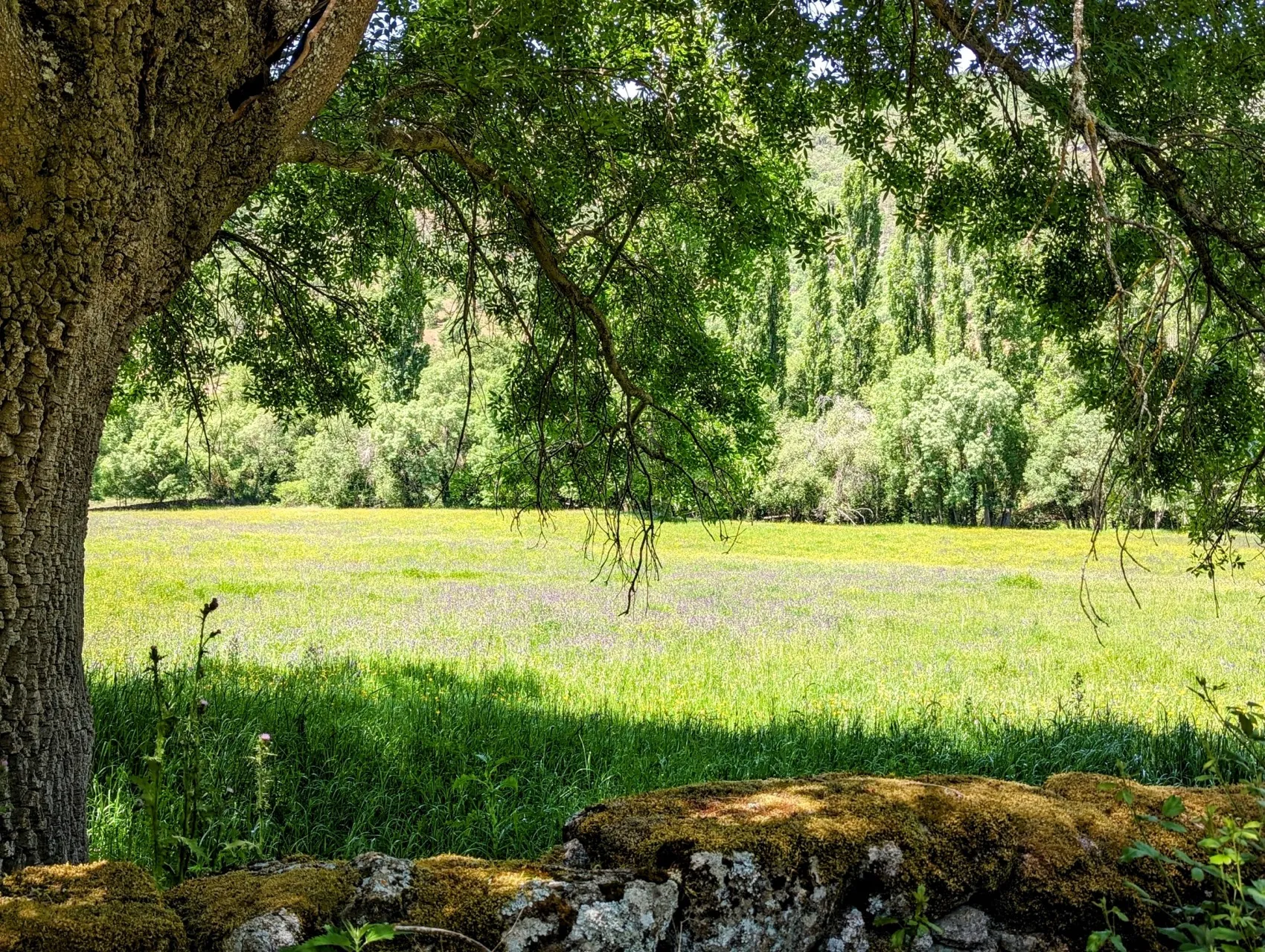
Once in the village, the little shop just opened. It's a tiny supermarket, but they have enough for the next two days, during which we probably won't encounter any more shops. With two substantially heavier backpacks, we continue our hike. Now the climbing really starts, even in the village. We walk uphill through small streets and over steep stairs to the old Roman road that starts just outside the village. After some climbing, we cross the main road and follow a small path into the greenery for a few hundred meters. And it really is green here. Enough trees to call it a forest, with ivy, flowering elderberries and at the bottom high green grass in the swampy ground. A very different landscape from the one we have known so far. Here in the forest is a sign and a beautifully carved stone, indicating that we are leaving Extremadura and entering the next region, our third already. From here we will walk for a long stretch through Castile and León, Spain's largest autonomous region. We will visit the capital Valladolid in several stages and we will also follow its main river, the Douro, for quite some time. We don't have an impression of this region yet, but since we really got a feel of Andalucía and Extremadura by crossing them, I'm sure that of Castile and León will come soon too. We let ourselves be surprised... In any case, the region starts green, and with a nice climb, because once back on the road it's another stretch to the col at 888 meters. Fortunately, we walk these last altitude meters in the shade. A little further on are a few houses and we can leave the road behind us. We pass under the highway and walk further and further into the green forests. Along the road are some fountains with drinking water. Lovely, cool water that we enjoy for a while, as it starts to get quite warm again. We pause along the path on a large Roman stone. It's teeming with caterpillars. Beautiful green and hairy blue/orange creatures. So it's probably no coincidence that there are remarkably many butterflies fluttering around us today. Beautiful creatures, with varieties we know from the Alps, but also new ones.
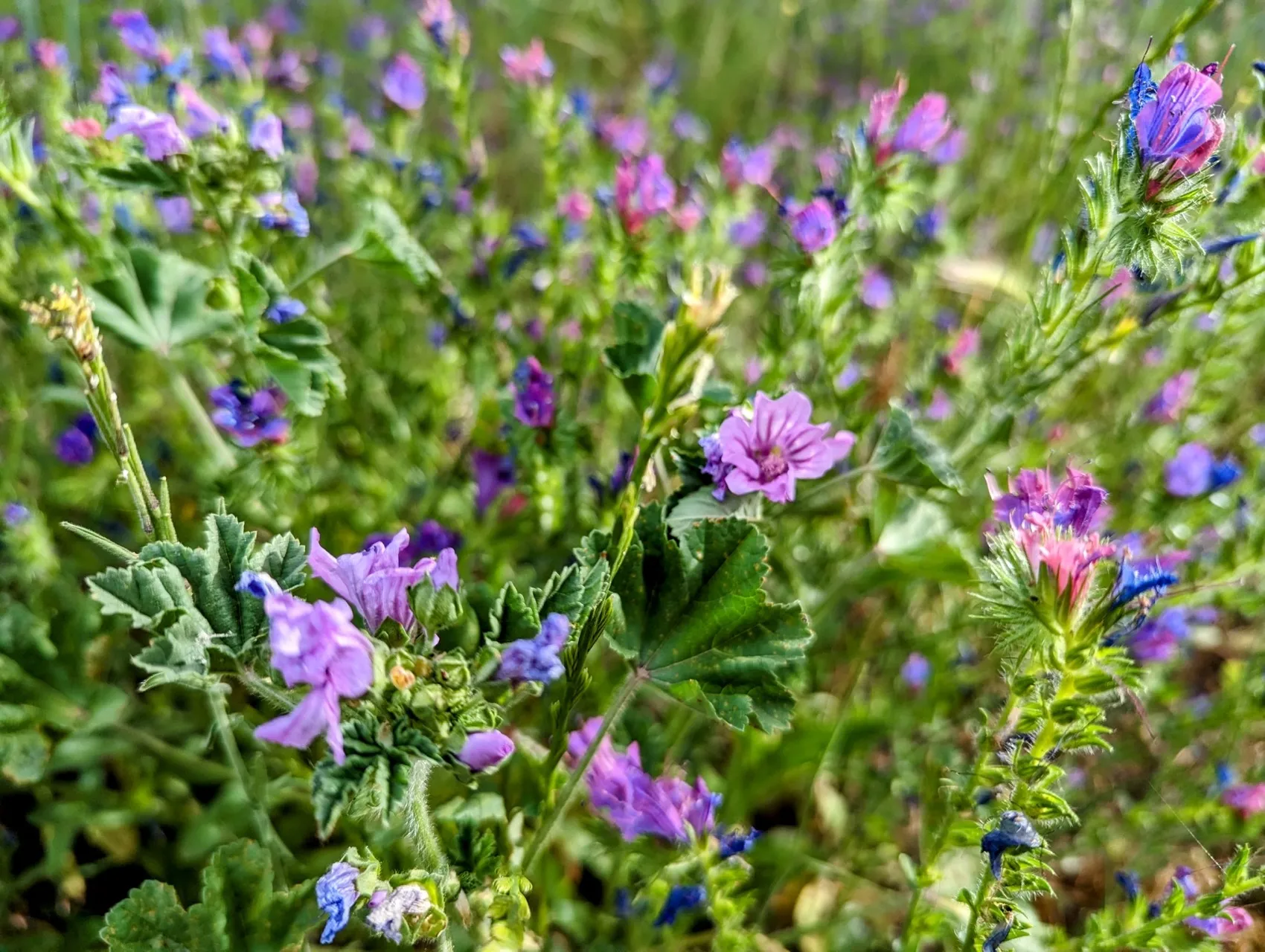
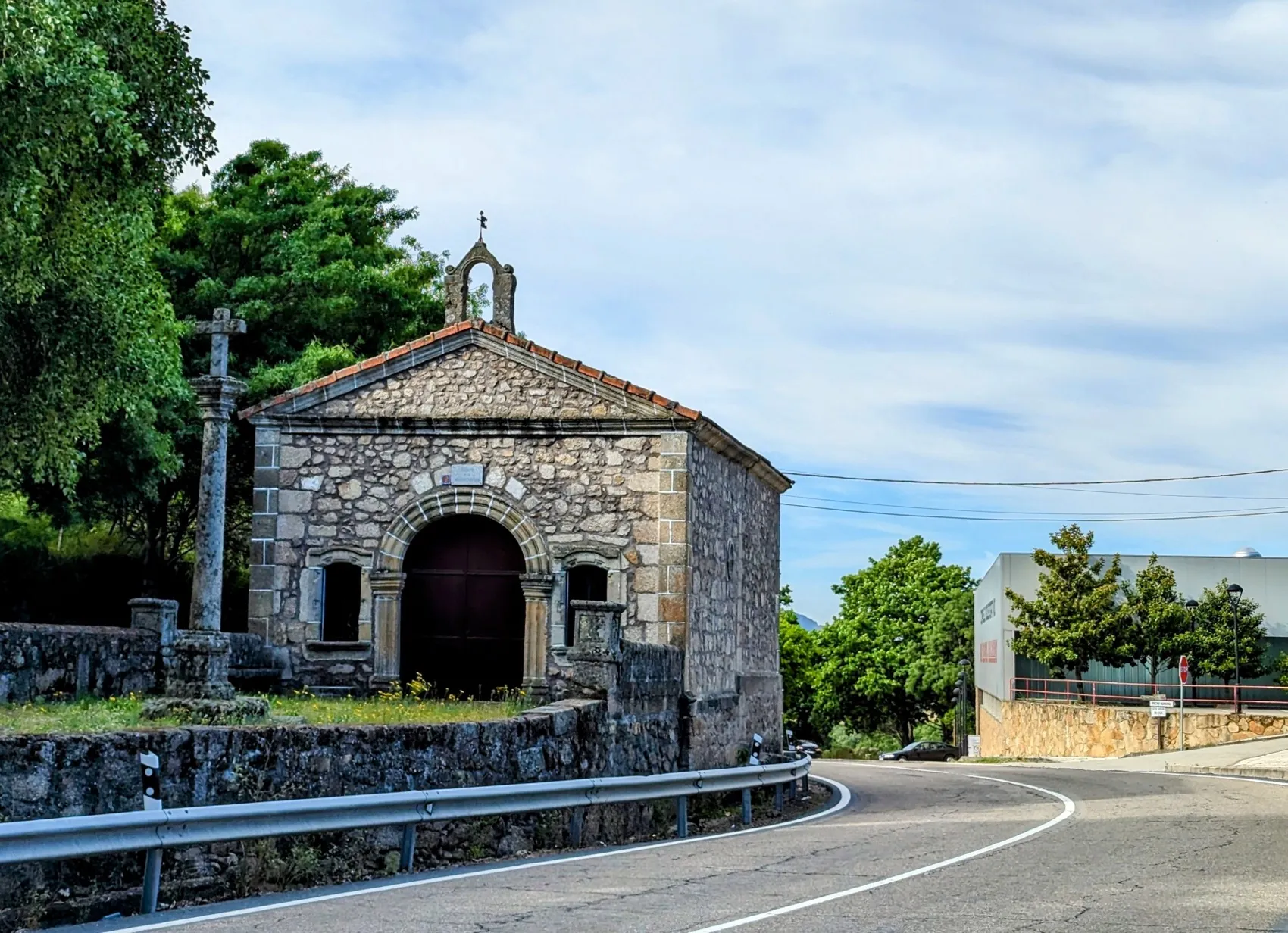
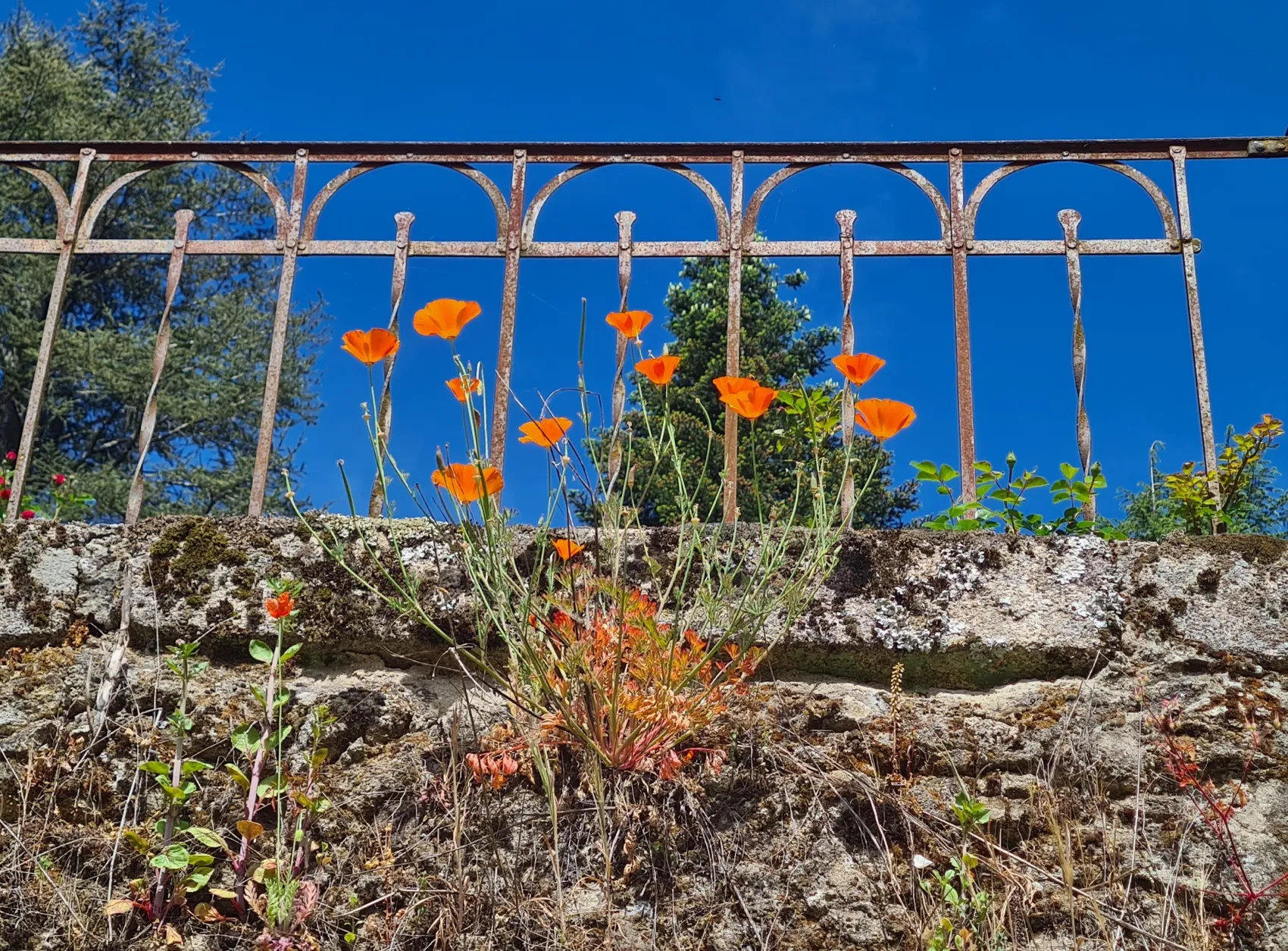
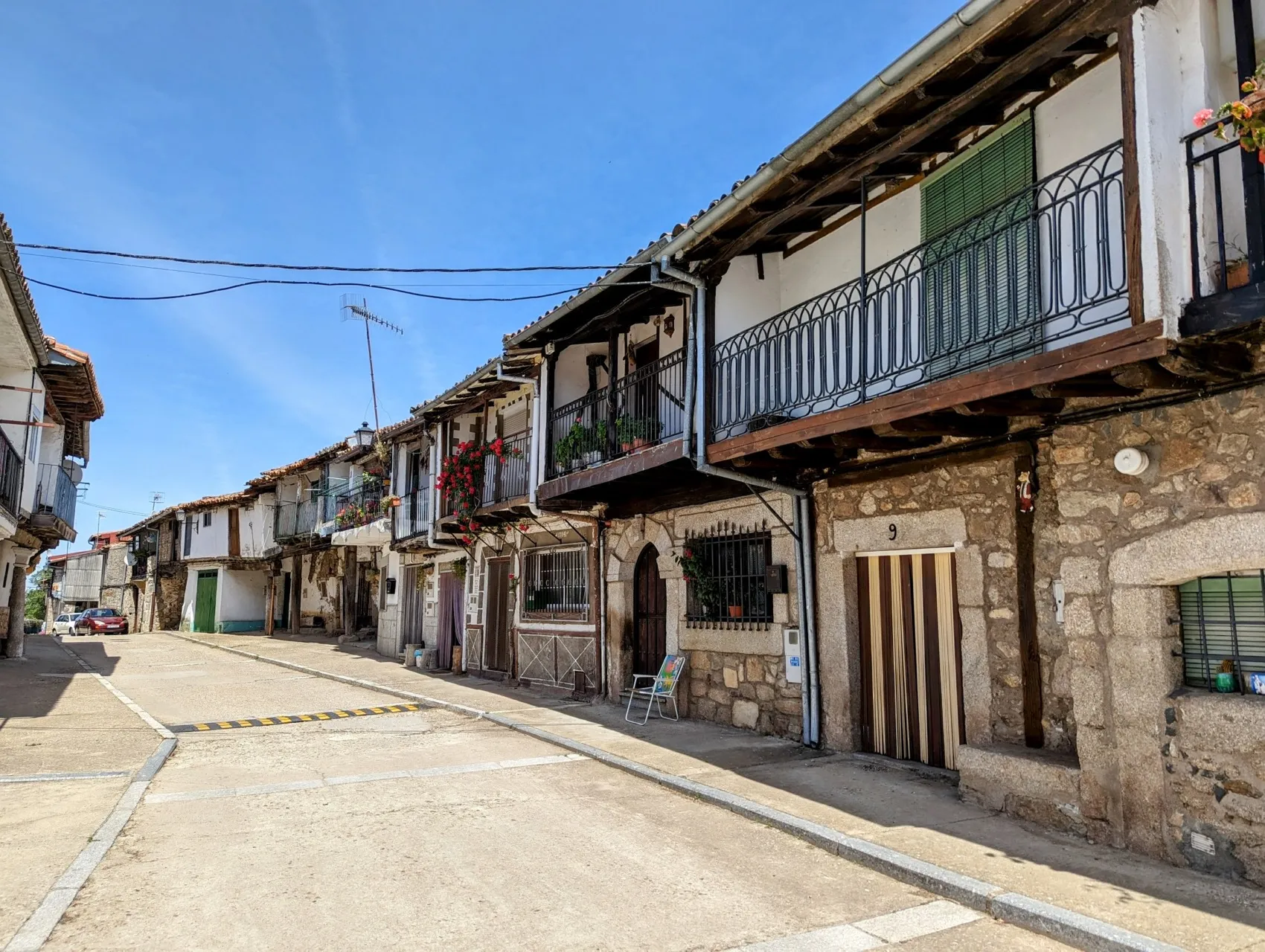
When we are hiking, we don't meet many fellow hikers, as we are all heading in the same direction. But during breaks, one hiker after another passes by. Most of them, by now, we know from the past few days and are bound to encounter more. Always with a friendly greeting, an occasional wave or an "Are you OK?".After the break, we descend a bit more on wide forest paths. We are soon downhill and even there the landscape remains a lot greener than we have been used to in recent weeks. Nice to walk a stage through forests and green meadows again. In the distance we can see the highway, far above us on a bridge along the mountains. We walk further and further away from it, on a small road undulating between the hills. The last stretch of the route goes up for a while, but it isn't long before we enter La Calzada de Béjar. Ten houses, five auberges for pilgrims, a church and a café, the village isn't much bigger than that. But it has a nice street with old wooden balconies, lots of flowers and a stork on the church. A quiet and nice first introduction to this new region. Many more stages will follow in Castile and León!