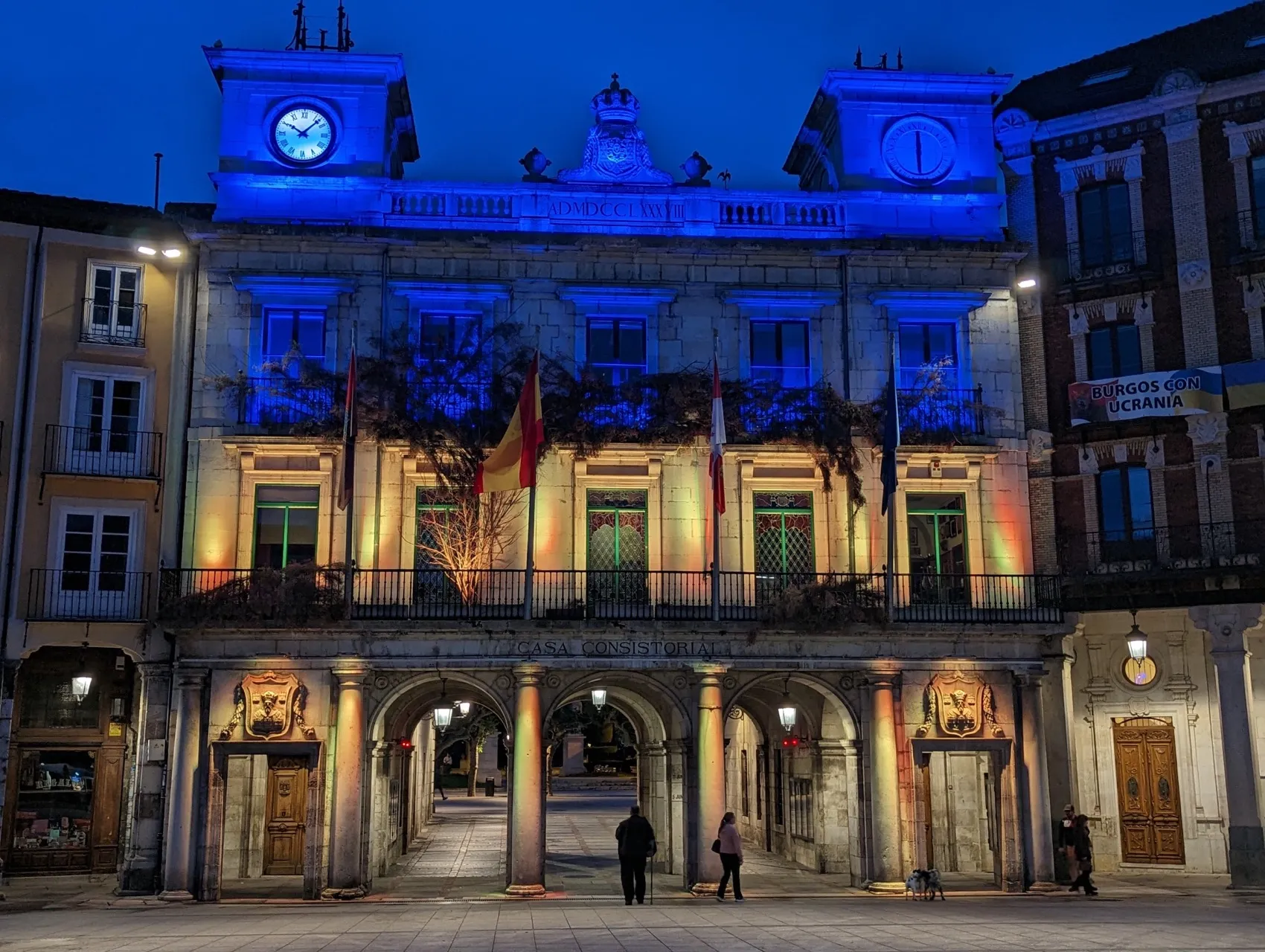
Last night, we stayed in Estépar, in a small hotel room with a tiny bathroom and a view of a parking lot next to a gas station where truck drivers sleep in their vehicles, planning to head south or north early in the morning. The small village, home to 630 residents, seems to be focused on the highway besides agriculture, featuring several such overnight parking spots, gas stations, and highway restaurants. Oddly enough, there are three banks within 100 meters of each other, almost as many banks as places to spend money. We did have a good night's sleep, and when we hand in the room key around 8 a.m., it is already quite busy in the restaurant below. There’s no major hiking trail passing through, so people do look up when they see us entering with our large backpacks and walking sticks, but as everywhere in Spain, they greet us kindly. We step outside and head back towards the river we crossed yesterday. To the south, dark clouds loom, while the north seems to have clear weather.
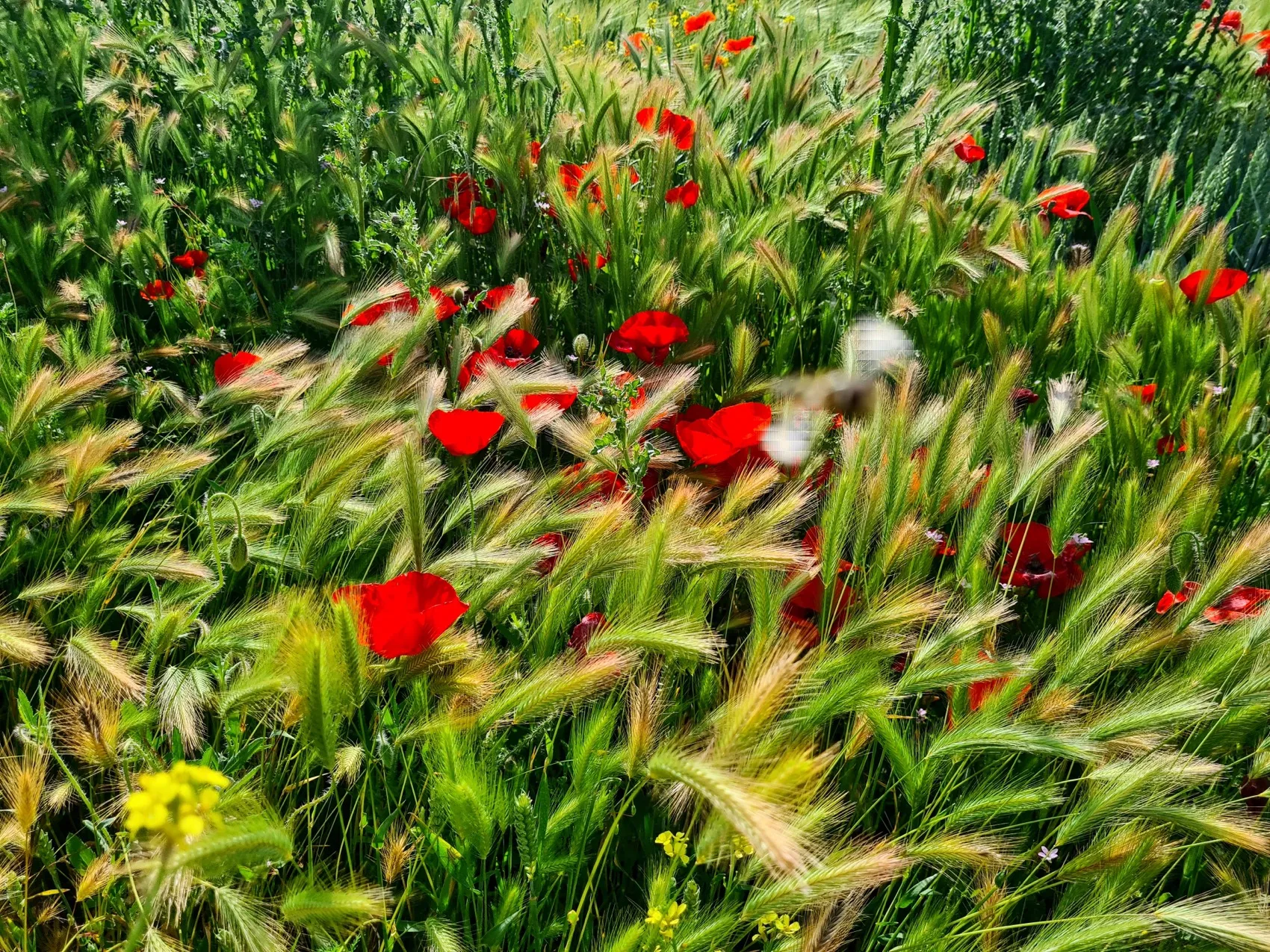
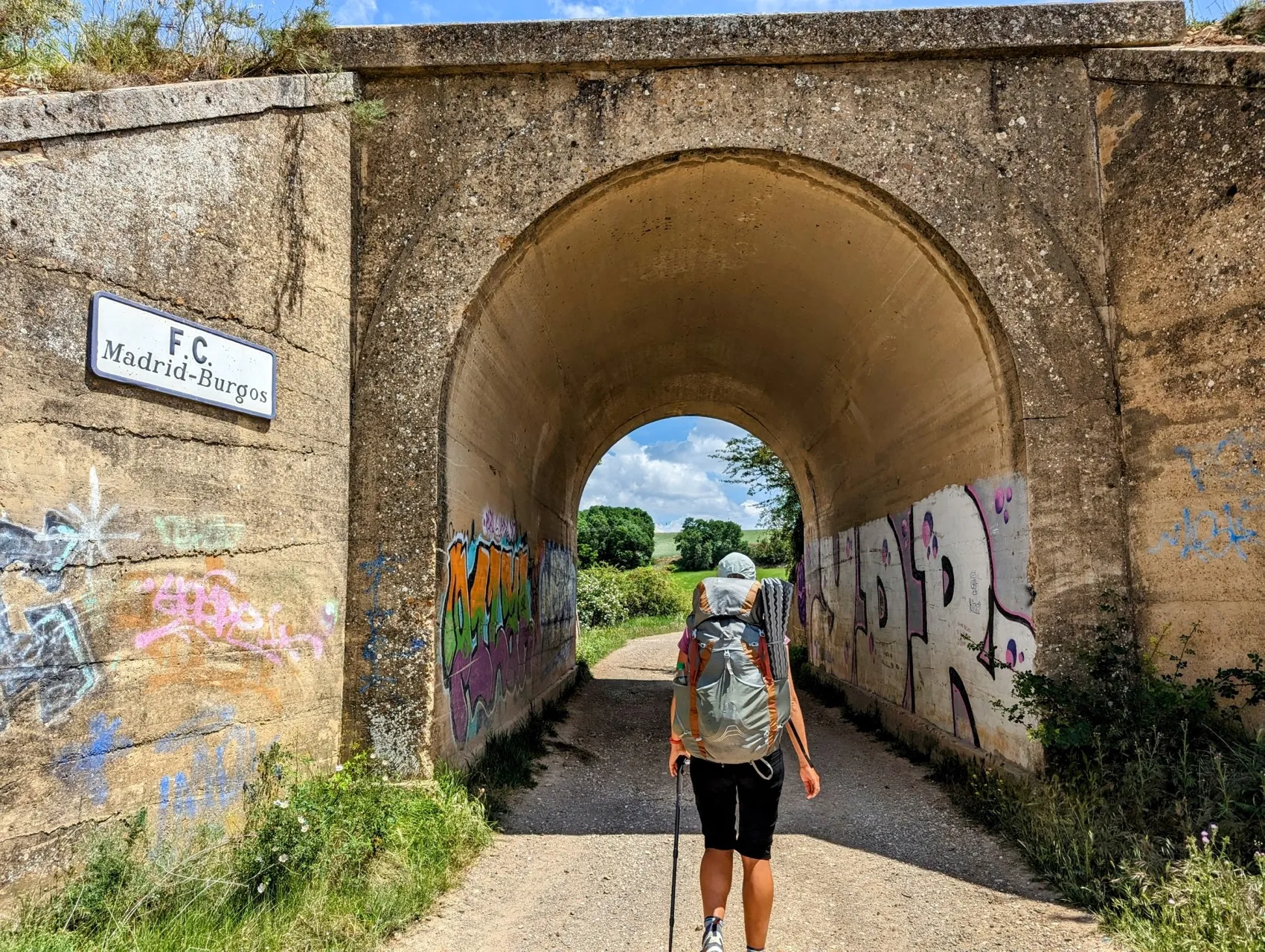
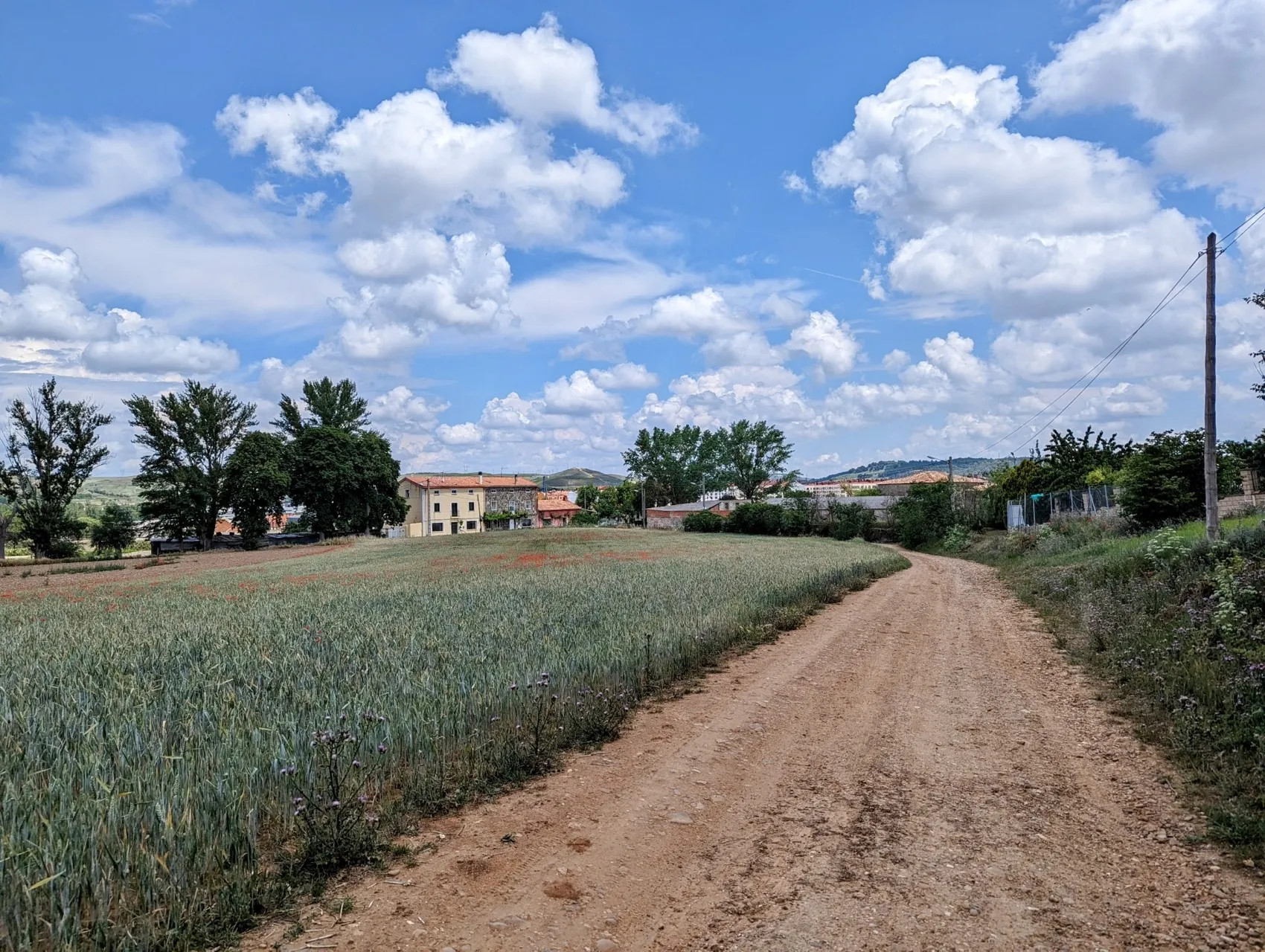
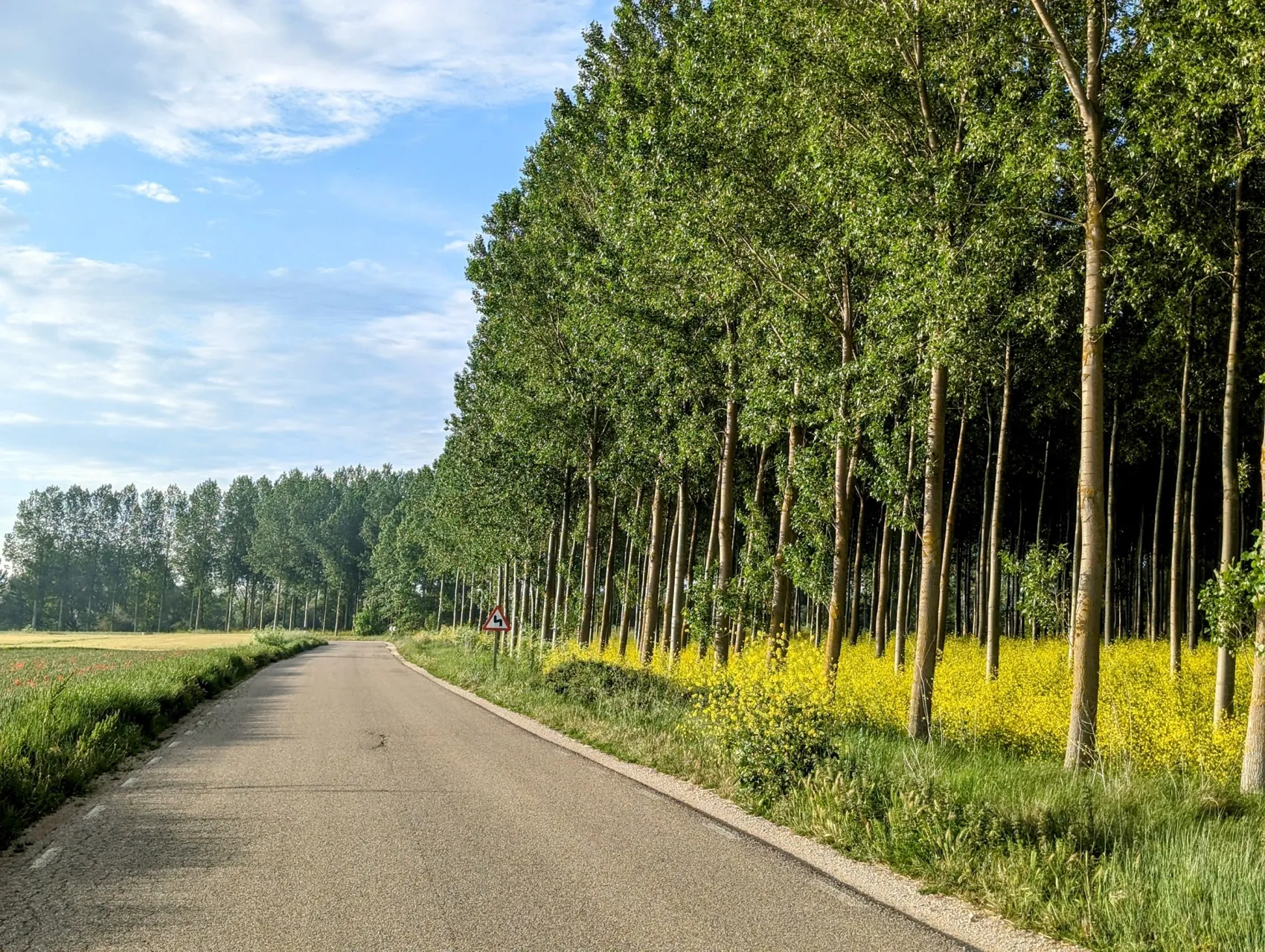
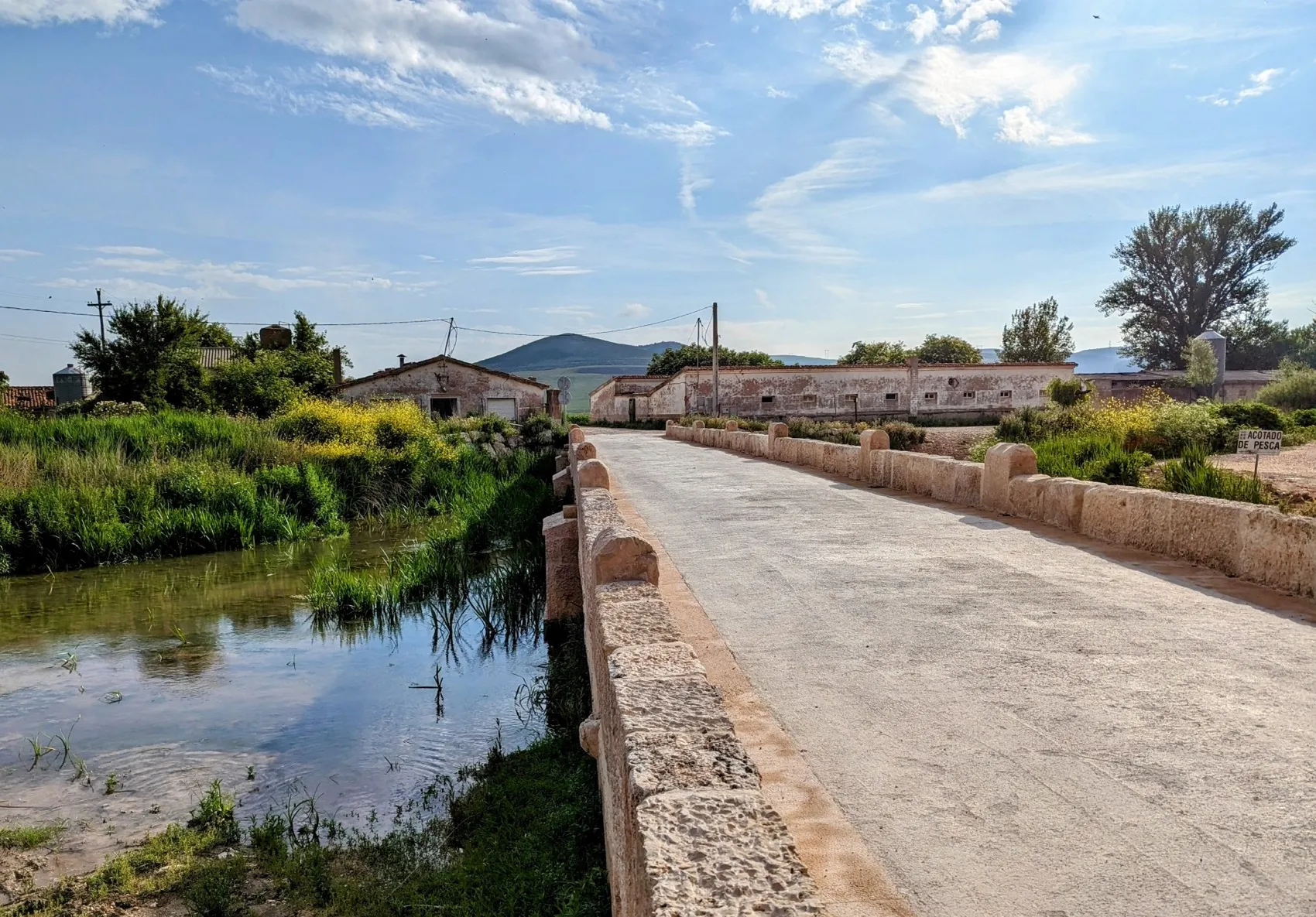
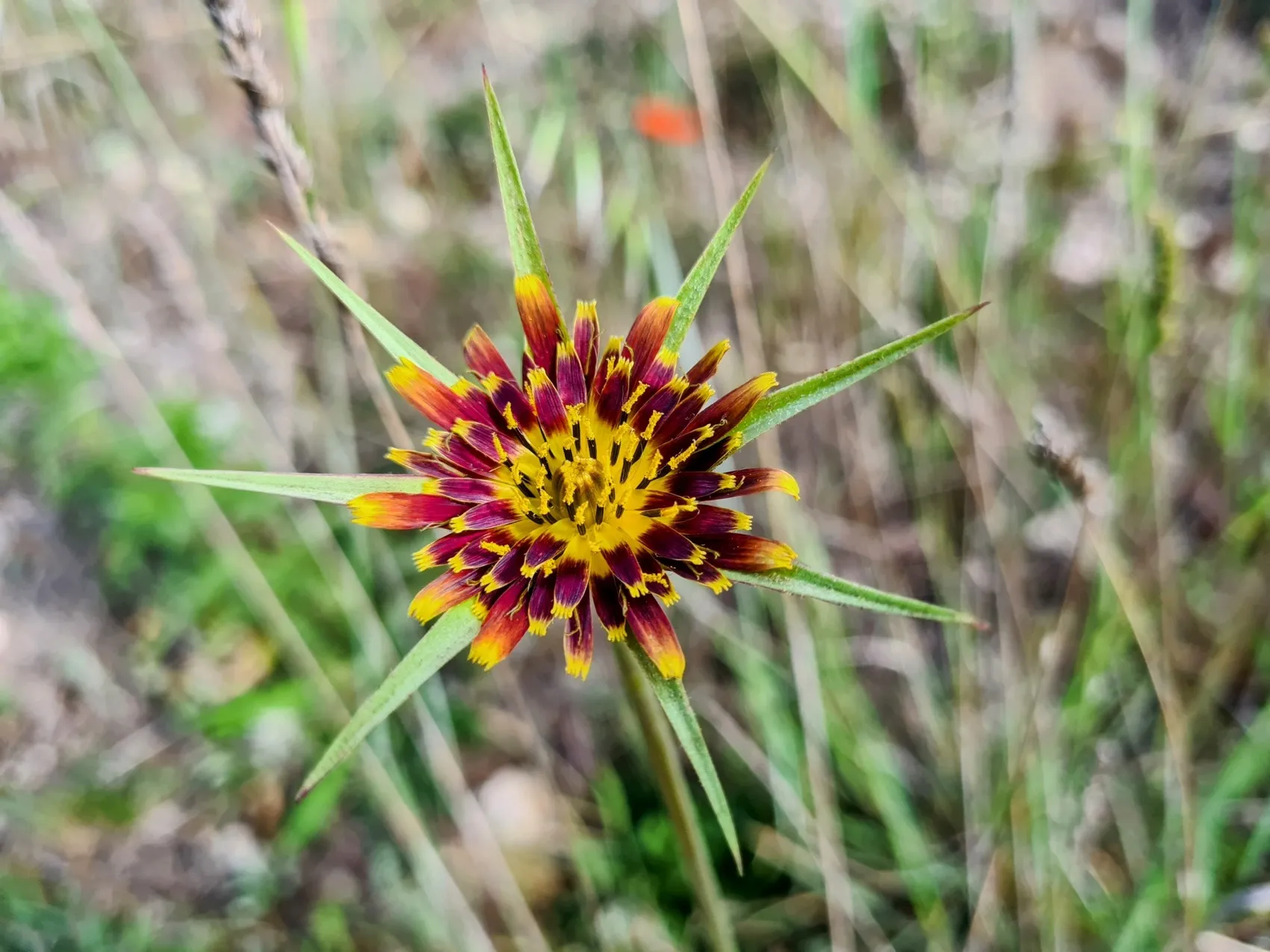
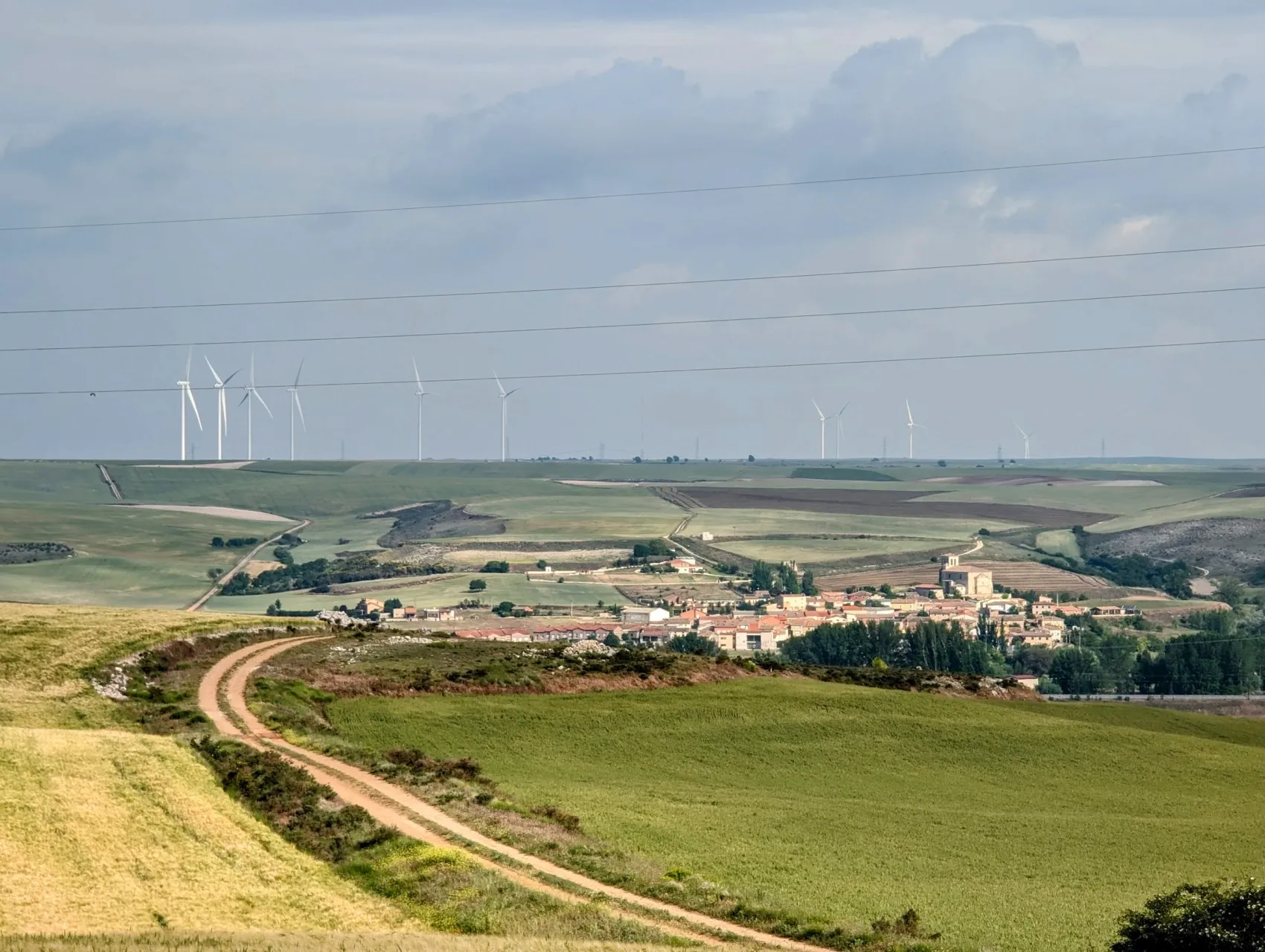
Rain is forecasted for nine and ten o'clock; we hope it doesn't come to that. Just to be safe, we've packed everything to be rain-proof again, with rain covers and raincoats readily accessible. We walk past a forest of tall poplars, the ground covered with yellow flowers resembling rapeseed. A chorus of little birds chirps away. The dense canopy of the trees creates an echo, as if they are whistling in a tunnel or a church. On the other side of the river, we take an unpaved road that follows the river and the trees for a while. In addition to the chirping, we hear the cuckoo again. It's lovely to walk in the morning; later in the day, you hear far fewer birds. We walk along the fields to the village of Cavia, then up the hills—or actually, up a slope with 100 meters of elevation, between grain fields and patches too steep for farming. Here, low bushes of broom, oregano, lavender, and the beautifully blooming Tragopogon, known in English as 'Bronze-flowered Goat’s-Beard', are visible. Once at the top, the landscape flattens out. We are on a gently rolling plateau. With a magnificent panoramic view over the valleys, we head towards the highway, which we pass under. We walk on an overgrown path with grass and flowers up to our waist. The poppies, interspersed with wheat and white umbellifers, remain a magnificent combination. On the other side of the highway, away from the noise and over a hill, we take a break. The rain seems to have dissipated behind us; it has cleared up nicely. We can take our time during the break because if we keep going at this pace, we will arrive too early in Burgos, where we can only enter our apartment between two and three. There is a campground near the city, but it is a few kilometers outside the center. We would have liked to camp, but by staying in the center, we can make the most of our limited time in the city. And we can do laundry while playing tourist; that’s multitasking!
We enjoy the view a bit longer and then continue towards the city. Burgos is not visible yet through the hilly landscape, even though it's only about eight kilometers away. We cross another highway and the village of Villacienzo. On the village square, there are a beautiful old church and some dilapidated houses. Around the corner, rows of new construction almost resemble Dutch row houses. These are probably homes for people from Burgos who prefer to live in a rural village, but it looks a bit odd. Just one more small hill, and then we arrive at the edge of the city. Like every Spanish city we've come across, the boundary between countryside and city is very sharp. Within a few minutes, we go from meadows and woods to apartments, shops, buses, parks, and major streets. Initially, the city has a real suburban feel, but soon the charming part begins. We walk through avenues of large old chestnuts and beautiful classic buildings. There is a lot of youth on the streets, which you seldom see in the countryside. You see small children and older people, but few young people. They must go to the larger cities for education and build their lives there. This immediately makes for a livelier street scene.
By the river Arlanzón, golden shells on the sidewalk indicate that we have reached the Santiago route from the Pyrenees. This route is now quite busy as there are large celebrations in Santiago de Compostela on July 25, especially for pilgrims. Thousands of people attend each year, and we plan to avoid this route toward the mountains as much as possible.
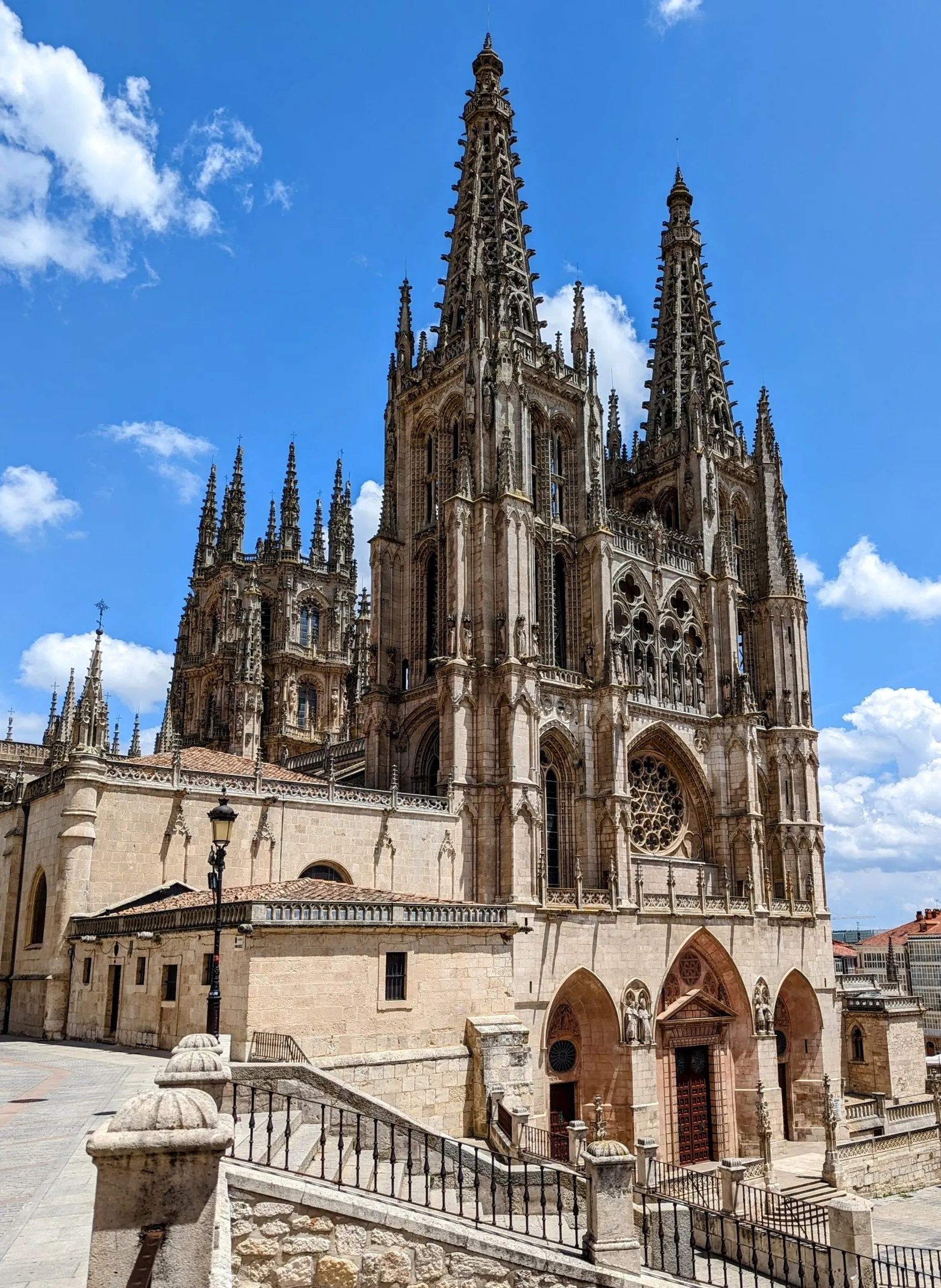
We walk along the city walls and through a beautiful gate into the downtown area. The buildings become larger and more imposing. We pass the Burgos Cathedral, an impressive building with seemingly endless towers, arches, and sculptures! Further on, the lively part begins with shops, cafes, and hotels. Our apartment is also located here, and we can enter immediately using codes we received to open the doors. A nice spacious place with a kitchen, living room, bedroom, and bathroom in a newly renovated old city house right in the center. It continues to amaze us that such beautiful apartments in the centers of cities are much cheaper than the rural houses in grandmother's style, where you're lucky if daylight shines through. We're fortunate with this nice spot and can't wait to go out and see what Burgos has in store for us. The entrance is promising!