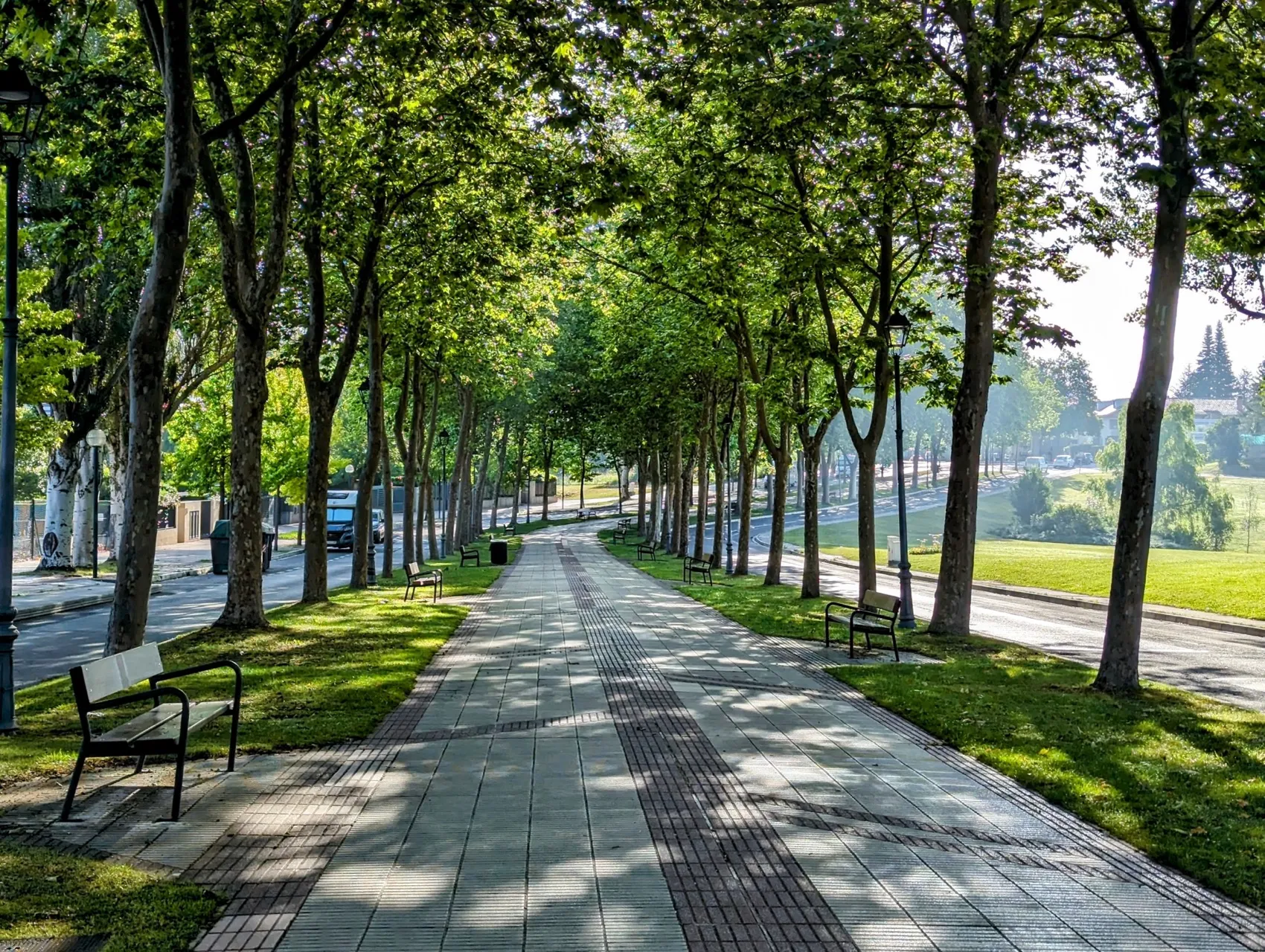
After a relaxed afternoon at the campground and a peaceful evening, we had a wonderful sleep in our own little bed—it usually provides the best sleep. We woke up early, but packing up our stuff takes a bit more time at a campground than when leaving from a hotel. By about 8:30 AM, everything was packed, on, and strapped to our backpacks, we were outside the campground gate, ready to hit the road again. The first half of today's leg will take us through urban areas, as we were camped just a few kilometers south of the large city of Vitoria-Gasteiz, and we could already see the outskirts from the campground. We cross the highway again at the roundabout and continue our journey on the two-lane road. It isn't very busy, but when a car or van does come our way, they zip by at full speed. After just 1.5 kilometers, we arrive at the edge of the city. In the middle of the street, there's a paved strip with benches and trees, which we can follow through the city. We are certainly not alone.
As we delve deeper into the city, it becomes busier with people walking their dogs, joggers, schoolchildren, and also pilgrims. Clearly, we're back on the pilgrim's route. We pass through residential neighborhoods, churches, schools, and parks, and the buildings gradually become older. In the suburbs, there are high, large flats—not the square blocks but more architecturally beautiful residential complexes. As we head towards the city center, the buildings along the streets become grander and more ornate, and the trees lining the walking path grow larger and older. We don’t venture into the center of Vitoria; the city is so large that it extends further, but it looks magnificent from a distance. It's certainly a city where you could easily spend a few days. It boasts one of the best-preserved medieval city centers in Spain, numerous charming parks and green spaces, and has long been the capital of the Basque Country. The Basque parliament is located here, which enhances the city's culture and prosperity. Even outside the center, it looks like a stately city.
The dual name of the city, 'Vitoria' in Spanish and 'Gasteiz' in Basque, is something we'll see often in this region. The Basque Country truly has its own language, which is widely spoken, even as a first language. While nearly every region in Spain has its own language, those are all derivatives of Spanish. Basque is the only language in Europe without any relatives, a unique language unrelated to any other European languages. It's spoken not only in the autonomous region of the Basque Country but also throughout the broader cultural region of the Basque Country that stretches into southern France. It's a distinctive language to hear and read. The letter 'x' and combinations like 'tx' and 'tz' are commonly used in words and place names, making them look quite different from what we're accustomed to. For now, we're sticking with 'Kaixo!' which means 'hello!' in Basque, but who knows how far we'll get in the coming stages…
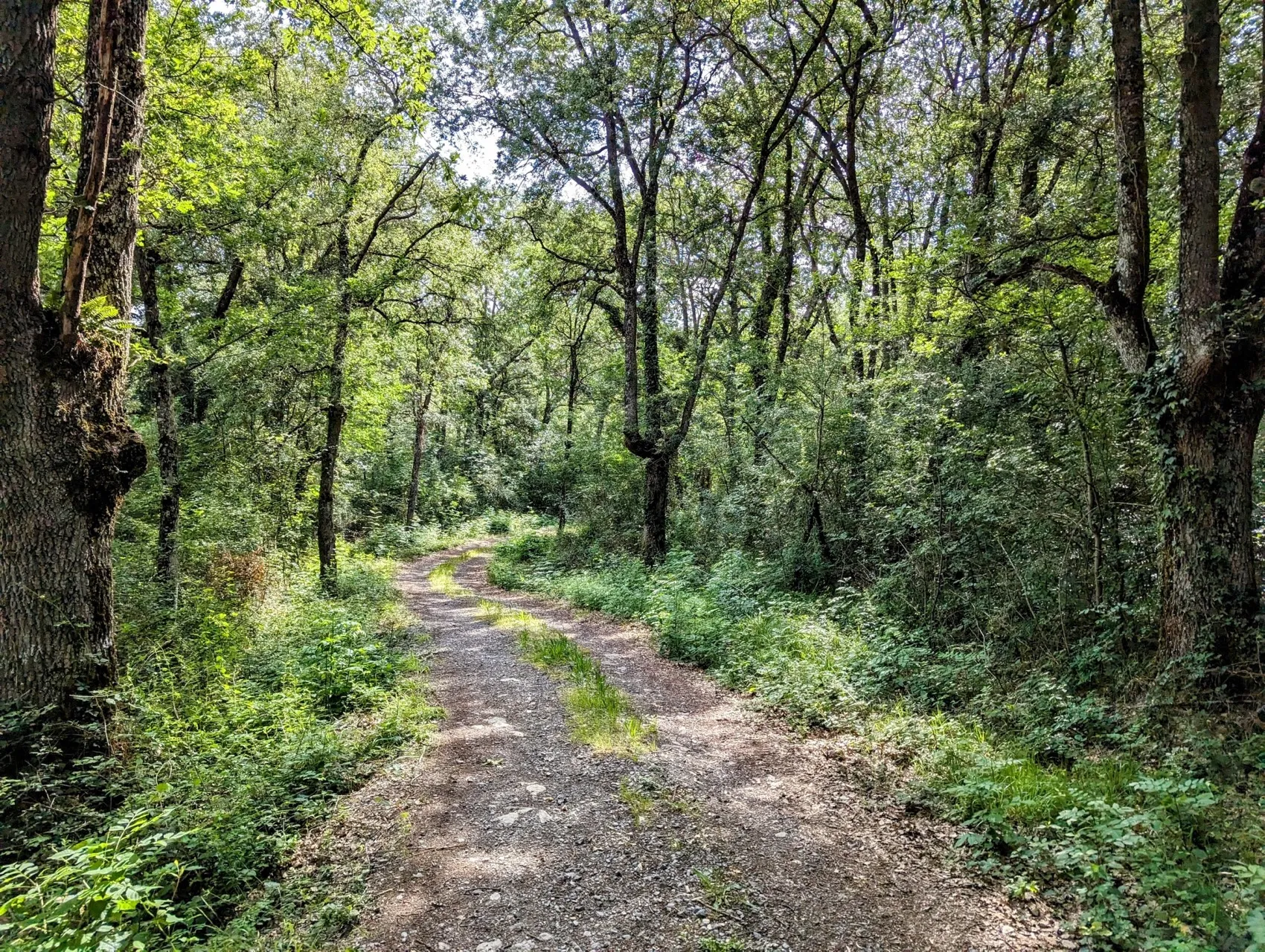
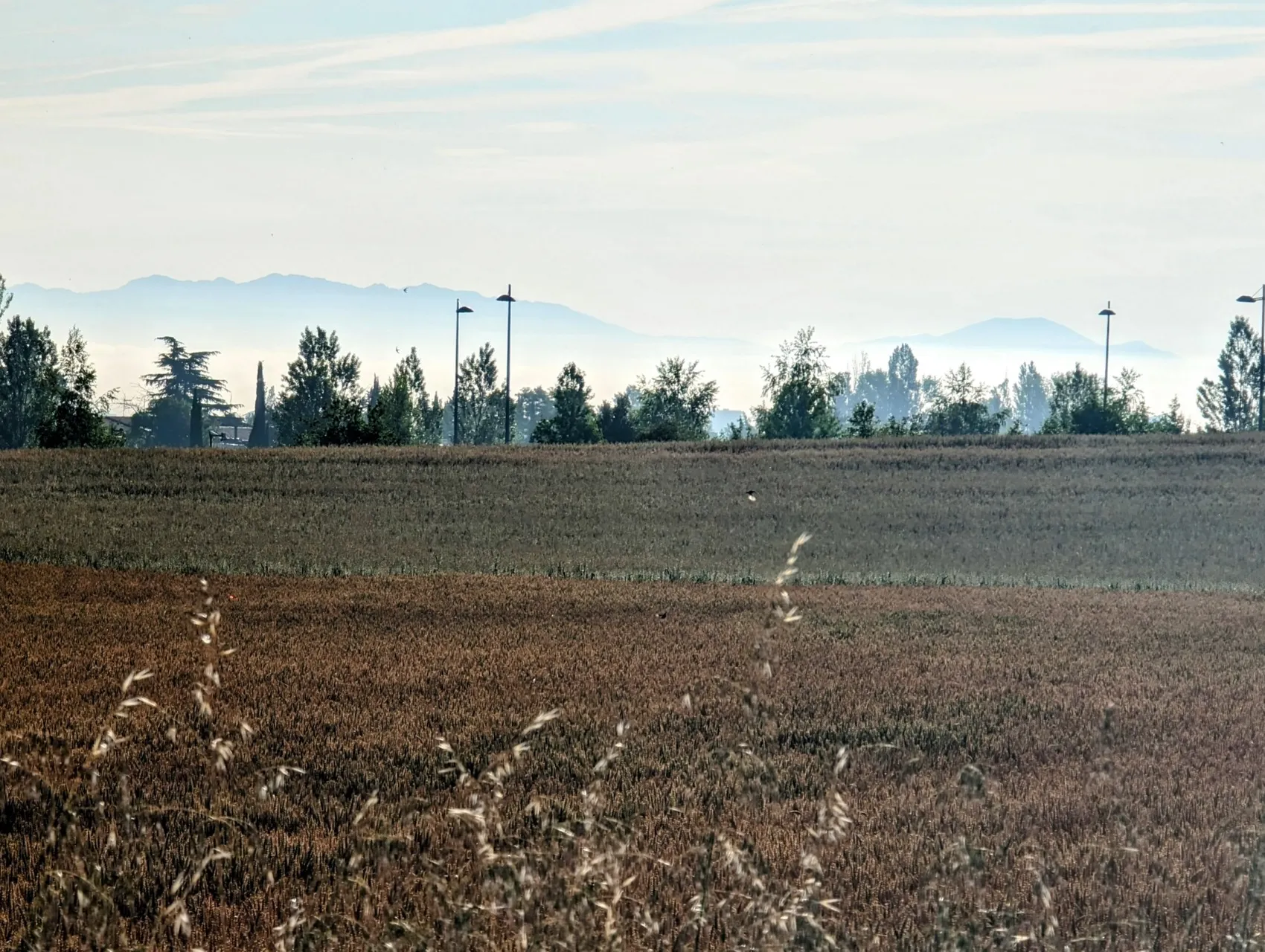
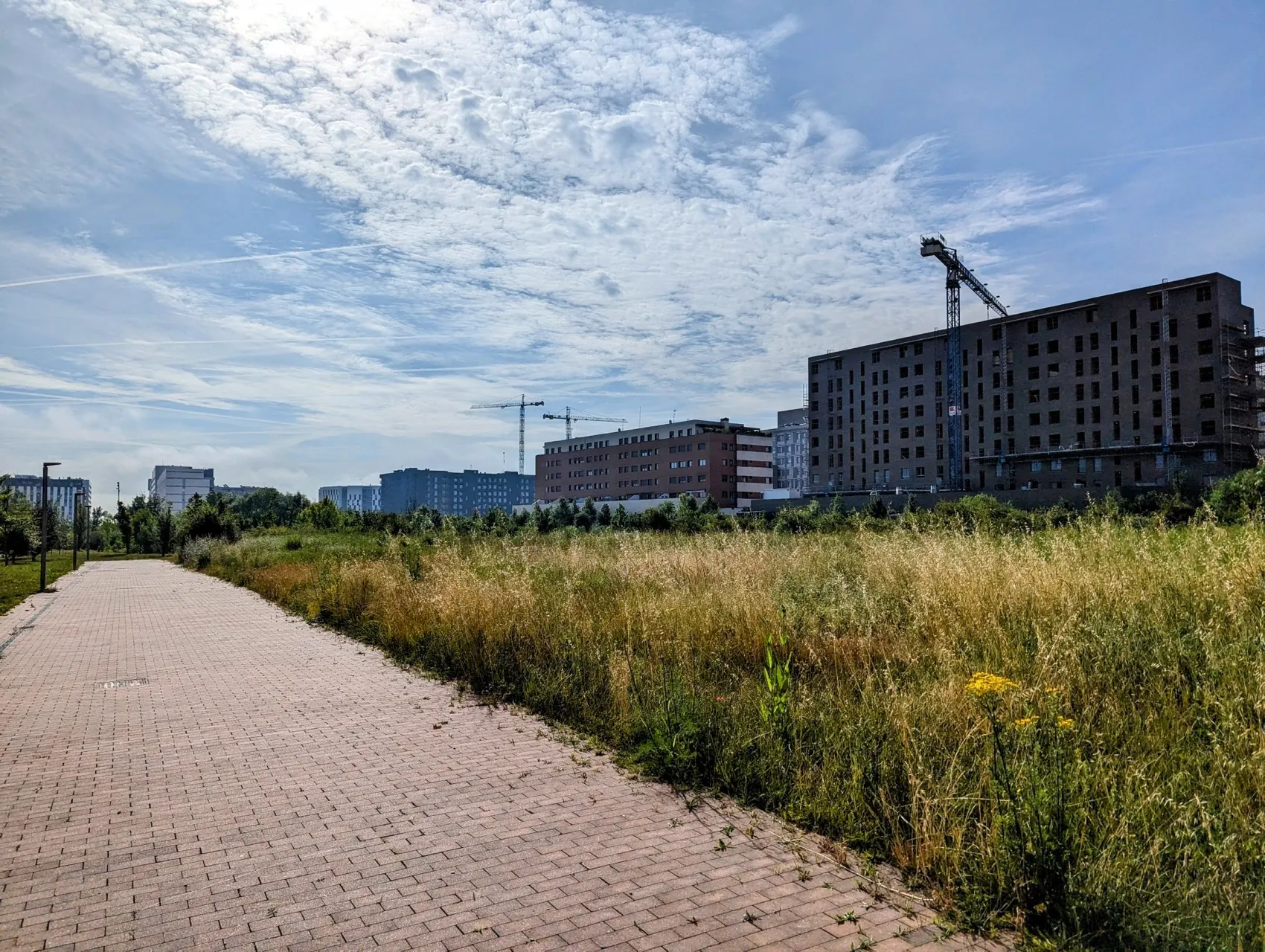
As we continue, the trees along the road gradually become smaller and younger, and the buildings newer. On the side of the city we're leaving, there are again high, new, but neat flats. Suddenly, we're back among the familiar fields, but with far more hills around us than in previous stages. Unfortunately, we can't avoid walking a few kilometers along a busy road, but as soon as we can, we're back among the fields and beautiful nature. It's quite warm today, and we're looking for a shady spot for a break. It takes a while, but after about 12 kilometers through a forest, we find the right spot. We set up our chairs and stove, and then spot the first tick. Soon, there's a second and third. We haven't seen any in the dry inland, but apparently, we've now entered an area where they are plentiful. We'll need to be vigilant—ticks are troublesome creatures.
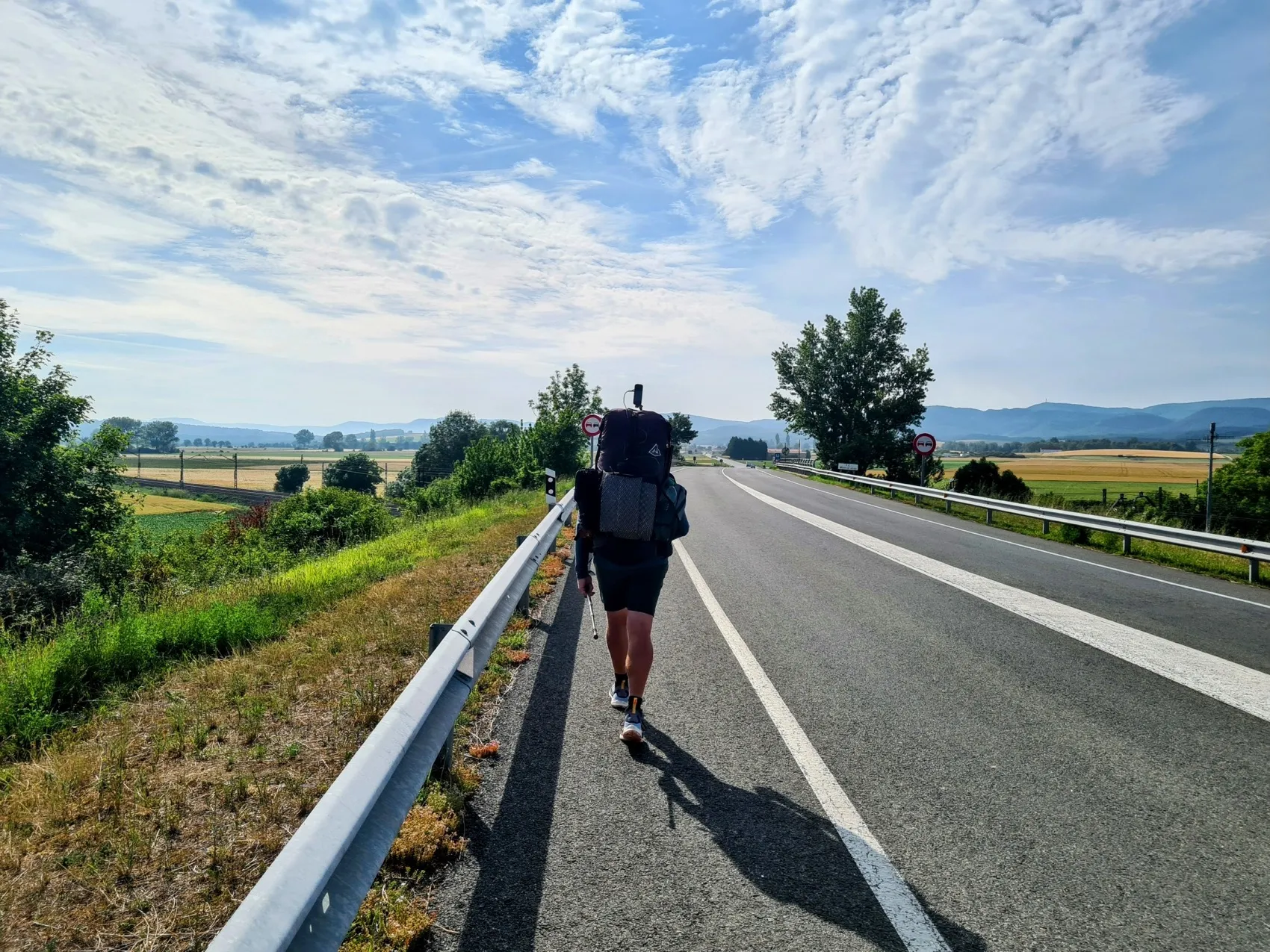
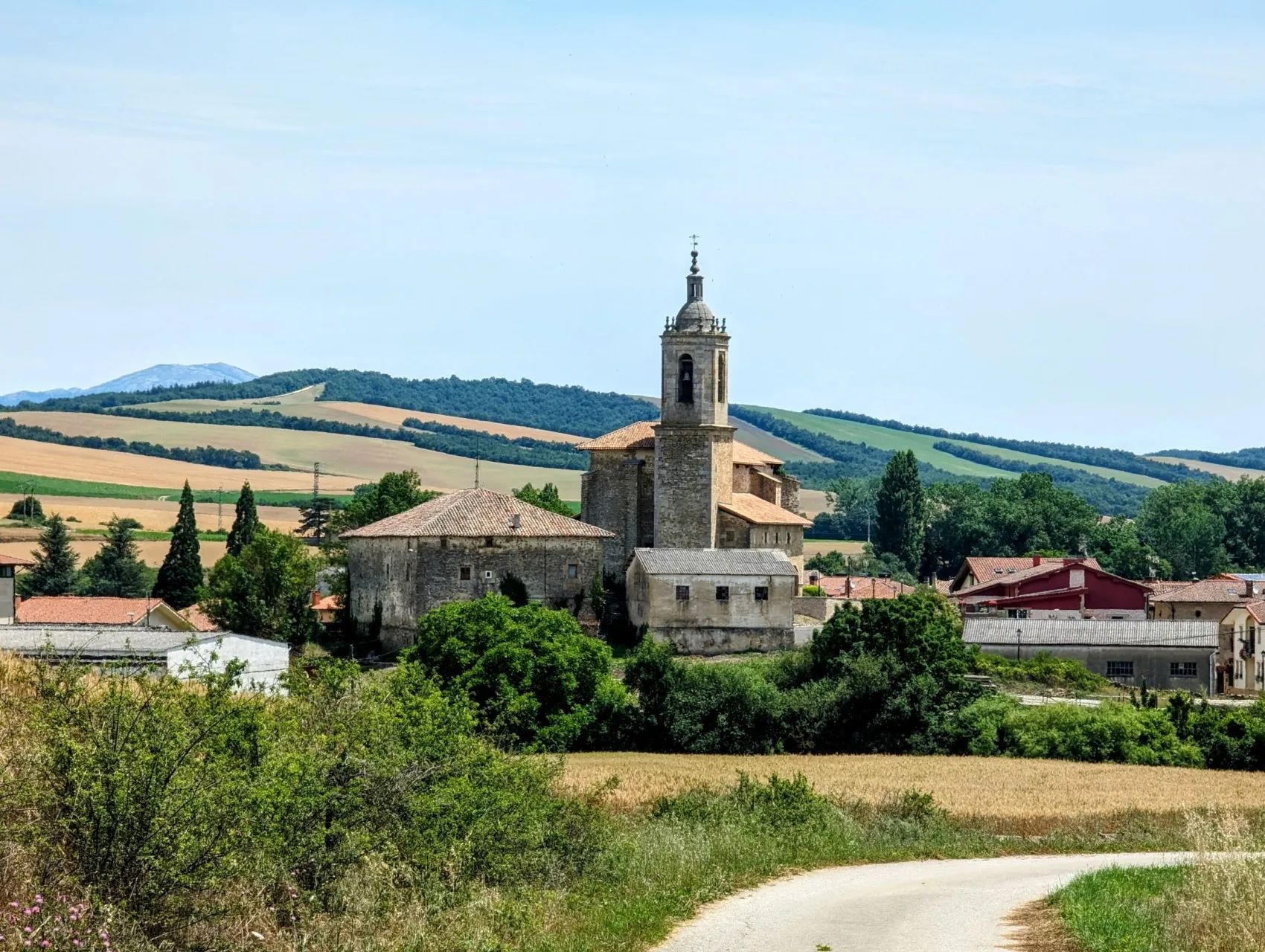
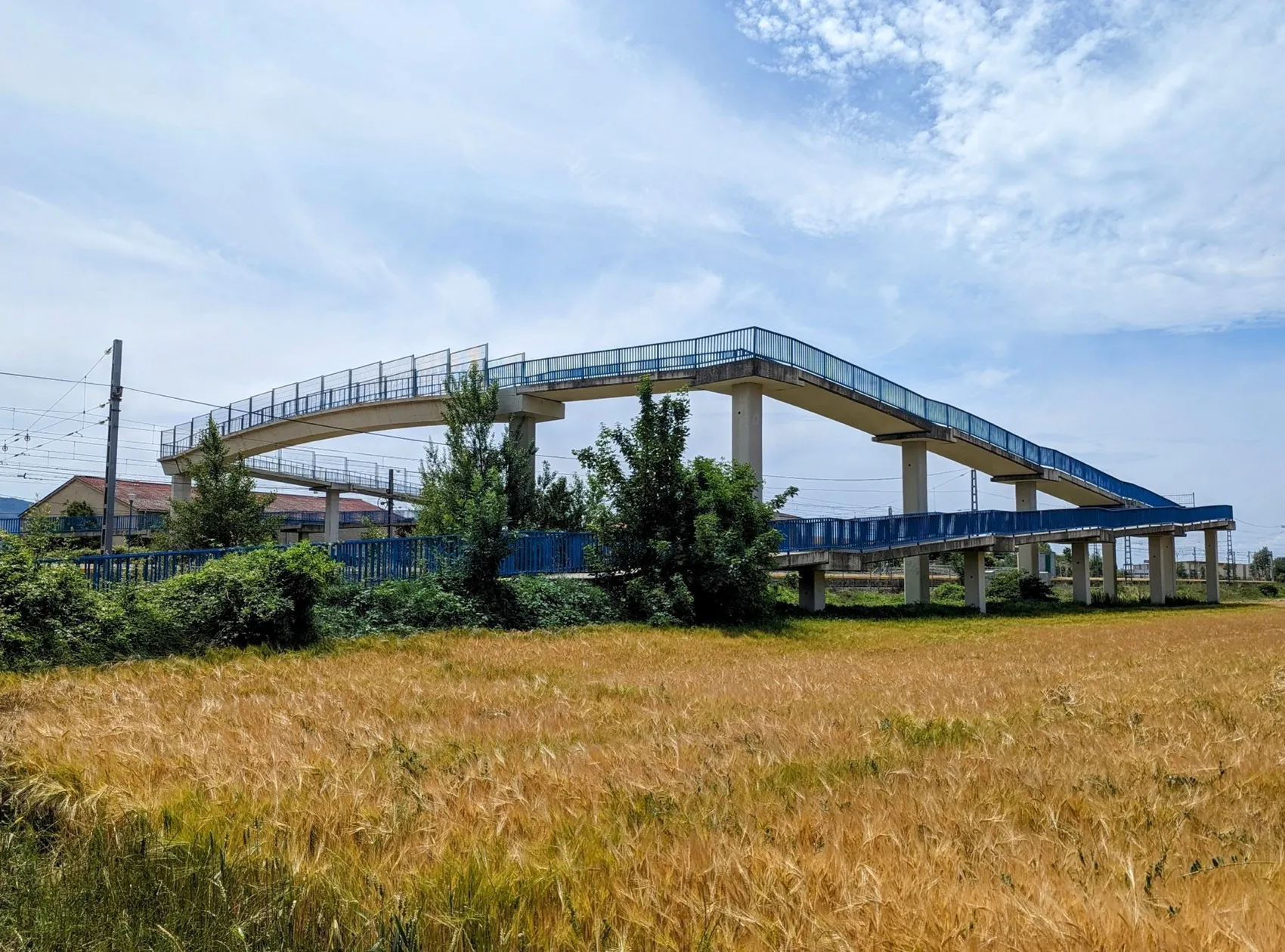
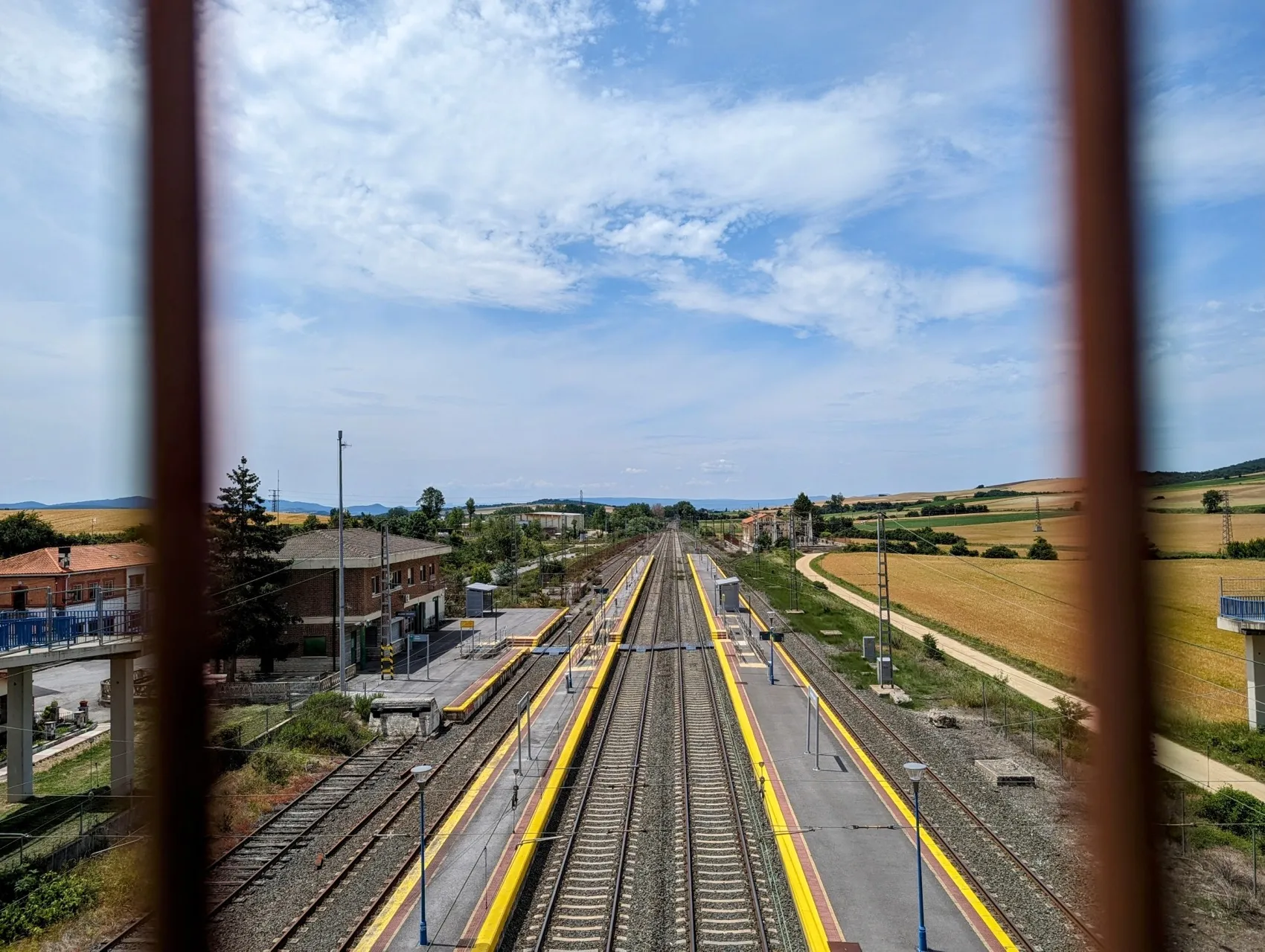
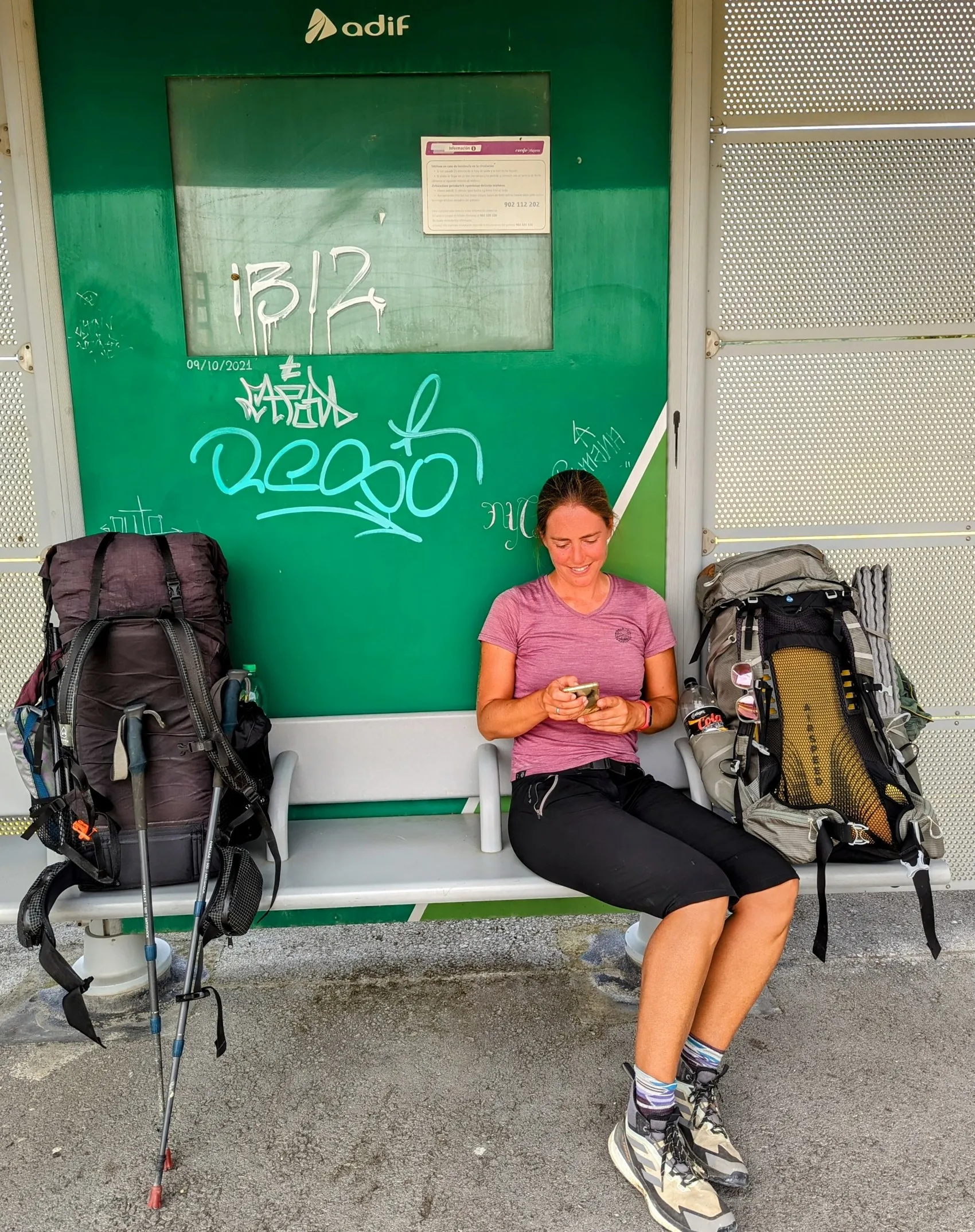
We walk along broad paths, up and down hills. We cross a few quiet rural villages, but mostly we walk past fields of grain and sunflowers. To our left and right, the ridges grow taller and seem to converge in the distance ahead, though our route continues to follow the broad valley for now. Towards the end, we reach the railway which we follow for a bit and cross to get to a small station. Here ends today's stage. We take a train to a campground further on, as finding overnight accommodations here and at the end of the next stage is challenging. Ideally, we avoid public transport and just keep walking, but sometimes it's the only or most obvious solution. So today, it works out fine. We buy tickets online and wait about half an hour for the train that will take us to Etxarri-Aranatz. Another beautiful Basque name and a lovely green campground. Tomorrow, we'll return to this little station for stage 80, but first, we set up our tent and make our little home. At the campsite, we're quickly joined by finches, tame blackbirds, nuthatches, and a lesser spotted woodpecker. For Spanish standards, it's a rare beautiful camping spot, under large trees on the edge of the hills and a large forest. We're quite content to stay here a while, to tackle the coming stages.