The GR5/E2
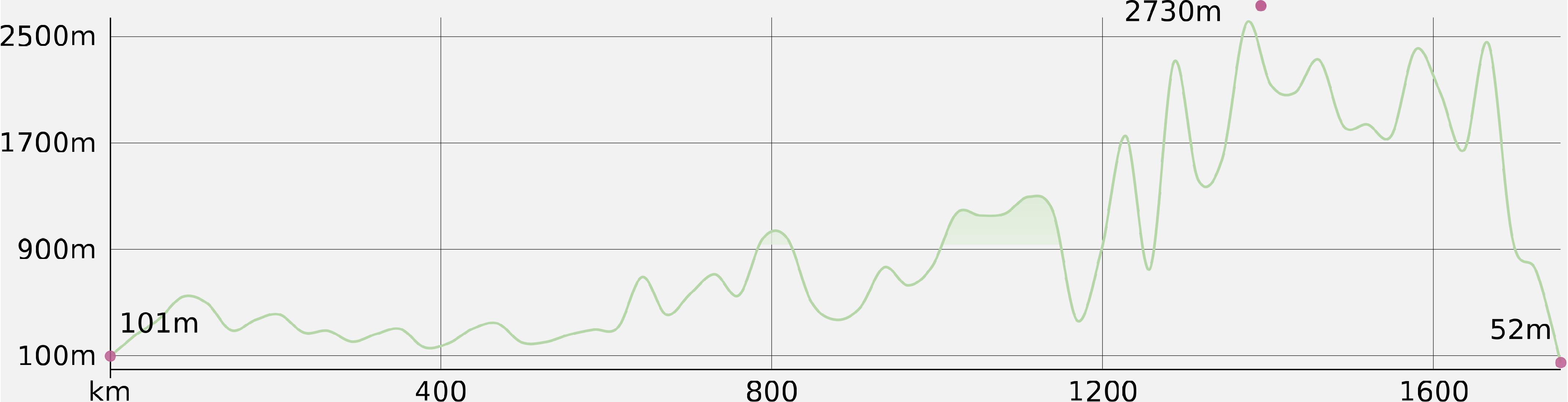
The GR5 (Grand Randonnée 5) is a Grand Route trail that runs from the Hoek van Holland to Nice on the Mediterranean Sea. After the pilgrimage route of Santiago de Compostella, it's Europe's most popular long-distance route. It passes through the Netherlands, Belgium, Luxembourg, Switzerland and a (very) small part of Germany, but most of it runs through France. The trail crosses the Ardennes, Vosges, Jura and the Alps. In total, the route is 2,150 kilometers long and runs mostly on trails through hilly and mountainous terrain. The route largely follows the border of Germany, Switzerland and Italy. The highest point of the route is the Col de L'Iseran, which is 2,730 meters above sea level. The GR5 is also a part of European Long Distance Path E2. This route also covers England, Scotland and Northern Ireland and adds 2700 kilometres.
'Our' GR5
We were keen to start the trek from 'home'. Since we lived in South Limburg, we started in Heerlen. From there, we walked in 3 stages to Spa, where we picked up the GR5. On paper, our route was about 1,775 kilometers long, but we ended up just over the 2,000-kilometer mark in the last stage to Nice. That's about 12.5% more than previously calculated, quite a big deviation! This is largely due to walking to and from overnight stops, misruns, dead-end roads and recently changed sections of the route. There are also 2 variants for the end of the route; the main variant to Nice and the GR52 to Menton. We chose the latter, which is about 100 kilometer longer and afterwards we still walked to Nice. All in all, these kilometers add up quite a bit.
Elevation
In the whole route, we ascended and descended about 150 kilometers. When we started the trek, we had very little experience of trekking. When planning the stages, we mainly looked at the number of kilometers to estimate which overnight spot we could take. But we soon found out that altimeters are at least as important to take into account :). And especially in the Alps, this turned out to be a strong determining factor.
Accommodation
Since we like camping best, we mainly stayed overnight at campsites located along the route. In the Vosges and in the Jura, we also slept a dozen nights in a hut/cabin. These were all fine cottages, specially built for trekking hikers, where we had a nice and quiet night. It varied from a very basic cabin with only four walls and a door, to a small house with stove, cooking utensils and even once equiped with light and power from a solar panel! Some huts were furnished with a place to sleep, but most were basically for shelter, with a table and benches that were easily set aside to put down an air bed.
There is a bit of a 'first come, first served' rule; we ourselves were almost always lucky because we were not hiking during the (summer) holidays.
Bivouac
In the well-known mountain areas, we also bivouacked quite a few times. For us, these were very special experiences, being in the middle of the mountains with only nature and animals around. However, it's always important to check where bivouacs are allowed and between which times, but also where you can pitch your tent safely (e.g. far enough away from inhabited areas and herds of sheep and cows!).
There is a clear distinction between wild camping and bivouacing in France, and different guidelines apply for each nature reserve. In the Mercantour, for example, we were only allowed to bivouac between 7pm and 9am, and in the Vanoise you can only pitch your tent for the night at certain Refuges. Just to be clear: wild camping is not allowed in France, but bivouacing is tolerated. The difference lies in the nuance, leaving your tent up during the day and sitting down with tables and chairs is obviously a lot more like camping than using the place purely for overnight stays. We ourselves always pitched up the tent at sunset and took it down as soon as possible after waking up, only to have breakfast afterwards. We felt most comfortable with this and never had any problems.
Wet tent
We'd often get strange looks when drying the tent at break time. Since many campsites are in valleys near rivers, our tent was almost always very wet when taken down, especially before and after summer. This can add quite a bit of extra weight to your backpack. Also, especially after a long stage, it's more often impossible to get the tent dry enough to pitch it on arrival. Or the drying process takes far too long, when you actually want to rest after an intense stage.
The solution we gradually found was to pitch the tent during our lunch break to let it dry. This meant that our breaks were a lot longer than we were used to before, with the advantage that we were more relaxed (and lighter) when we set off again, which is especially nice in the mountains. Plus the tent was dry enough at the next stop to be ready for sleeping straight away.
Water
In such a long break, we like to make a cup of coffee. For that, of course, we need water. We use quite a lot of water on a hiking day anyway. Also in the evening for cooking soup and pasta, washing dishes, dribking a cup of tea, washing and brushing teeth, it all requires water. If we just stay at a campsite, the water comes nicely from a tap. For drinks during the hike, we filled bottles of water at the campsite in the morning. We also generally came across enough shops in Belgium, Luxembourg and the French countryside to buy some extra if we were short.
But already the first time we bivouacked, we were surprised at how much water you need on a day. From the last village, we lugged 6 bottles of 1.5 liters of water with us for the evening and morning. Fortunately, we were able to bring down the needed amount of water pretty quickly and our skills for finding water did improve quite a bit. In France, there are many wells in villages where often even drinking water can be tapped. For the times it was 'eau non-controlé' or when we had to get water from little wells and mountain streams, we carried a Katadyn water purification system. This, along with boiling water proved to be a golden move, especially in the mountains. The Katadyn removes all particles from the water and boiling water for 5-10 minutes destroys all bacteria and viruses. Most hikers we encountered found this a bit 'double Dutch' and were less carefull with it. Being a little less strict will usually go down well too, but the last thing we felt like was being in the mountains with stomach & intestinal problems....
Prices
French small mountain shops are expensive, but you can always put together a simple meal. Luxury products like softdrinks and chocolate are very pricey, but if you stick to basics like pasta, bread and vegetables, it's manageable. Personally, when we were in a slightly bigger place, we did as much of our basic shopping (food, but also care products like shampoo) as possible at the big supermarket chains.
In Luxembourg, the petrol stations have proved to be a godsend for us: you can find all your groceries there, usually at reasonable prices. And every now and then when we were a bit worn out by the Luxembourg hills, we could go there for a cup of coffee, an ice cream or a cool softdrink.
We already expected it, but Switzerland turned out to be really very expensive for groceries. For a simple evening meal plus a small breakfast we once spent €35 in a local supermarket. So if you can: stock up on some essentials before crossing this border. Campsites are also pricey in Switzerland, but they are generally very well maintained and clean. And in Les Brenets, the campsite gave us a pass that allowed us free use of public transport and a boat trip on the lake, plus discount tickets to nearby tourist attractions.
Needless to say, campsites vary a lot in price. On average, we spent around €17 per night and the few hotels we slept in cost around €70 per night. Using the huts and bivouacking was free. Only in the Vanoise a small contribution of €5 per person was charged by the Refuges you were allowed to pitch at, for compensating the use of sanitary facilities and drinking water.
Moisture
The three biggest annoyances of trekking hikers are ticks (the nasty little animals that can make you quite ill), campervans (just kidding, of course, but it's very annoying when you come back to your tent and find yourself between two huge campervans), and moisture. The first two are hard to avoid, but the last category is partly in your own hands.
Camping while hiking is great, but keeping everything clean and dry is a challenge. If your gear is still damp in the morning and you have to pack it for a new stage, it's very difficult to keep the rest of your gear dry.
Therefor we've always put wet gear as much as possible in plastic bags and let our tent, towels and damp clothing dry during hiking breaks. If we'd had heavy rain during a stage, we'd always left all our wet gear (backpacks, rain covers, rain jackets and wet trousers) in the awning of the tent until everything was dry again, whether or not a day later. What we found is that a waterproof backpack isn't always very useful. Mark's Hyperlite Mountain Gear backpack is virtually waterproof. Very little moisture gets in from outside, but once it does, it's very difficult to get it out again. Next time, we will opt for a 'breathable' backpack with a rain cover.
Food
When doing long stages, especially in the mountains, you need food. Lots of food, we noticed. Again, we learnt an important lesson right on our first night bivouacing: take food as light as possible! The first time, we walked into the mountains with lots of fresh vegetables, fruit and a heavy can of Ratatouille (general tip: avoid canned goods anyway, as you have to drag the rubbish al the way down the mountain with you ;)). This is not sustainable... Soon, especially on multi-day hiking stages, we substituted fresh vegetables for dried ones and occasionally the well-known freeze-dried meal bags proved to be a godsend. Although after surviving 3 days on these meals in the mountains, we did crave fresh fruit and a 'real' meal...
Adventure
All in all, walking the GR5 was one big adventure for us, in which we learnt so many things. We dreamed about it for a long time and finally took on the bold 'mountain' shoes. We learned quite a bit about planning and dealing with unexpected situations and learned that you actually need very little in everyday life. We started with way too much stuff, but the feet pretty quickly told us that none of that is necessary. Downsizing feels good when you carry every gram you own on your back. Of course, it feels like survivalling now and then and it's more often quite tough, but the encounters along the way, the beautiful places we encountered and the views every time we crossed a mountain made this so rewarding. A trek never to be forgotten!