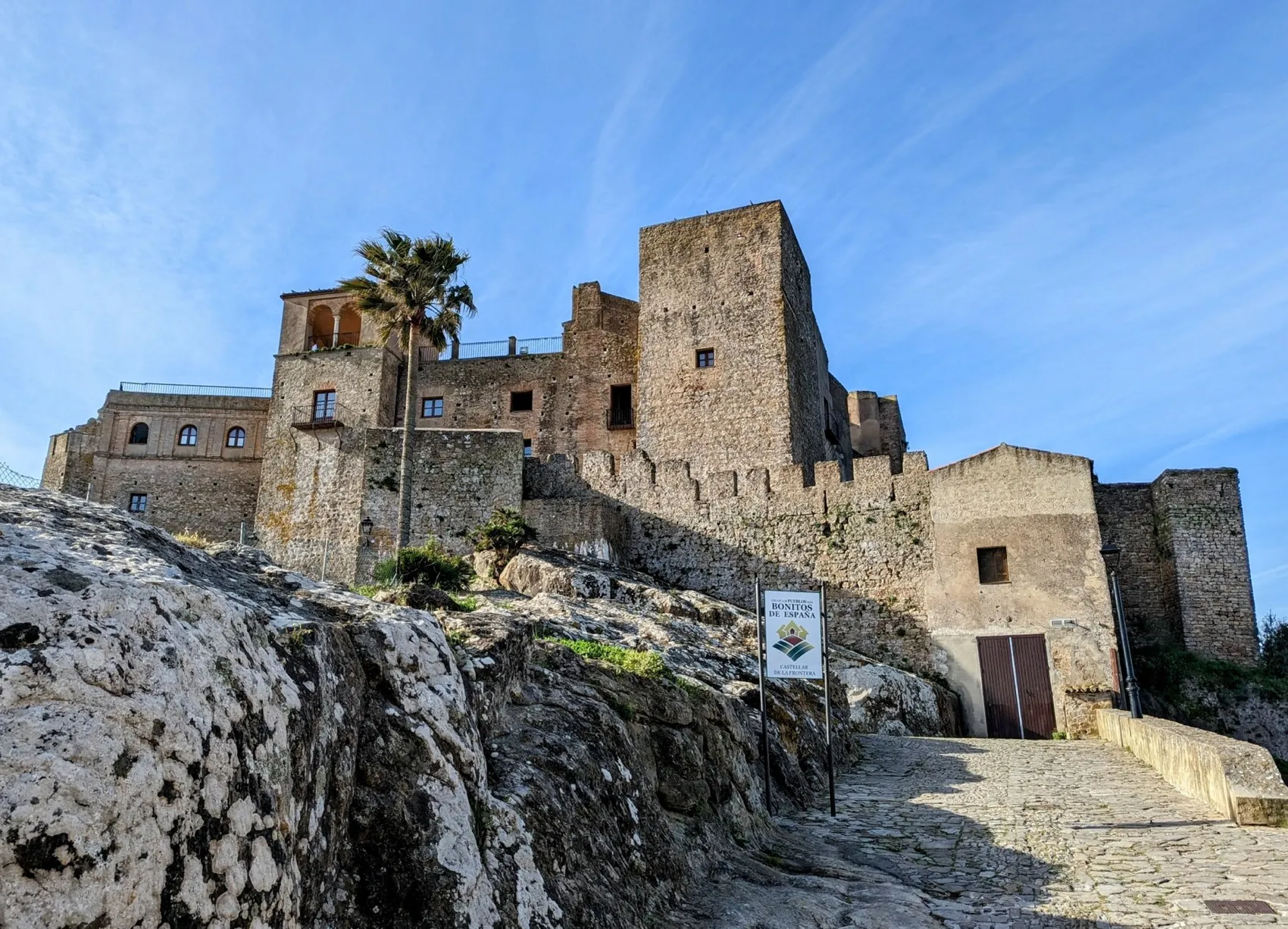
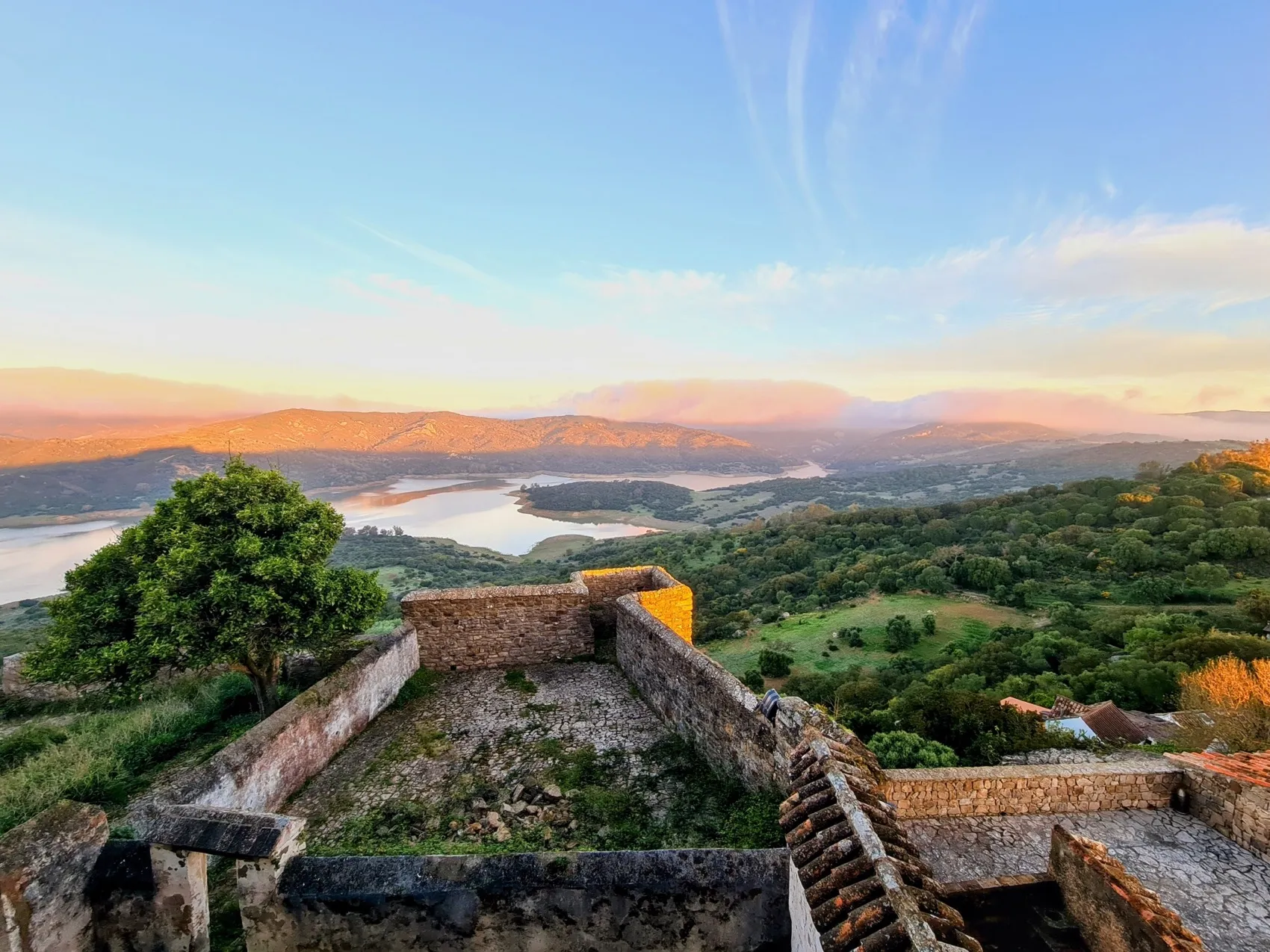
After a night in this ancient castle that has its origins in Arab times, we enjoy breakfast with views over the hills and plains towards the coast. From here it's easy to see why they once chose this strategic location to build this walled city with a castle. From here, we can see three countries: Spain, Gibraltar and Morocco and the Mediterranean Sea. Intruders would soon have been spotted. Now you could also have breakfast at the Triangle-point in Vaals, overlooking three countries, but the fact that we can see Africa from here, and thus see two continents, three countries AND a sea, is quite unique!
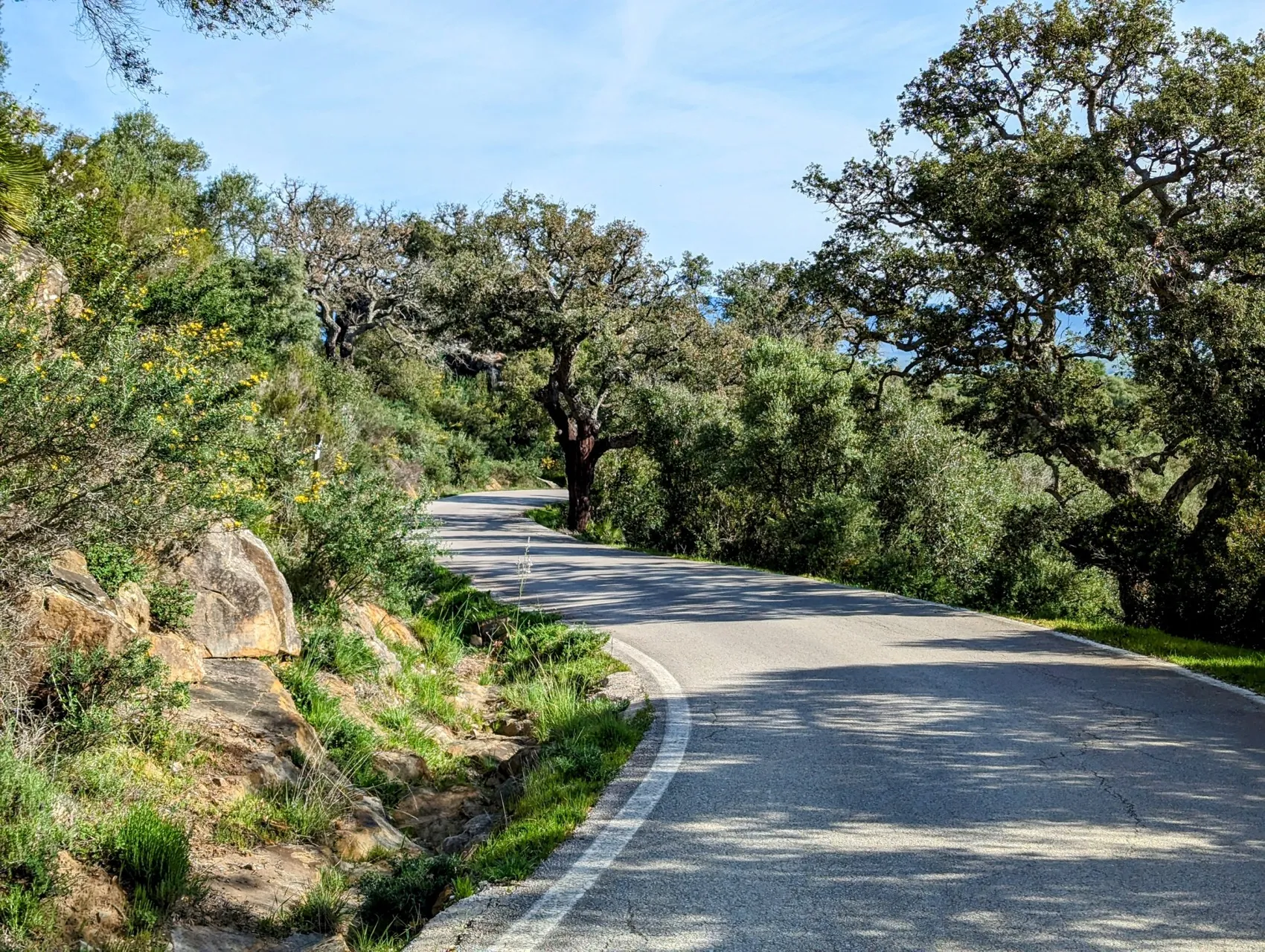
After breakfast we pack our gear and leave the town through the old gate. Today's stage isn't that long at 22 kilometers, and we don't have that many altitude meters. Let's hope it's a bit less on asphalt than yesterday. We start on a small road among typical Mediterranean vegetation. It can be seen that the sea and ocean bring moist air more often, everything is fresh and green around us. But today, this is certainly not the case, the sky is clear blue and it's almost windless. What peace and quiet around us. Having walked for hundreds of kilometers beside the ocean with the sound of the waves and the wind, it's really striking how calm and quiet it is here.
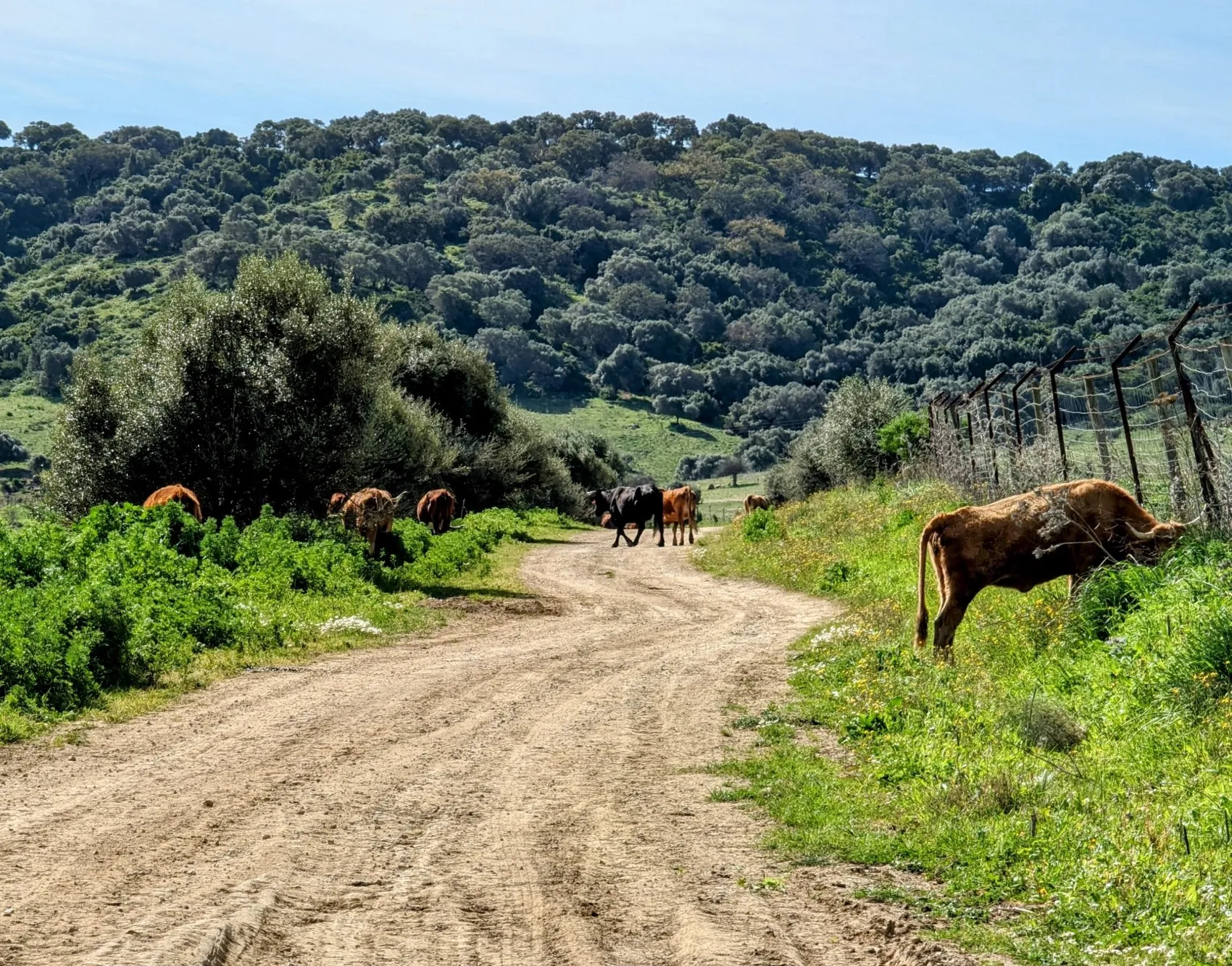
We slowly descend into the valley below us. The asphalt road soon turns into a dirt road through open woods and meadows. Once down, we pass an old farmhouse and go through a gate into a meadow with gorgeous large, dark brown cows. The size and gigantic horns are impressive, but they're calm animals that slowly move aside as we approach. You have nothing to fear, as long as you stay away from the calves, because they can get protective if you come too close.
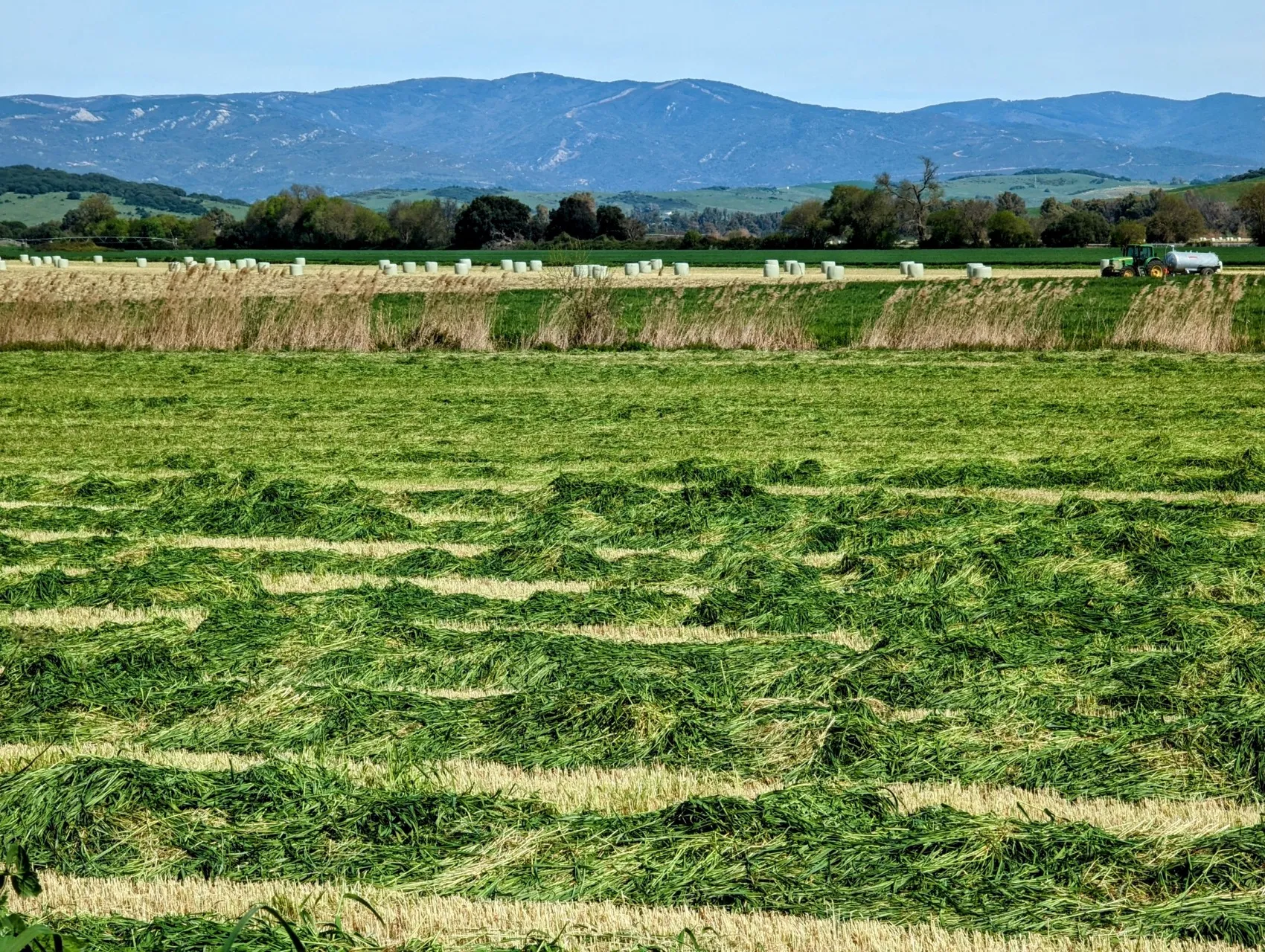
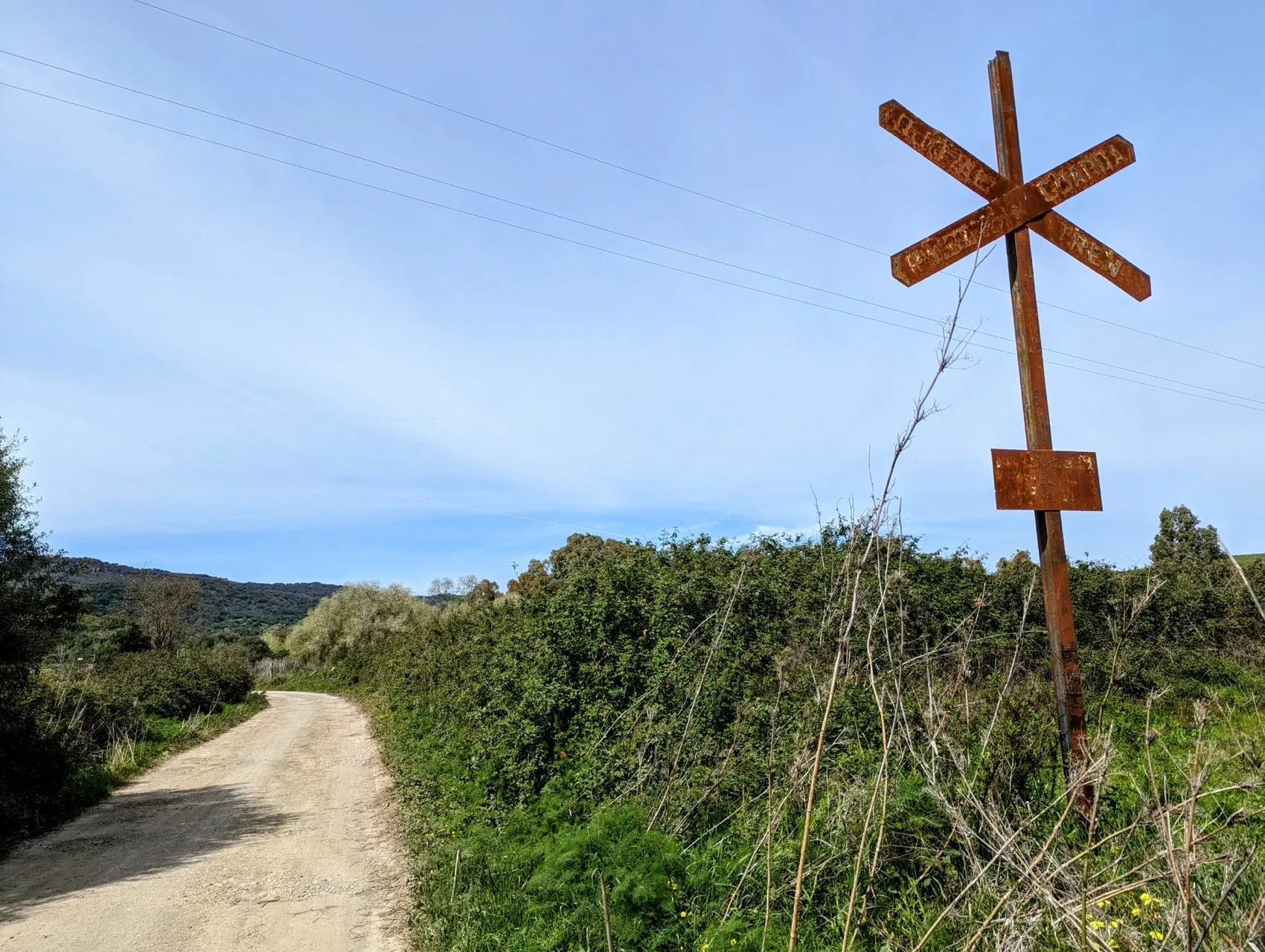
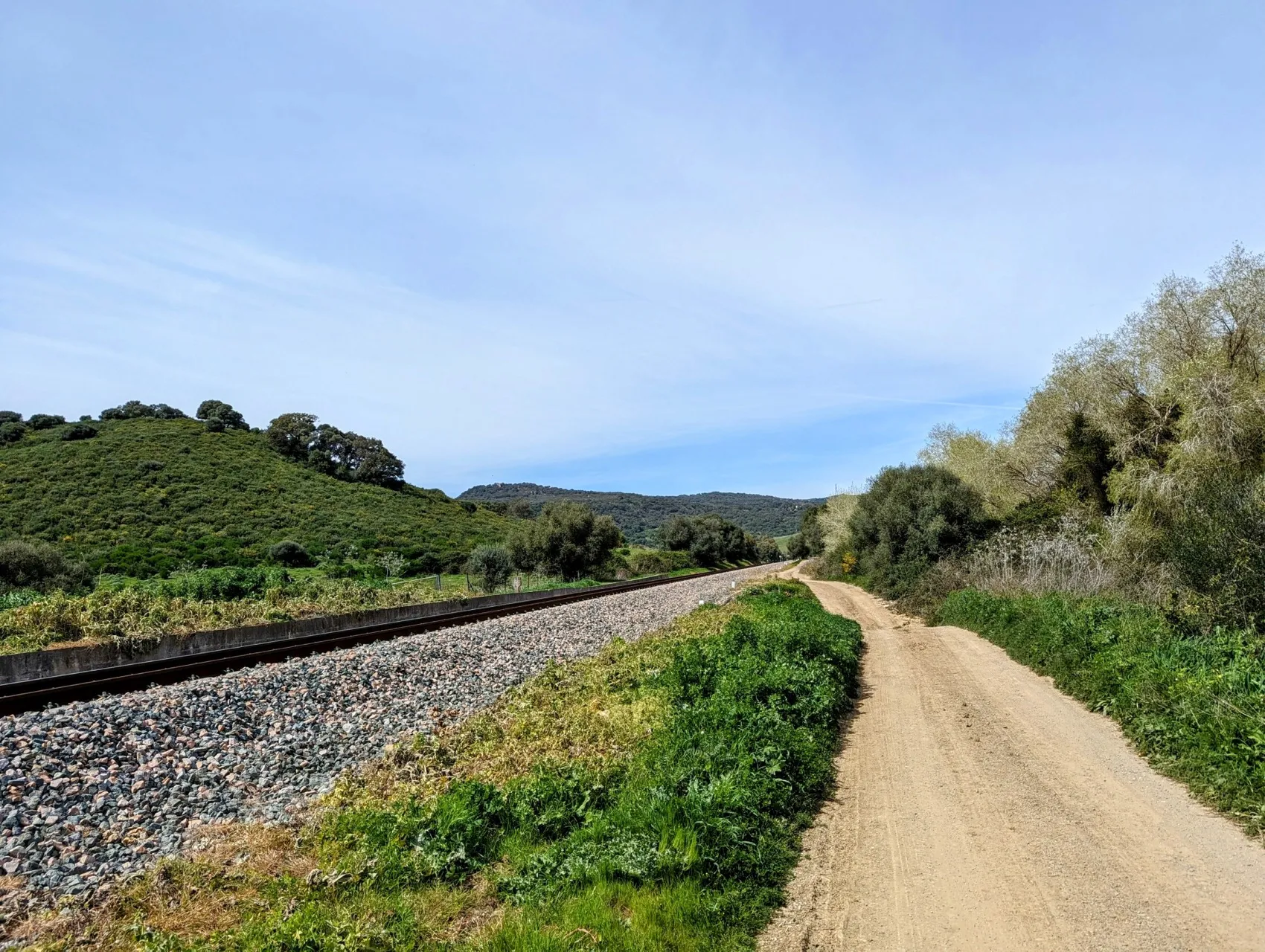
After 7 kilometers, we reach the old railway station of Castillo de Castellar and then turn left onto a path parallel to the railway. Several farmers are working on the land. It's late March, but the grass has already been cut and the fresh grass lies in strips on the field. Big machines are making bales of it. Not for the winter, like in the Netherlands, but for the dry summer season when the grass won't grow. We follow the path along the track for about 11 kilometers through meadows and past forests. We wade through a few shallow streams and pass a single finca. We see a small snake crawling away, a lot of lizards and giant grasshoppers that look like small birds when they fly by. It's lovely walking like this through the greenery. After 18 kilometers, we leave the path along the railway and head towards Jimena de la Frontera, the village where our campsite is.
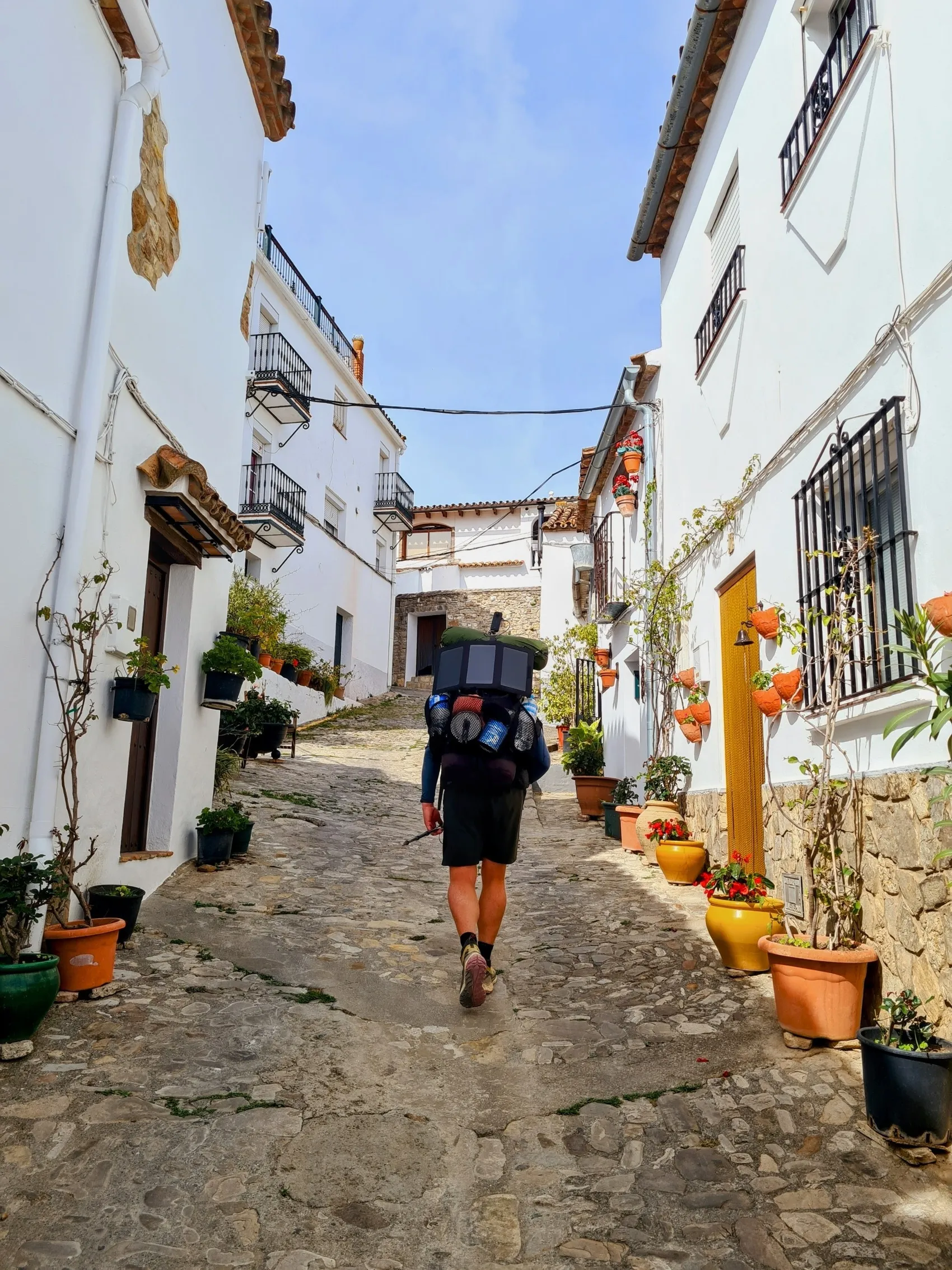
Again, this is a very old village with its origins predating Arab times. Being so close to the Strait of Gibraltar and protected by the hills behind it, the village was already an economic centre in Roman times and coins were minted in the town with ancient Mediterranean characters: the Phoenician alphabet. The oldest signs of habitation even go back to the Stone Age. Rock paintings have been found in many of the caves in the area. It's another place with a lot of history, and it also looks stunning with its white houses and castle. We enter the town at the bottom of the hill and all the meters we needed to climb in our stage today, are in front of us. We zigzag steeply uphill through narrow streets. The people who live here must be very fit, because some parts are really steep! Once at the top, we are soon back in the fields. It's only a short distance to the campsite where we will stay for a few days before making the last 3 stages to Ronda through a large nature reserve: Los Alcornocales Natural Park. So we have time to go and see this town a bit more closely.
1 reactie