After a long night, we leave El Cubo de Tierra del Vino this morning. With 322 inhabitants, it's a small village, but it has existed since Roman times. Being located along the Via de la Plata trade route exactly halfway between Salamanca and Zamora, it has always been a resting place for travellers. And as its name suggests, it was the place for grapes and wine for a long time, until in the 19th century phylloxera devastated everything and the inhabitants had to switch to other types of agriculture. Occasionally we still walk past a vineyard, but they're clearly no longer in the large numbers they once were. Like most villages along the route, population numbers have more than halved since the 1960s, leaving many houses empty. But the nicest ones are all inhabited, so even though prices of prices are still very low here, it doesn't really invite to settle down ;-)
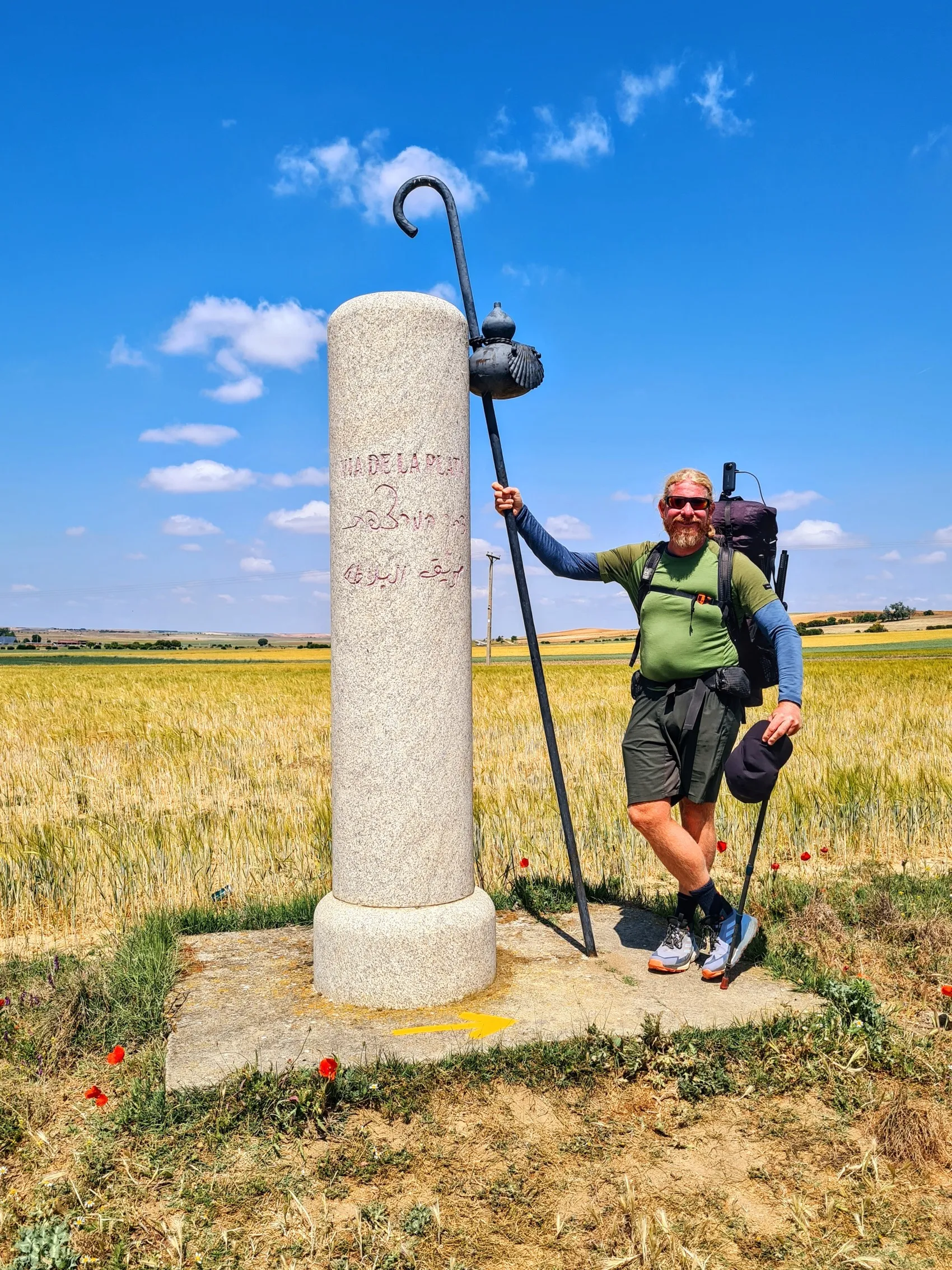
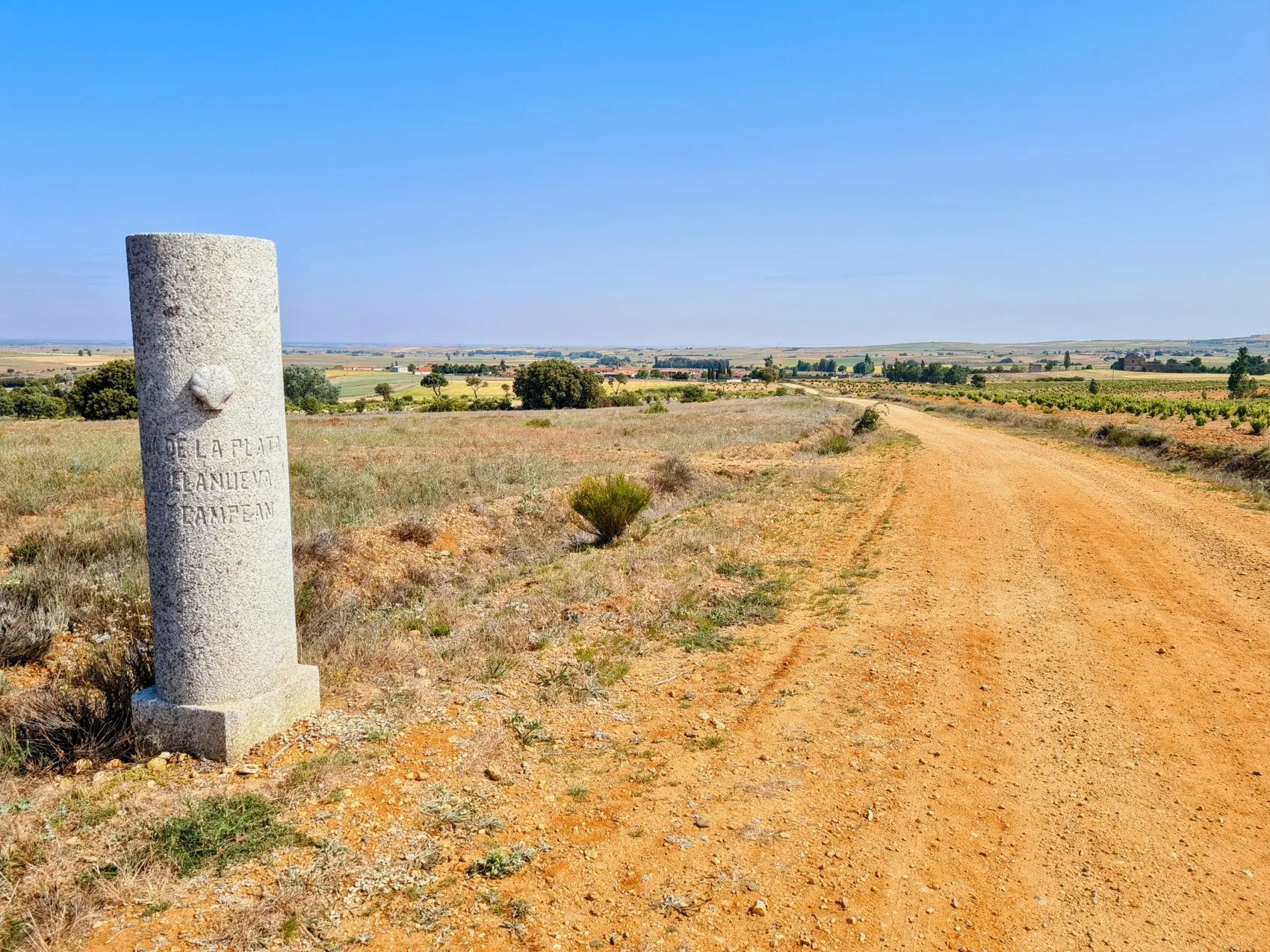
This morning we start the last stage of the Via de la Plata. This route continues north for a bit and then turns west towards Santiago de Compostella. We, however, head east at Zamora. So today we follow the yellow arrows, shells and Roman milestones one last time. The route is similar to yesterday's stage, but runs a lot further away from the motorway.
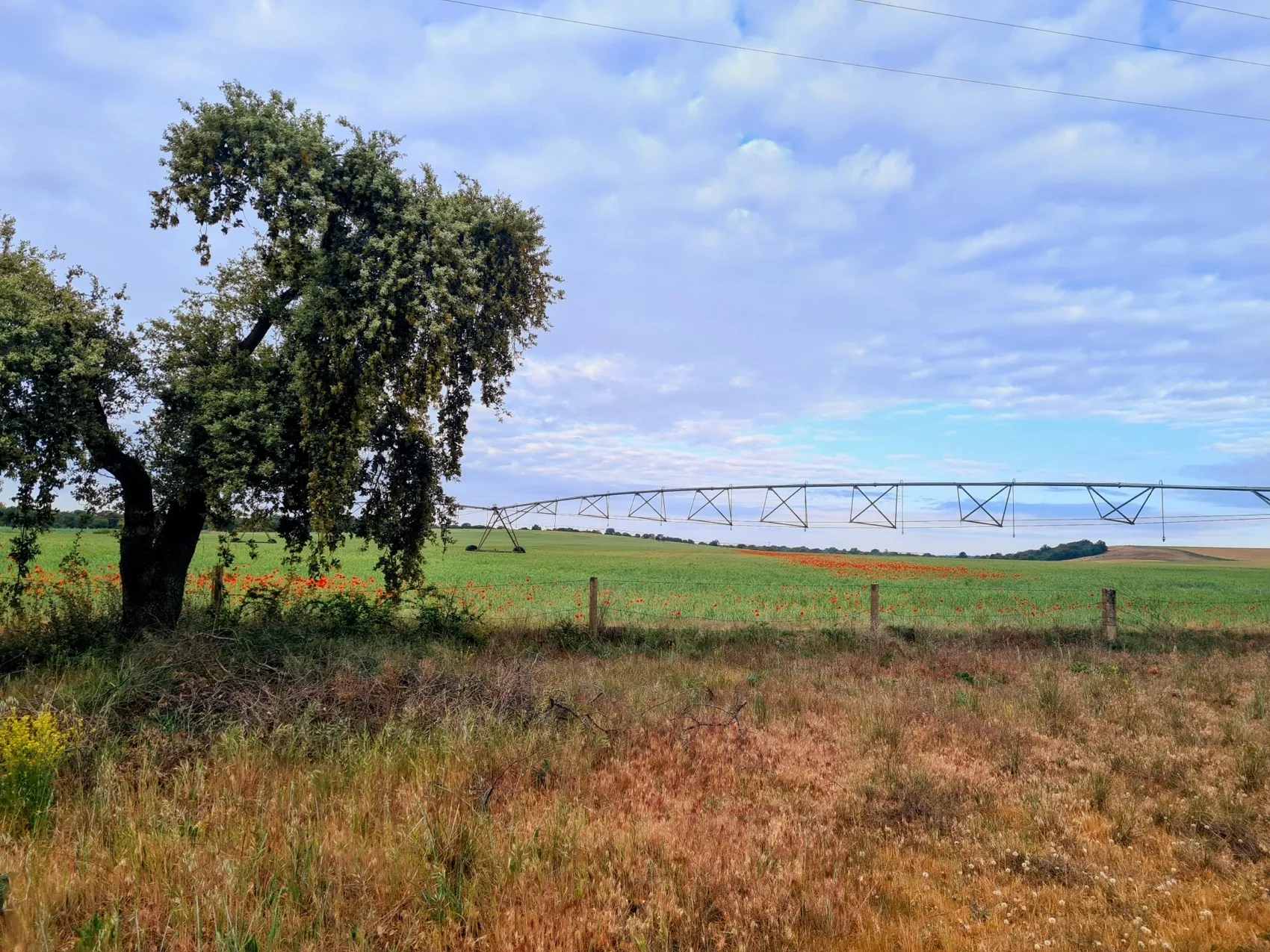
We walk from the village back onto a dirt road and for a while we follow an abandoned railway line, the Plasencia-Astorga line that has been retired since the 1980s. When preparing the route on the sattelite map, we saw large, perfectly round green fields in this area and wondered what that would be. Here, from the ground, there is actually little of it to be seen, until we discover gigantic spraying plants on the fields, which can spin around from a single point. They are so long that they create a large circular field, with hundreds of meters in diameter. Now we also notice that the crops underneath are sown in a circle. Farmers must be inventive, in a climate like this. The road rises slightly towards a somewhat hilly area leading towards the valley of the Douro river, on which Zamora lies. Along the way, we spot a ladder snake on the path. A small one this time, about 30 centimeters long. Snakes remain fascinating animals to behold. A little further on, two bright yellow and black birds fly past in front of us. They are orioles, songbirds that also occur in the Netherlands, but are rarely seen. Unfortunately, we did not hear them sing 'dudeljoo', which would have made the day, but they are beautiful to see.
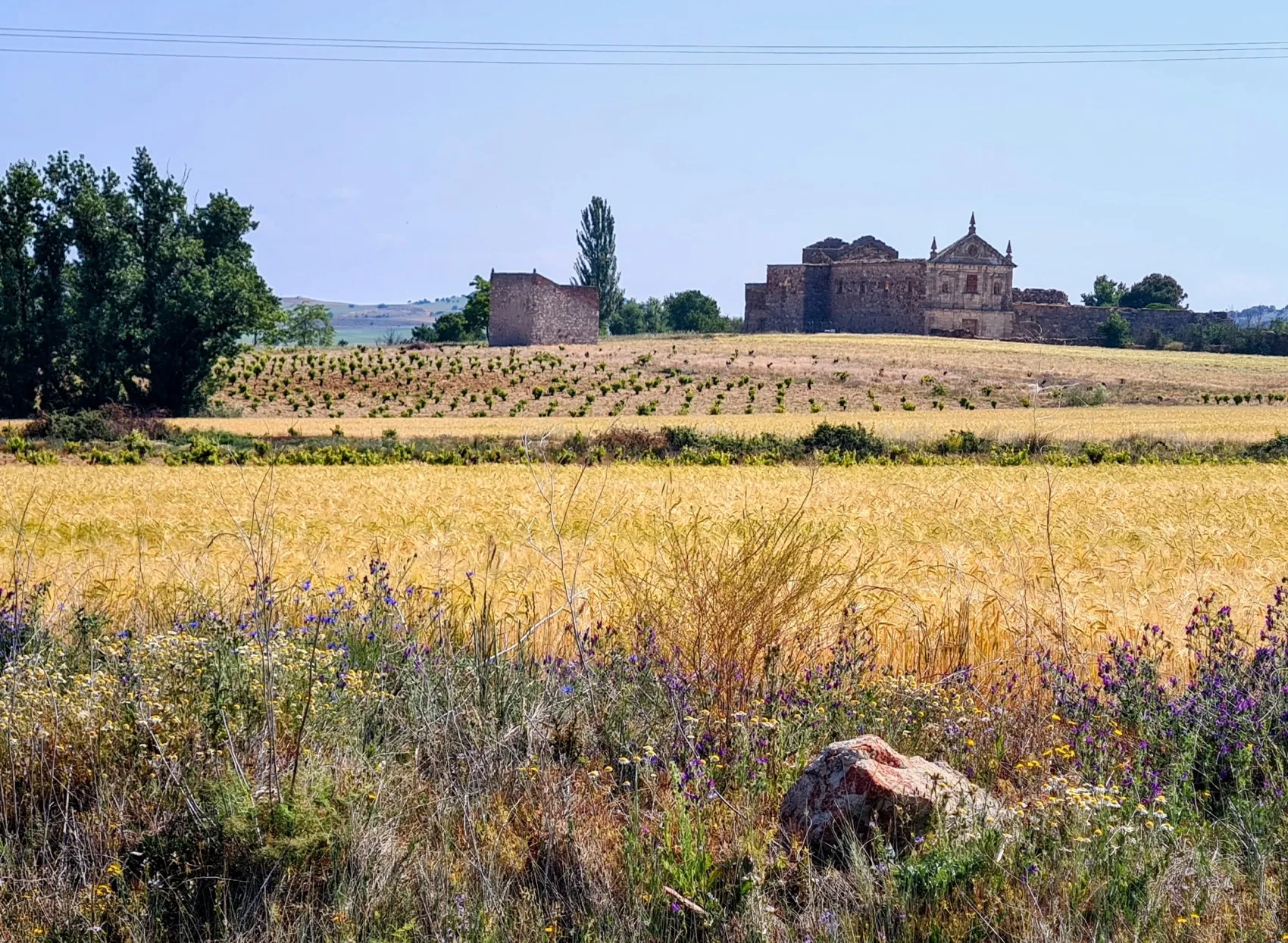
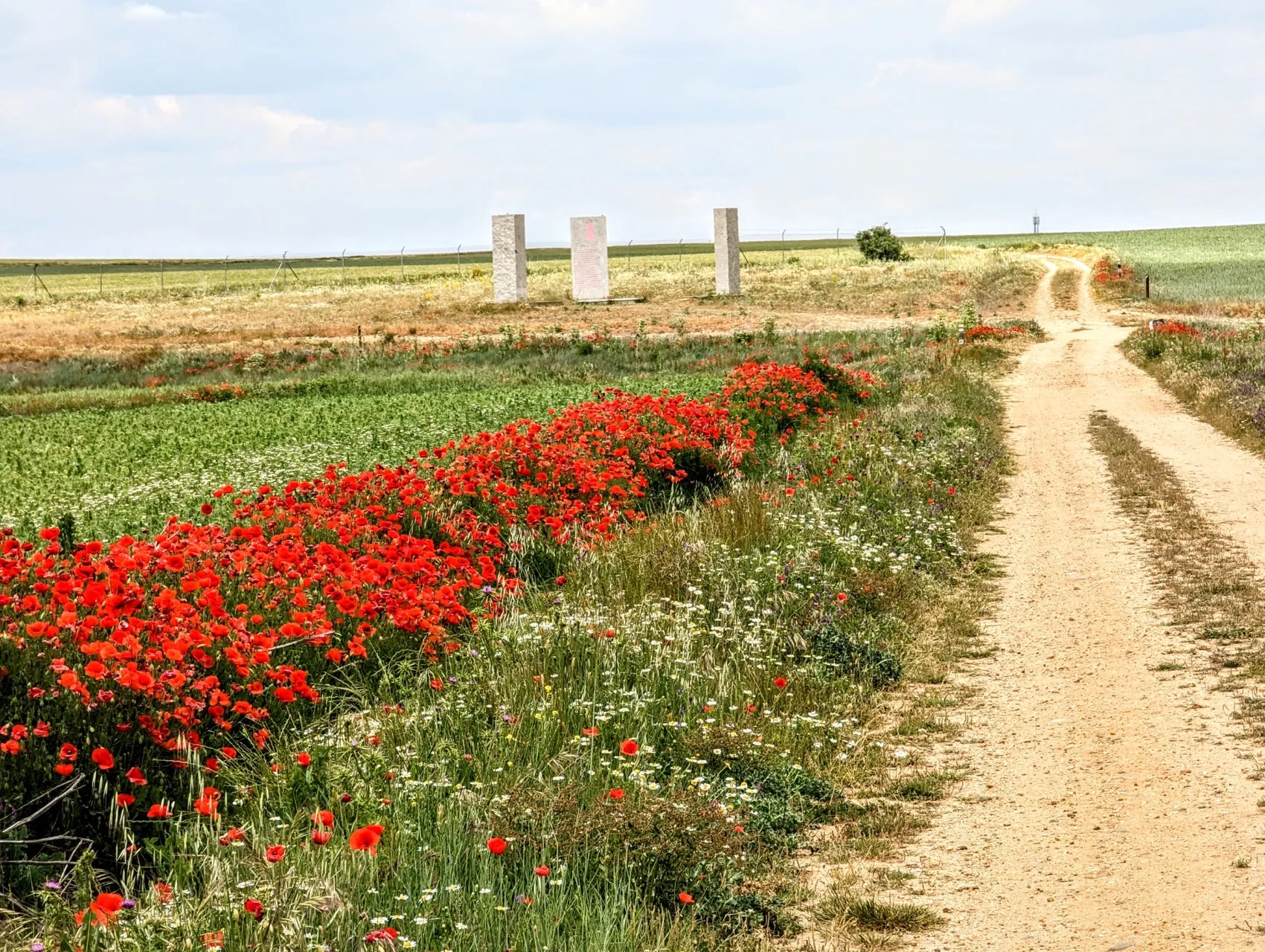
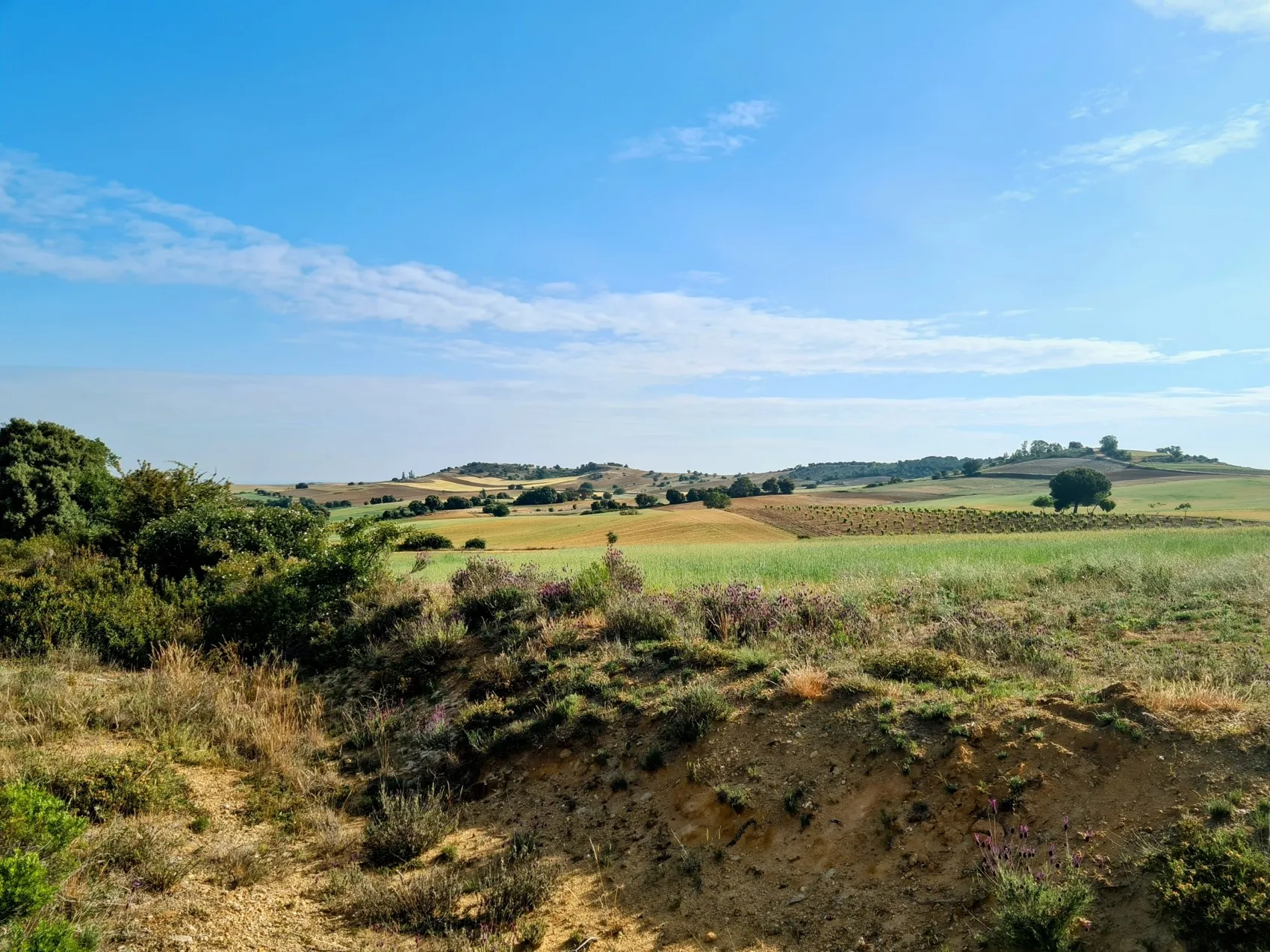
Near the hills (you can hardly see them on the map, but the landscape is so flat that these really do look like hills) the landscape becomes more woody with coniferous forests, large lavender bushes and wild rose bushes, the hedgehog anthem. From above, Zamora can already be seen in the distance, even though we still have some 25 kilometers to walk. Meanwhile, the kilometers seem to be getting longer and the backpack feels heavier. Last night's fatigue appears to have been a bit more than a long day after all. Even though it's probably a bad cold, when you suffer from something, hiking is tough. Whereas normally we chatter away and are amazed by plants, animals and landscapes that are new to us each day, today it takes significantly more energy and I more often only see the pebbles on the path than anything else. Never before have I checked the navigation so many times to see if the stage is making any progress, but it just moves forward slowly. After 13 kilometers, we take a break under oak trees, which gives us some energy. The tour continues past meadows, through a landscape that almost looks like Limburg. We compare it to the plain behind our former home between Nuth, Spaubeek and Schimmert, where we once saw the hen harrier flying. And to our surprise, a hen harrier also skims across the field here. Whether it's the blue or the grey is hard to say, but it's quite a coincidence. Perhaps the bird also saw similarities in the landscape.... In the fields of wheat, there are more ofte more poppies than grain, at least they stand out a lot more with their deep red colour. The floral display today is overwhelming again! A little further on, we see an old monastery in the field. Nowadays it's a derelict monastery from 1406 that had its heyday in the 16th and 17th centuries, but was abandoned after the 'Desamortización de Mendizábal'. Briefly explained, in the 19th century Spain had a large debt with the people, who financed the Carlist wars (3 civil wars from 1833 to 1876) through debt securities. An economist and politician, Mendizábal, introduced a system that expropriated and auctioned land and property. Land came from communes, as well as from the Catholic Church and other religious groups. Monasteries were closed and their properties nationalised. Land, buildings, works of art and riches of the churches were sold. The proceeds were used to pay off debts; it was even possible to pay with debt securities. As an added benefit for the Spanish state, this greatly reduced the church's political influence. A total of 2 million plots were sold, which of course did not end up with the people who needed them most, but with the people who could pay for them. This is why to this day there are still so many large landowners, especially in the south, where we more often walked for hours across the gigantic estates. Part of the monastery's ruins have found their way into the nearby village we crossed, Villanueva de Campeán. Walls and pieces of roof have been used as building materials here.
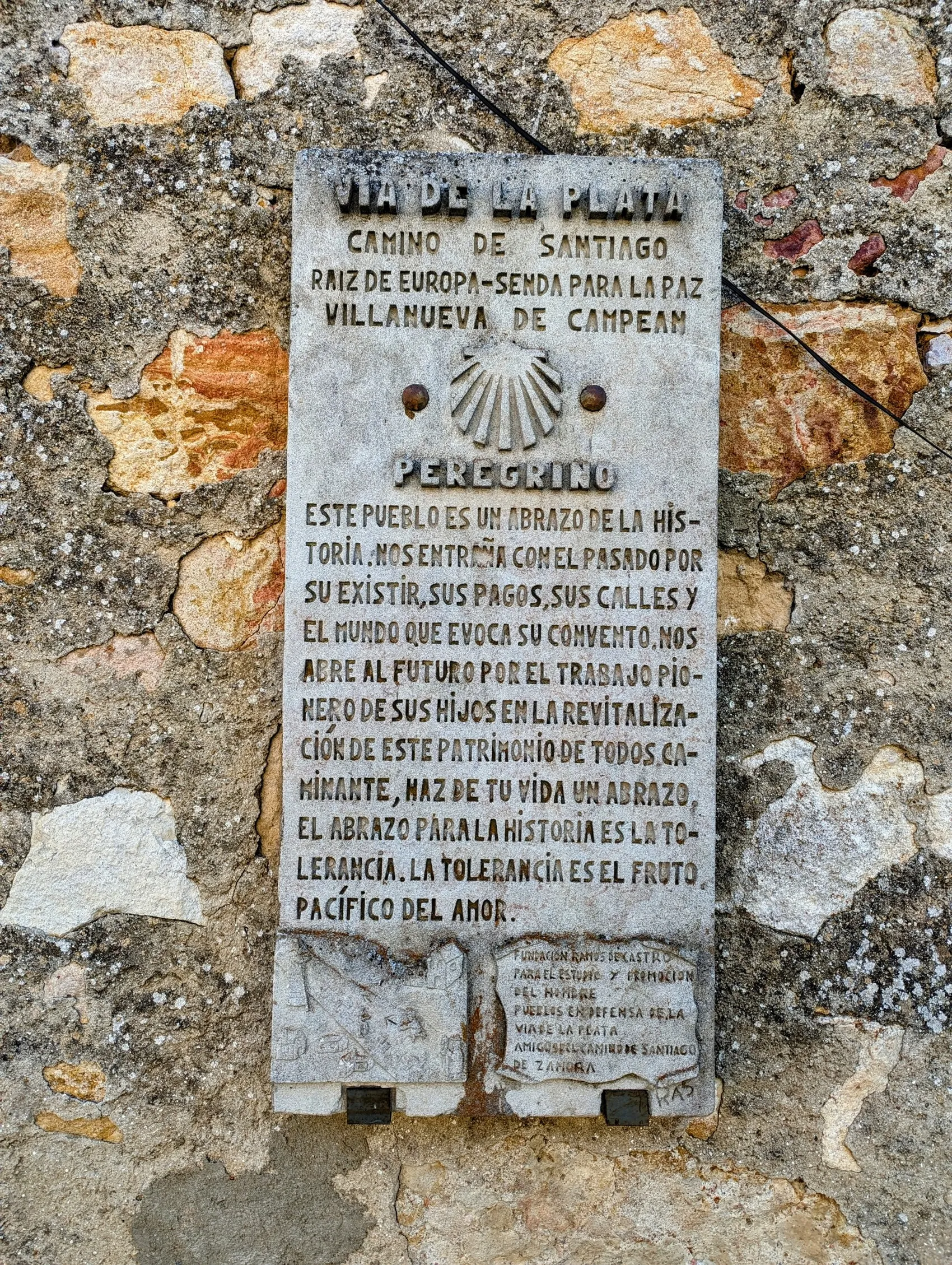
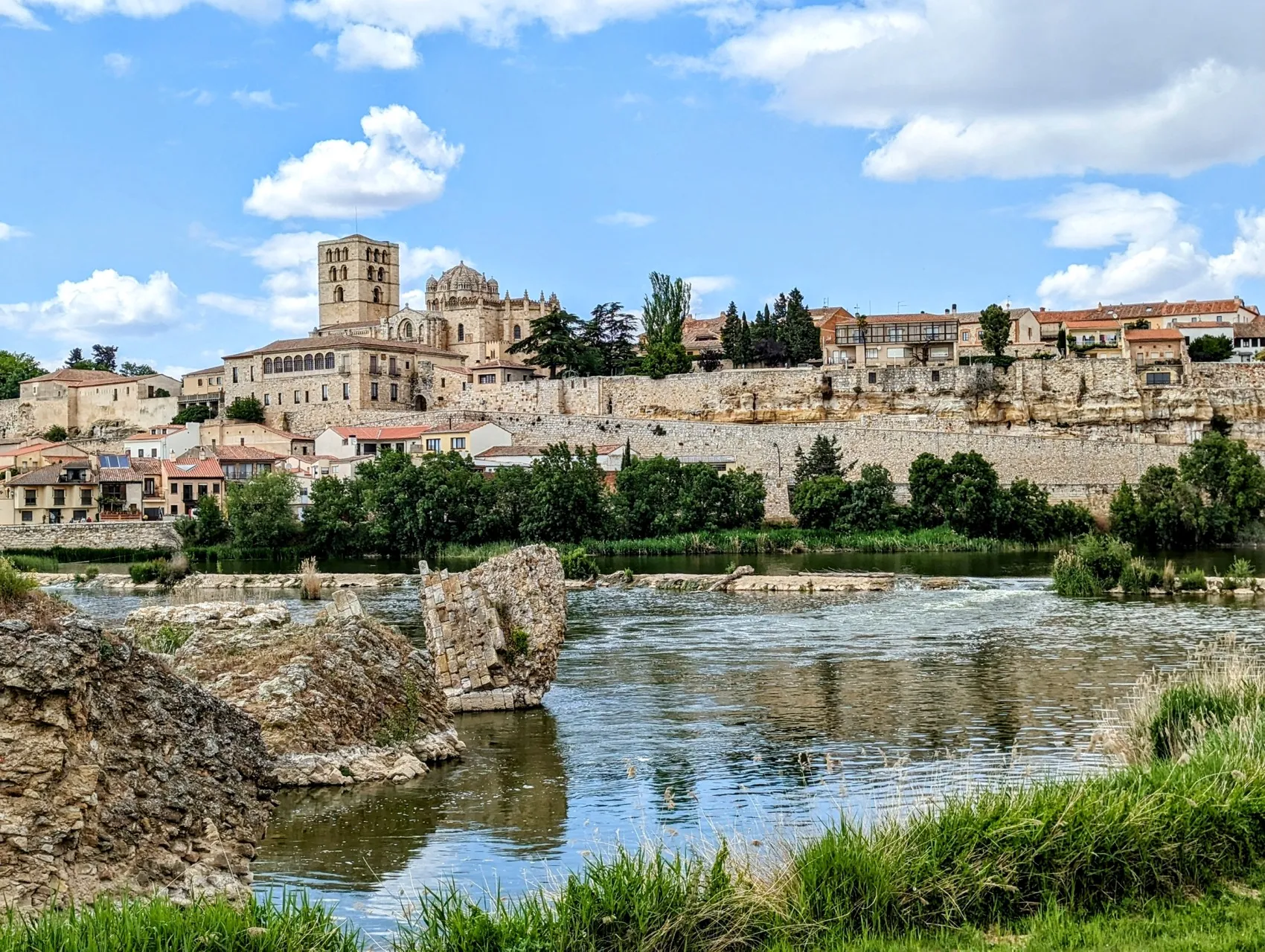
The route descends quietly further along well-worn paths and between fields of 'poppyfilled' grain. After about 23 kilometers, we take another extended break on the verge and get ready for the last 10 kilometers to Zamora. Slowly but surely, we walk more and more into built-up areas. Zamora clearly does not have as tight a rural/urban boundary as previous cities. We walk past businesses, houses and neighbourhoods for some time before we reach the old bridge over the Douro. The last few kilometers are a bit on the gums anyway, so we are glad to have reached the city. Our apartment is on the other side of the centre, so we already get a 'sneak preview' of the city centre. Zamora is a lot smaller than Salamanca, but also looks beautiful. Lots of beautifully maintained old buildings, with newer ones in between. We made it, the 33 kilometers of today. I'm afraid it will be a few days of sicking out before we continue our journey eastwards. But not before visiting the city, of course, as we are very curious what Zamora has to offer.
Via de la Plata, thank you for the beautiful kilometers we have had the pleasure of following you! From Seville to Zamora, 592 kilometers, over a route that has been travelled this way for at least 2,000 years. We saw the same cities, albeit in a different size, that travellers have been seeing for 2,000 years. The same bridges, the same hills and mountains and even the same boulders... The Romans knew what they were doing!