Well, that was the first time this trip, and the previous one, that we have been felled by the flu for several days, a week even. Being outside and walking a lot is super healthy, but even then you can run into the wrong virus at the wrong time apparently. After a few days' rest, we are pretty fit again and ready to continue our way east. We had left two days earlier towards a place just outside Zamora, so we could take it easy on the first hiking day. From the nearly 40-kilometer stage from Zamora to Toro we would then, just like the long stage from Salamanca to Cubo de Vino, cut a few kilometres off by spending the night 7 kilometers outside Zamora and cover the remaining distance the following day. But it turned out there was a problem with the booking and the hotel was fully booked. We had hoped to easily build the hiking up this way, but alas, we were able to turn around again and stay in Zamora after all. That did give us an extra day of rest and the opportunity to take a good look at the city, which we didn't really get to do last week. Now we stay in the middle of the city centre, overlooking Plaza Mayor and the beautiful San Juan church. Zamora is a city full of antiquities, where just about every ruler of the past has left their mark and magnificent structures. The river Douro, or the Duero as the Spanish call it, on which the city lies got its name from the Celts. The Celtic 'dour' means water.
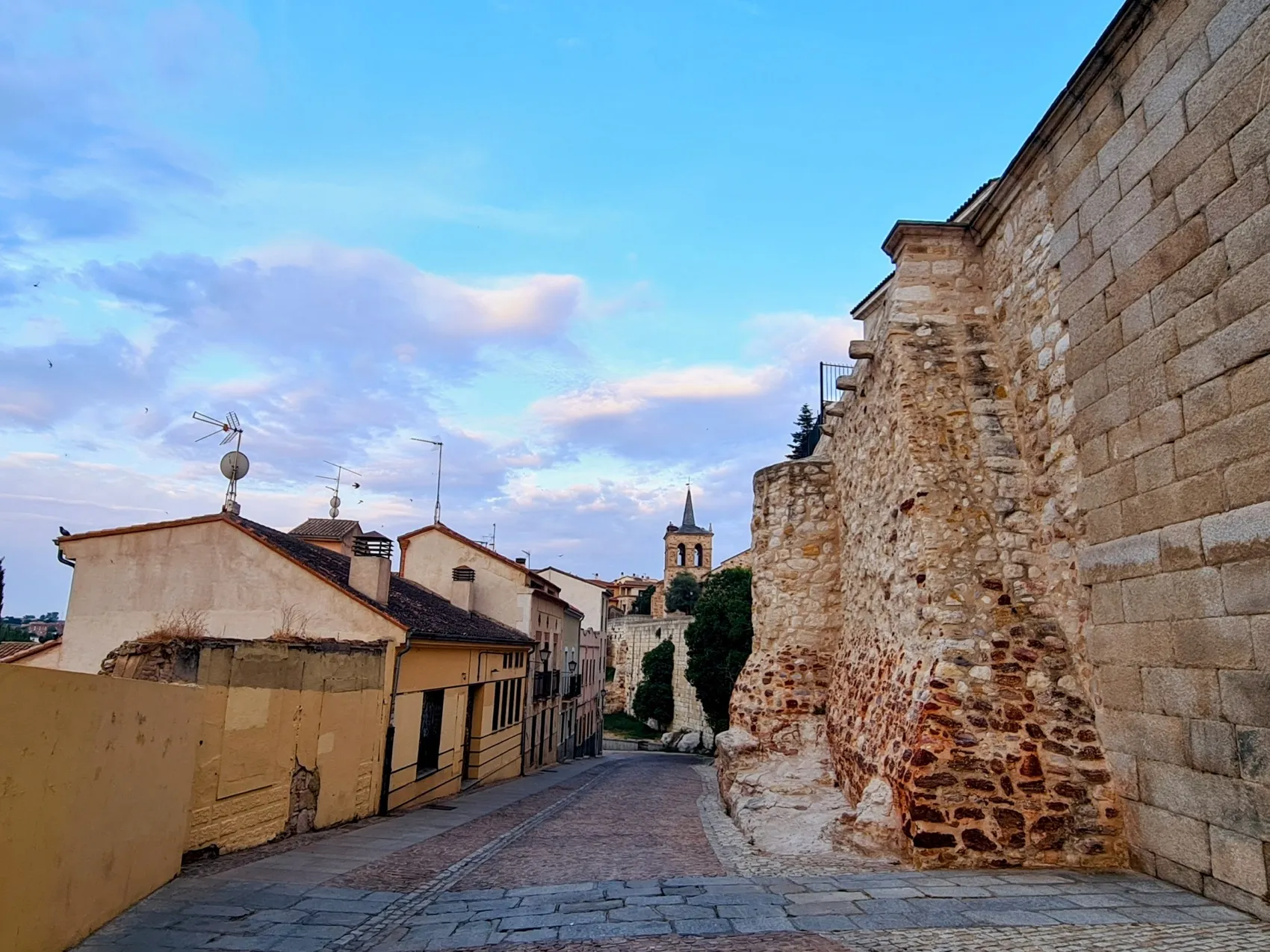
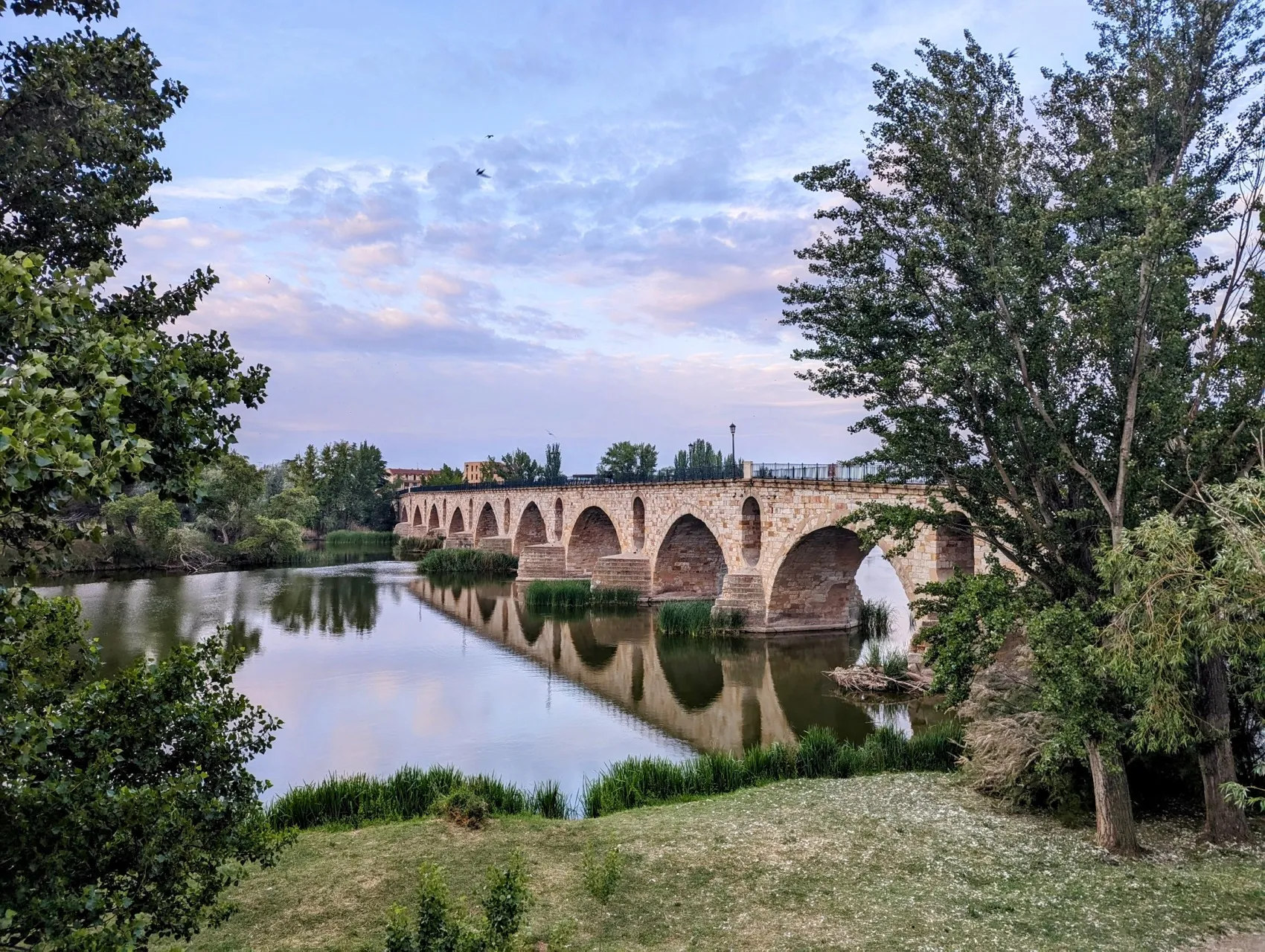
The Romans left the old bridge and city walls, which continue to Plaza Mayor. There the newer part with more modern buildings begins. The Moors built a large castle that can now be admired as a ruin, near the big cathedral. And old mills that still stand at the bottom of the city walls in the river. In turn, the Christians built no less than 22 churches in this town. It's a town with a long history of being caught between two fires. In the Middle Ages, it sat between Christian kingdoms to the north and Moorish territories to the south. At the time, this made for rich trade and therefore economic growth. During the Spanish civil war from 1936 to 1939, the city was less fortunate. Then it was situated between the republican and nationalist areas, making it a target for government forces and rebels led by Francisco Franco. The city suffered badly from bombing and shelling that destroyed many buildings. We had noticed on our way through the city that there are more newer buildings in the streets than in, say, Salamanca. And this is a major cause of it. Much has been repaired though thankfully, and this city is another gem!
The extra day's rest also allowed us to take a good look at the route and find a shorter one. Of the 40 kilometers, we were able to make 34, which hopefully can be done in one day, because there is no overnight accommodation until Toro. Well, to be completely transparent: there is a wellness spa resort after 20 kilometers where you can put your legs under a sheet for over €200 a night... Tempting, but we have to watch the budget a bit. Anyway, we leave extra early to do most of the kilometers in the morning. We'll try to pretty much divide the stage into 15 kilometers, break, 11 kilometers, break and then the last 8, but we'll have to see how our energy will be today. Fever is a drain on your fitness anyway.
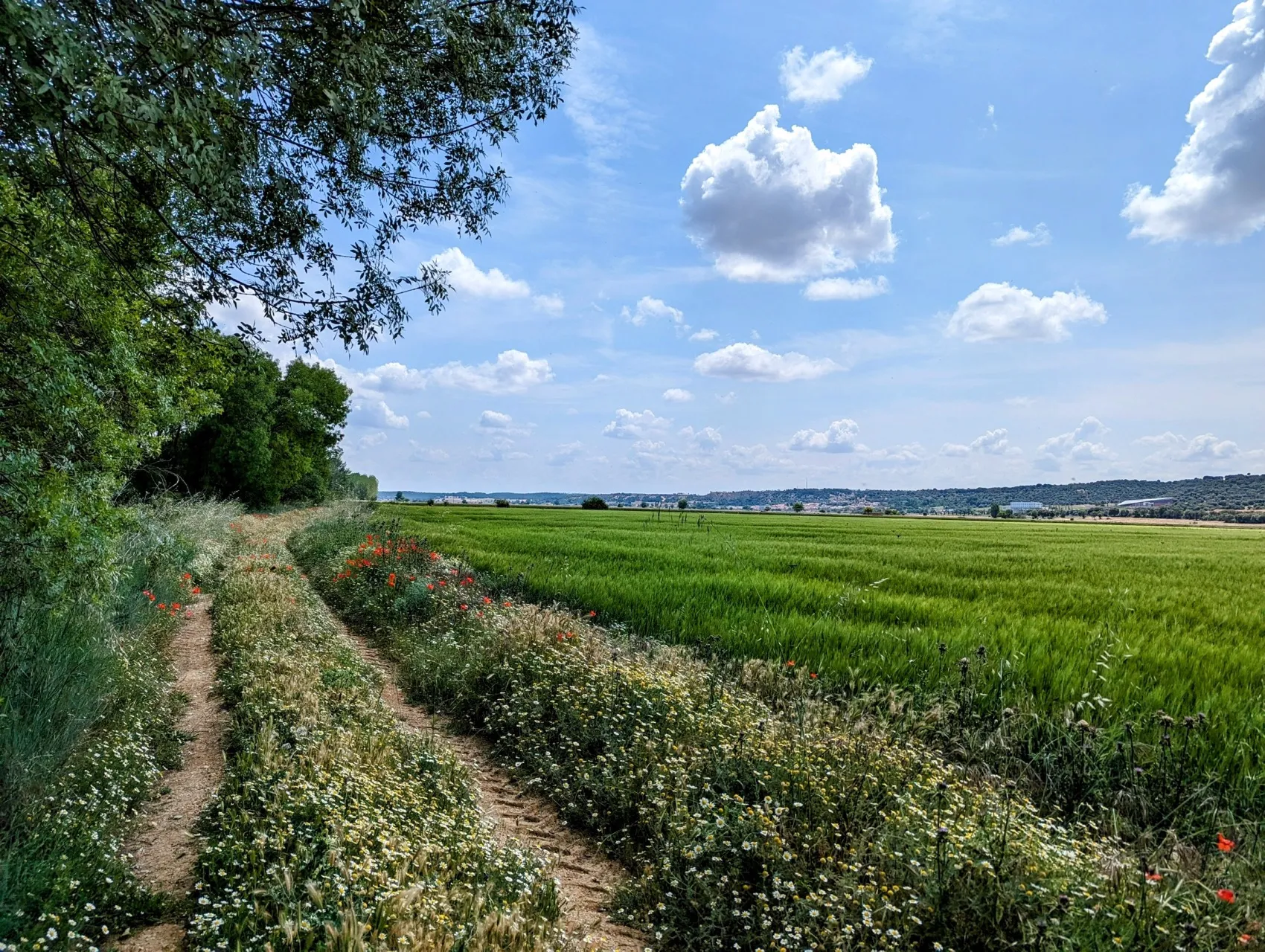
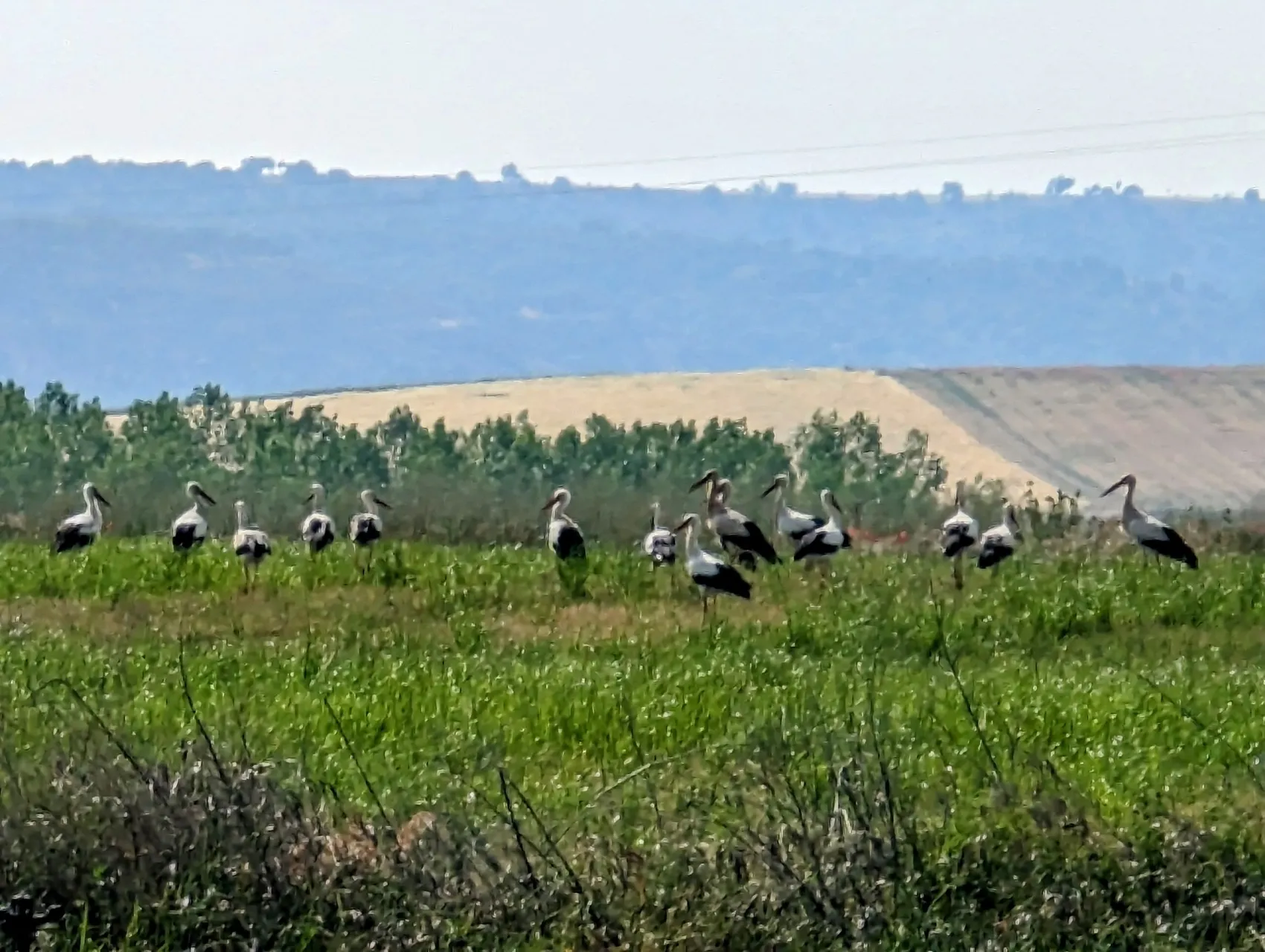
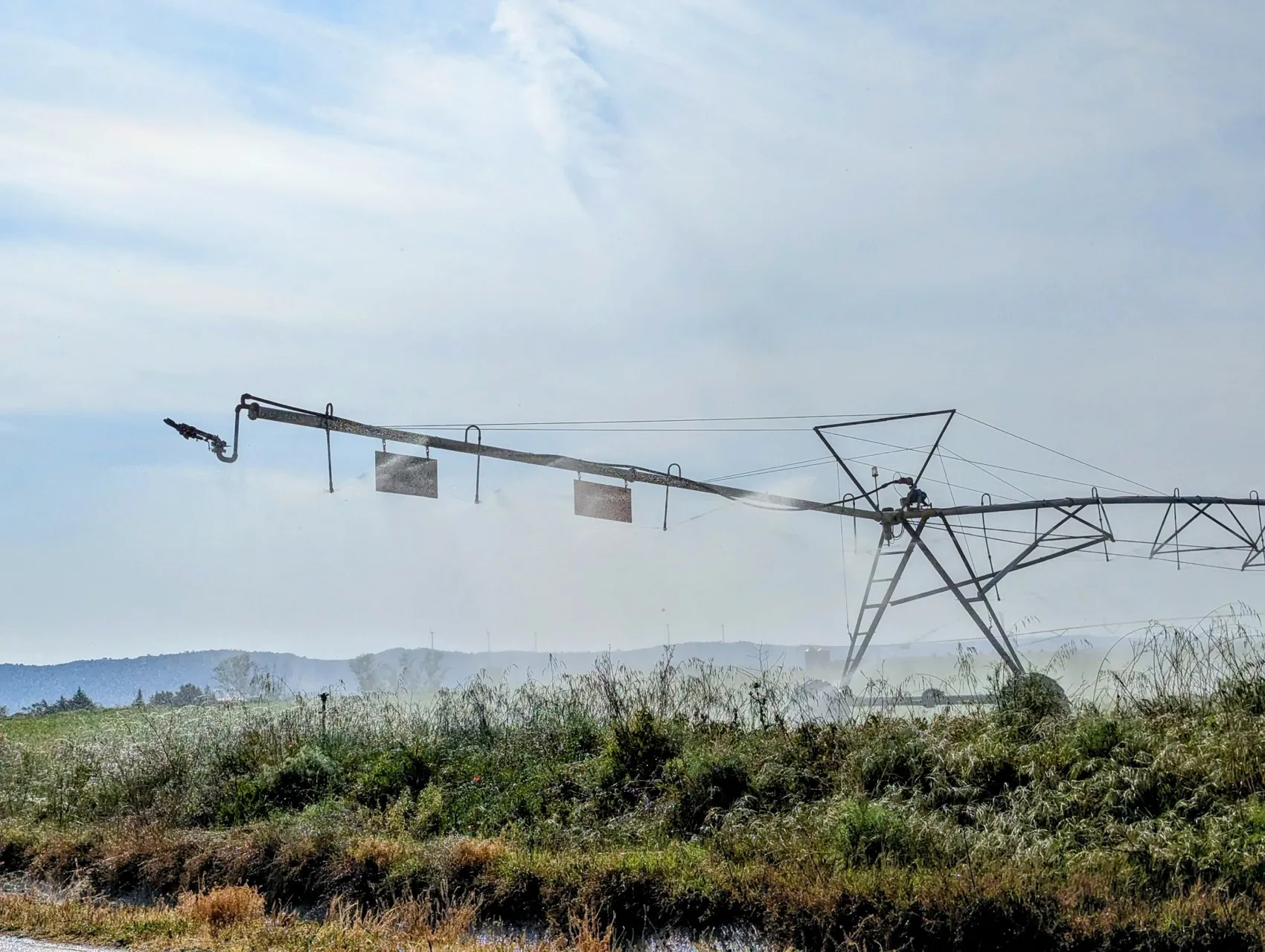
We walk across Plaza Mayor, descend through the narrow streets to the old bridge and cross the river. From here we have another magnificent view of the city and the windmills in the morning sun. We turn left on the other side towards the east and will continue to follow this river valley today. Unfortunately for us, there are few paths here just outside the city, so we follow an asphalt road. At first, it's a bit busier with oncoming traffic heading towards Zamora, but soon the road is quiet and actually runs smoothly. After about 7 kilometers we pass the first village (the one with the fully booked hotel), where two attentive locals kindly but rather urgently point out to us that the Santiago route runs in the opposite direction. Hard to explain in our poor Spanish that we are not following it anymore, but super friendly of course. We continue walking among meadows. Beautifully green, not the vast yellow meadows as earlier on the trek, but now smaller plots, with a different crop on each. Of course mostly cereals, but also more often sunflowers, onions, potatoes and corn. Large areas of fields are sprayed with gigantic sprinkler systems. This sometimes results in dozens of storks scurrying around. At our break, just after 15 kilometers, a large group flies over. What impressive birds...
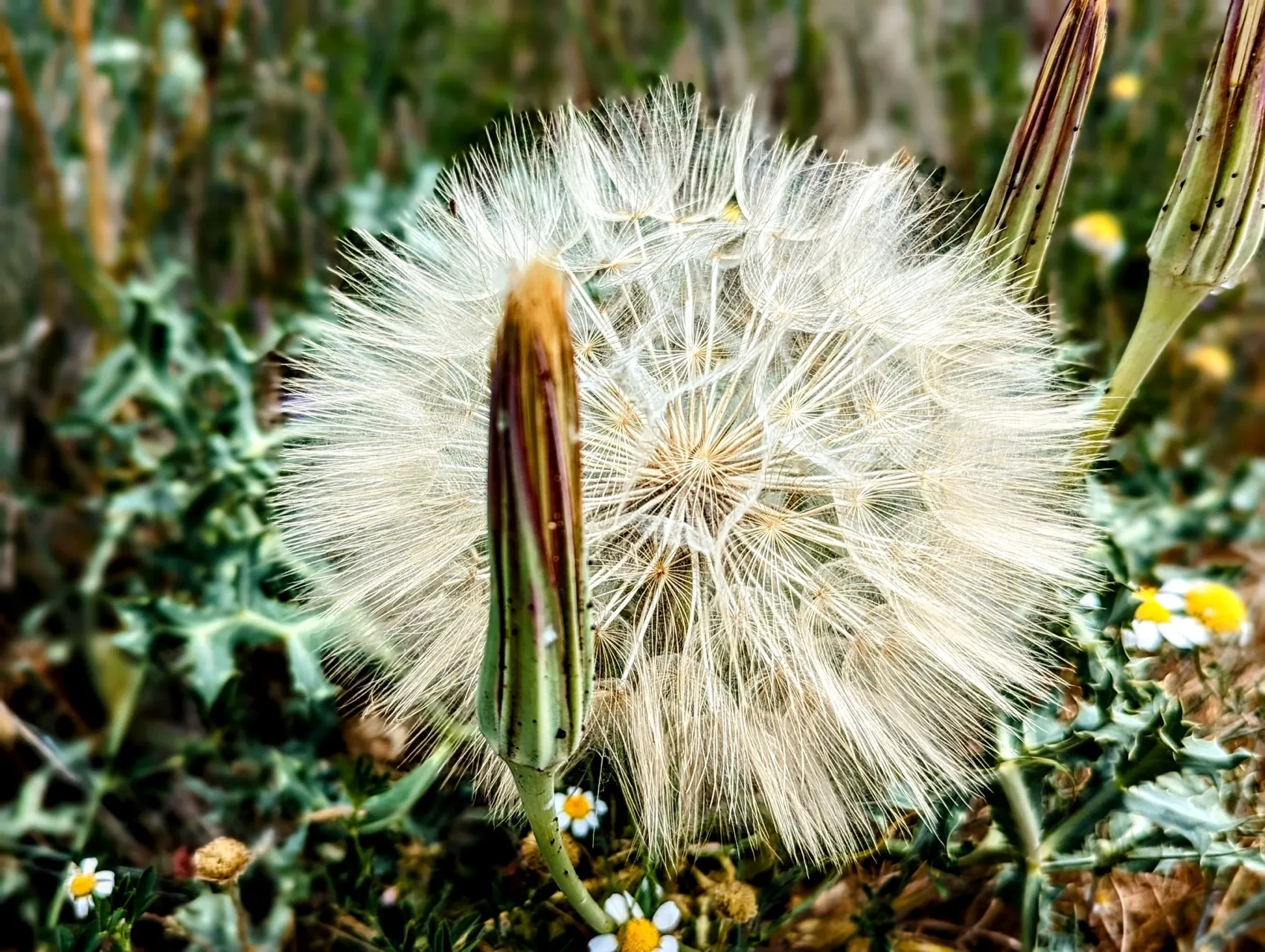
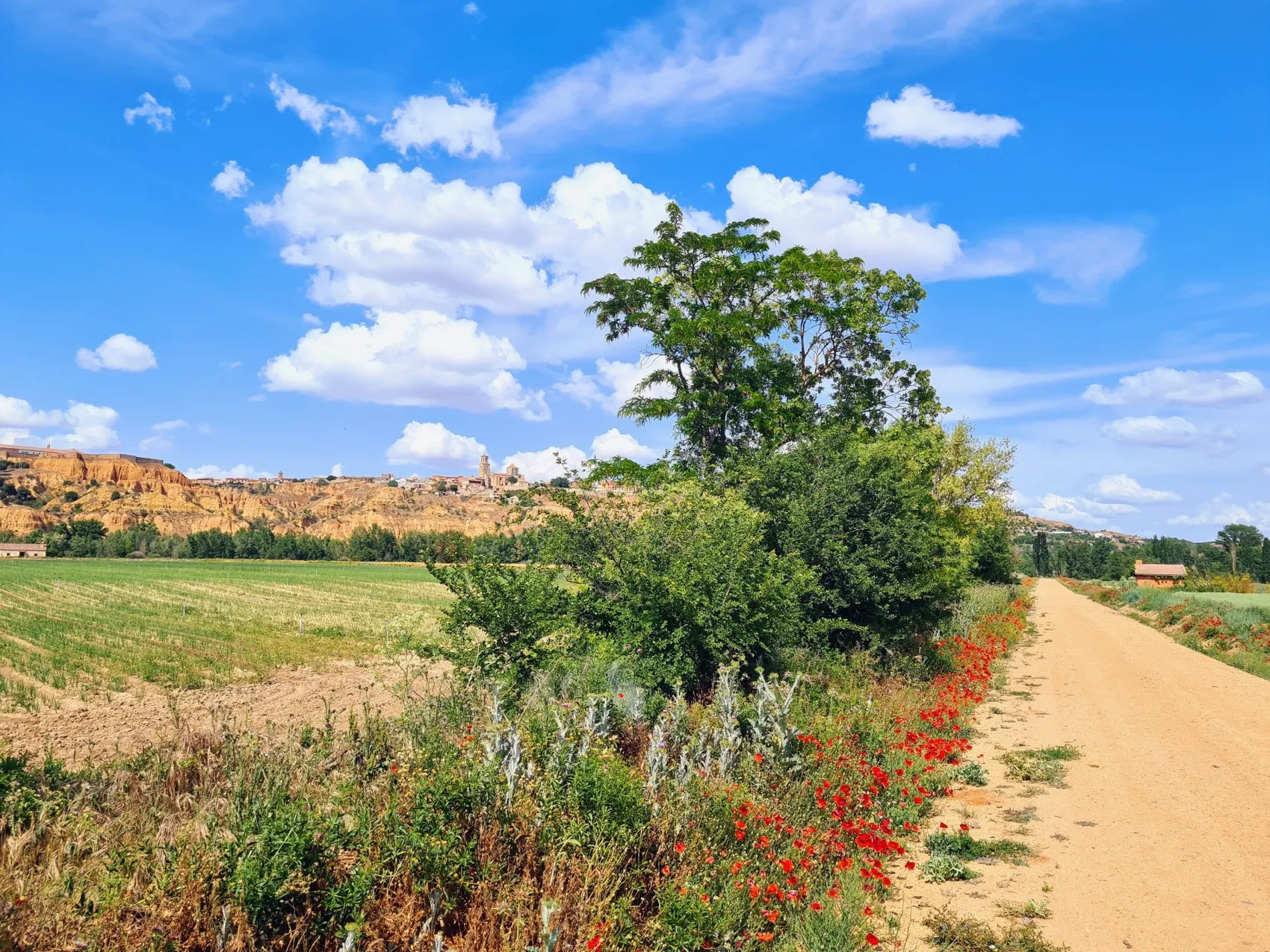
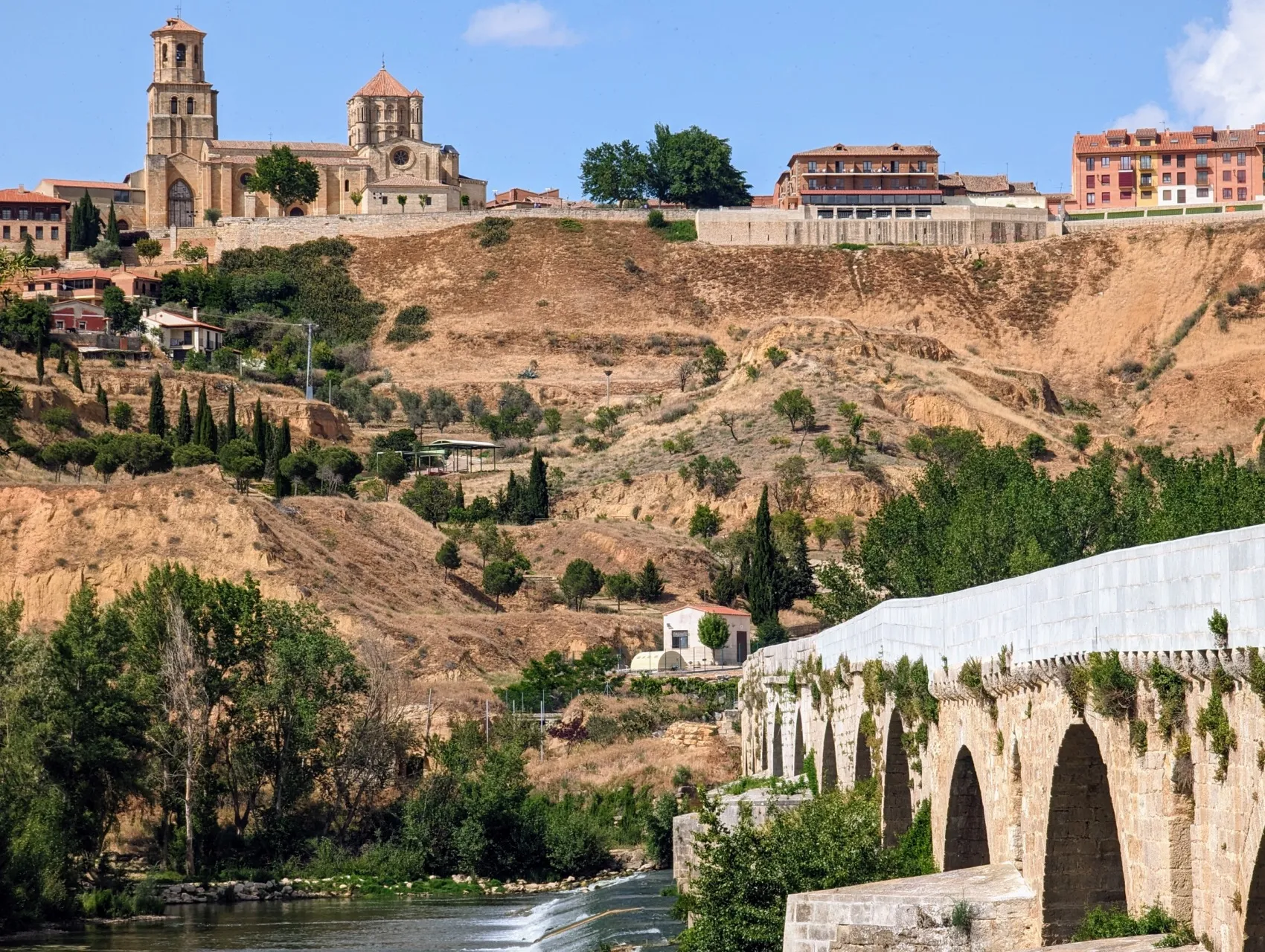
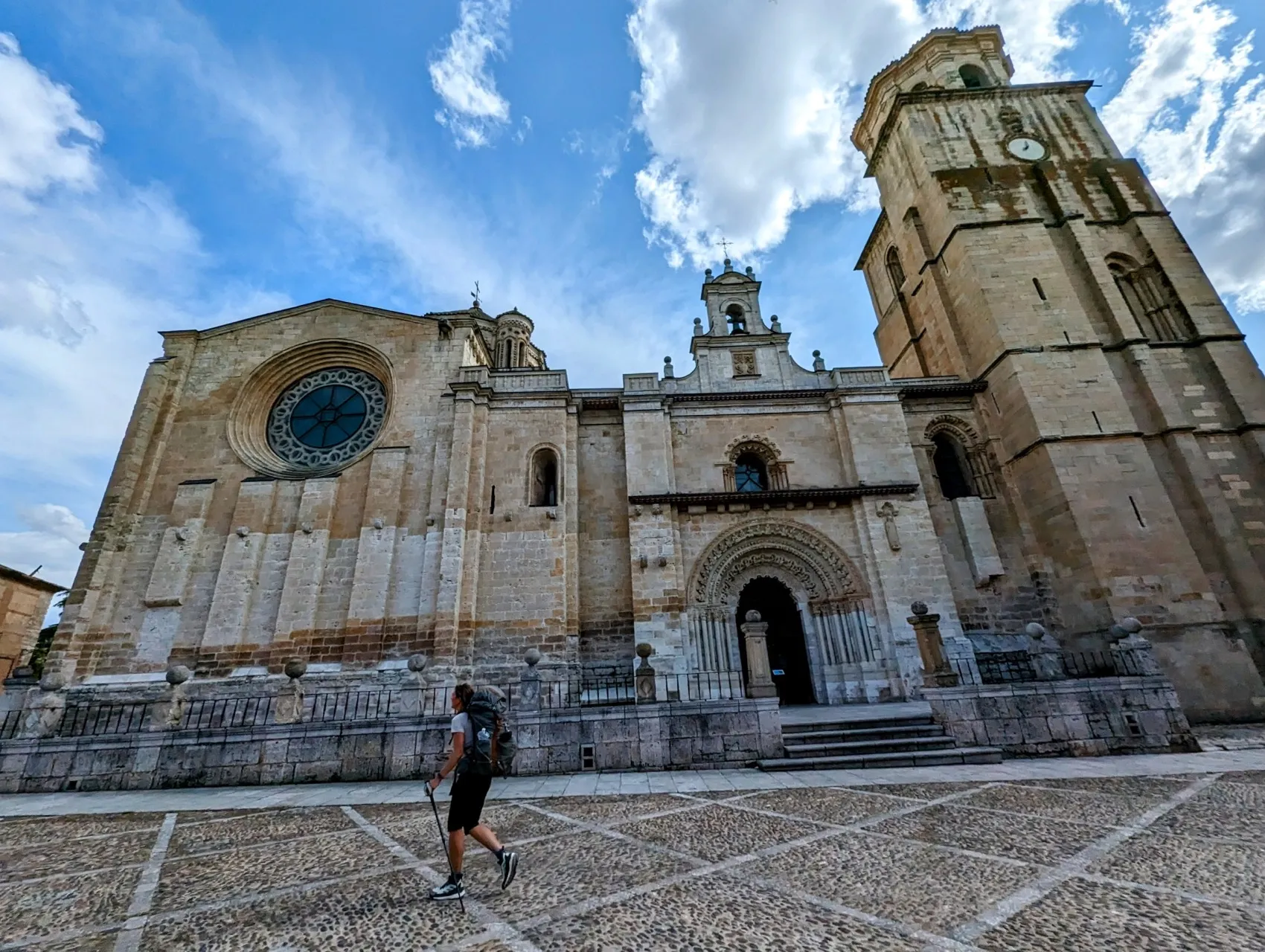
The kilometers actually go quite nicely and it's great to be on the road again. Especially when we can get a little further off the tarmac road, into the greenery. We turn onto a muddy farm track, closer to the river. We haven't seen the river much today from the road, but here we walk alongside it for whole stretches. In the trees, there are lots of cormorants nesting and we finally hear the golden oriole! Such a cute little sound. Walking on the paths does take a bit more energy, and even though it's a lot cooler here than earlier stretches, we're still glad we can take another extended break in the shade under a shelter of a cottage. A bit earlier than planned, we still have almost 10 kilometers to go, but we'll manage that too. After the break we continue along the paths and encounter more and more houses and barns here and there. Mostly dilapidated or uninhabited at first, but the closer we get to the town, the more have been beautifully renovated. You can't miss the town of Toro, even from a long distance away: the sand-coloured churches and stately buildings at the top of the jagged bare cliffs above the Douro stand out beautiful against the green river valley and blue sky. We get closer and closer and people ask us where we are from and where we are going. We get puzzled looks just by telling them where we came from today. Not many hikers come here, it's clear that we've left the Via de la Plata. World cyclists though, as we share the route more often than not with the Euro Velo 1.
At the bottom, as with any ancient city our route visits, we cross a pretty Roman bridge that leads us up the bare hillside. A nice stone road then takes us 100 meters higher to the village. It's a steep climb at the end of the hike, but at the top of the hill we soon walk past the big medieval church we saw from afar, and our hotel turns out to be right next to it. Fortunately, because by now we were running a bit on 'empty'. But it was a brilliantly varied hike. And it went better than we had hoped after a week of compulsory rest in Zamora. Tomorrow we'll check out Toro and recover another day, before we move on again. It sure feels great to feel the kilometers in the legs again!