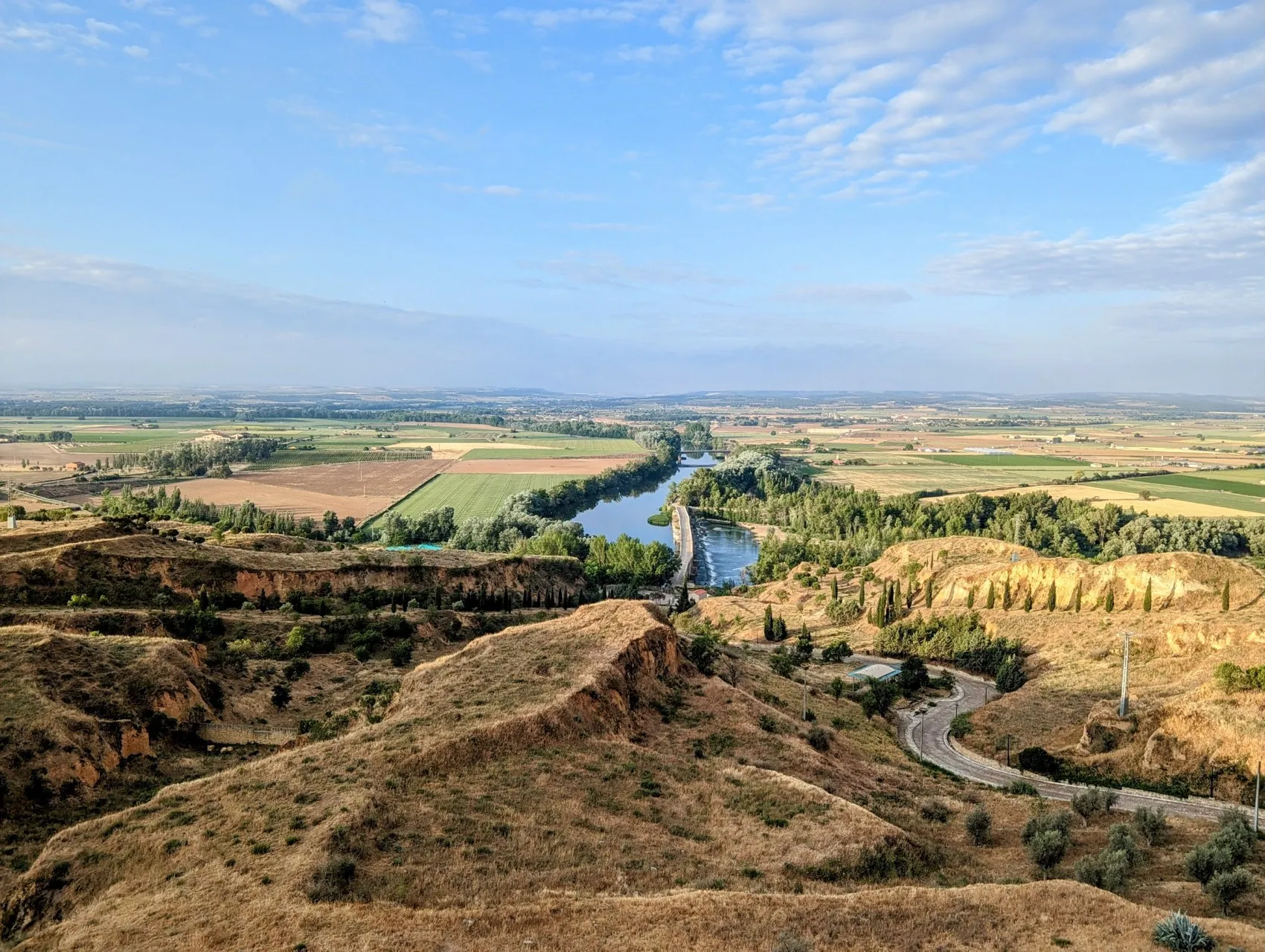
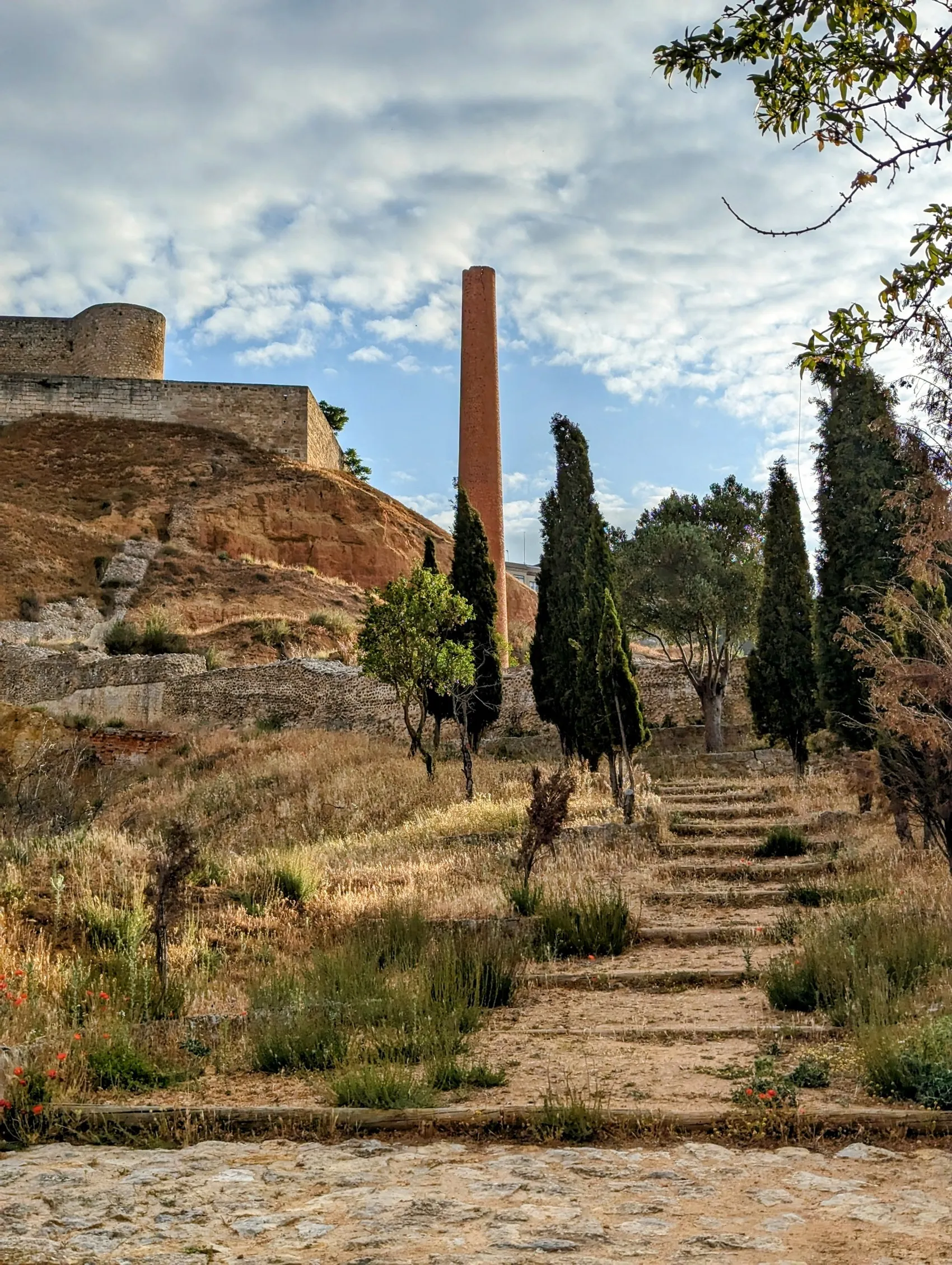
This morning we leave Toro. The small town of barely 8,500 inhabitants is known for its old centre with pieces of city walls, a fortress and beautiful old churches and houses. It's famous for the 'Toro-Bravo' bulls, the imposing black bulls used for bullfighting, which are bred in this region. And of course the Semana del Toro, the week of the bull, a celebration held every year in summer where Spanish traditions like bull running and bullfighting are practised. With so much 'toro', one naturally wonders, "What was there first? The city name or the bull?" Bullfighting really took off in the 13th century. The place name is not derived from toro/bull, but from the Latin word for tower, "turris", because of a tower that stood at the top of the cliffs here at the time. So in this case, the place name was earlier than the bull. But what really made the place immortal is the use of wine instead of water in the cement of the church Santa Maria la Mayor. At the time, water was so scarce and expensive, that wine was cheaper and more readily available, it is said. But another explanation could be that wine was used because the acid in it would shorten the drying time of the cement. In any case, it's a nice story and says something about the area and the history of the town. Either way, it made us look at the church with different eyes, yesterday. We descend the steep slope towards the plain of the Douro. From here, the river valley looks smoothed out. It's a green strip a few kilometers wide, snaking between the hills. Along the river are tall poplars, so you can only tell from the trees that it flows there; the river itself is little to be seen from up here. Once down, we walk across the beautiful old bridge to the other bank.
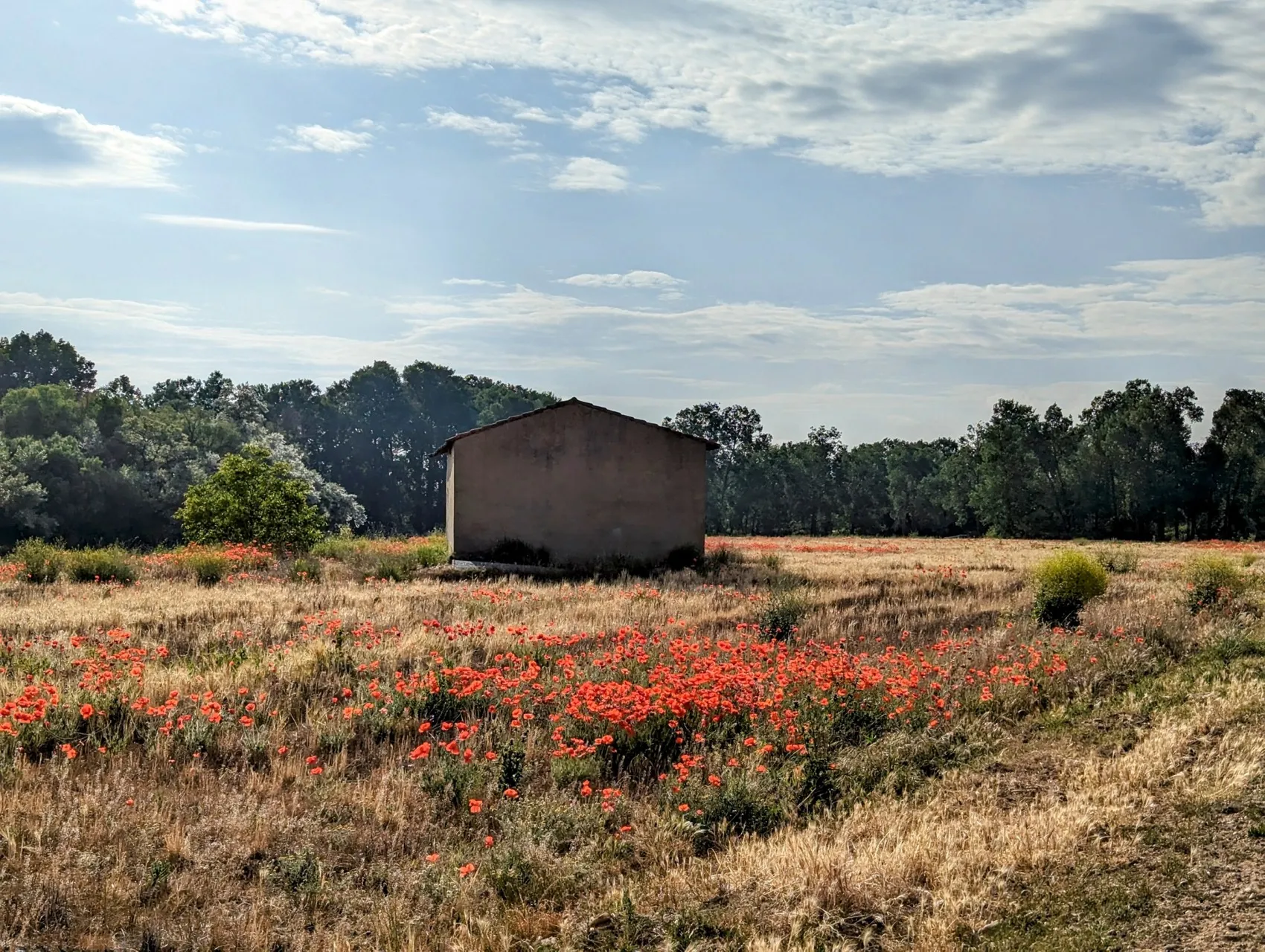
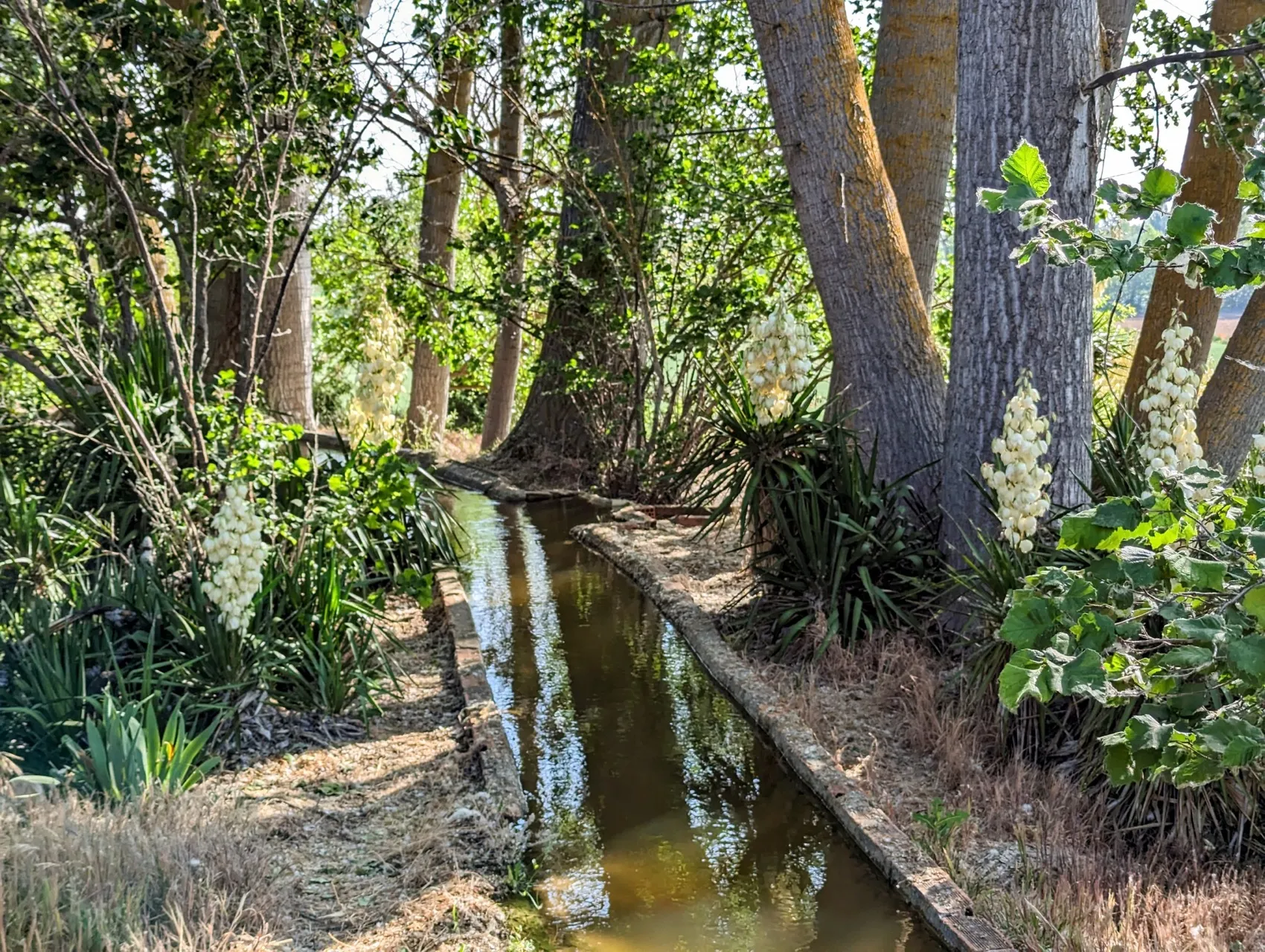
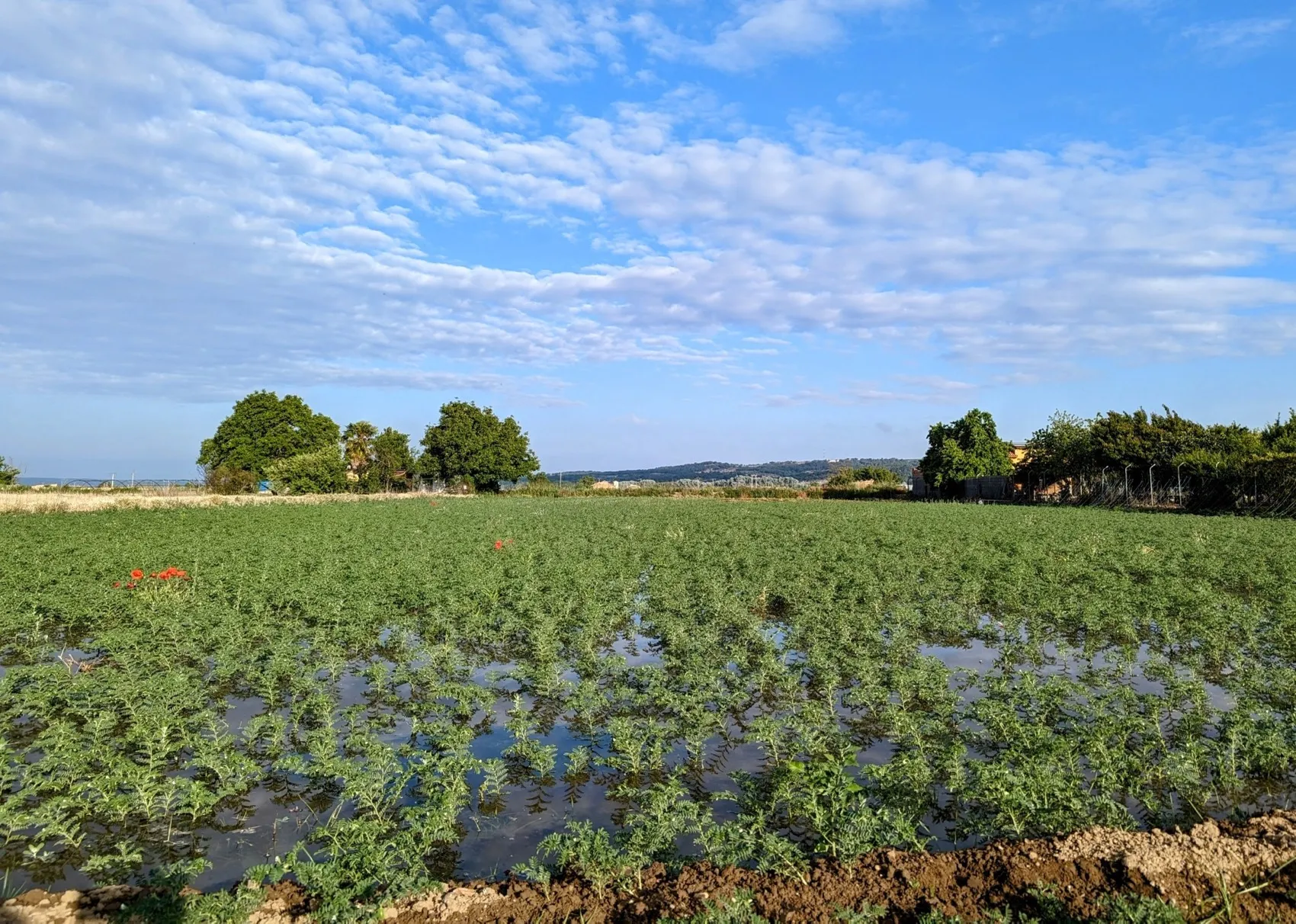
It's still early and teeming with birds. White and grey herons, ducks and cormorants, swallows, goldfinches and red kites. Large fish swim among the water plants; it's a paradise for animals. A few kilometers from the water, the landscape is much drier again. Today's weather, with maximum temperatures of 20 to 25 degrees with an occasional drop of rain, is fine for us. And the nature is probably happy with it as well, for it is used to quite something else here. It's not an easy area for animals and plants. Winter is long and harsh, temperatures down to -10 are common in the winter months. Summer is short but intense, reaching 40 degrees Celsius. Rain doesn't fall much either, averaging between 400 and 500 mm per year, half the average rainfall in the Netherlands. So the beautiful green strip of agriculture therefore mainly owes its colour to the river water. We walk kilometer after kilometer next to canals with gates and large pumps next to the fields, kept running by noisy generators to supply them with water wherever needed. In some area's farmers simply flood the fields, but there is also a lot of irrigation.
Most of the time the sprinklers are well adjusted to the paths. But sometimes we have to run to avoid a shower, and we succeed most of the time... Fortunately, the sun shows itself now and then, so we don't get cold. In the flooded fields, we see crops resembling vetch, fragile plants with small white flowers. We look them up and they turn out to be chickpeas. One of the oldest crops grown, for more than 9,000 years. It originated in the Mediterranean, but actually on the other side, more towards Turkey. It makes for beautiful fields; we will encounter them more often along the route today.
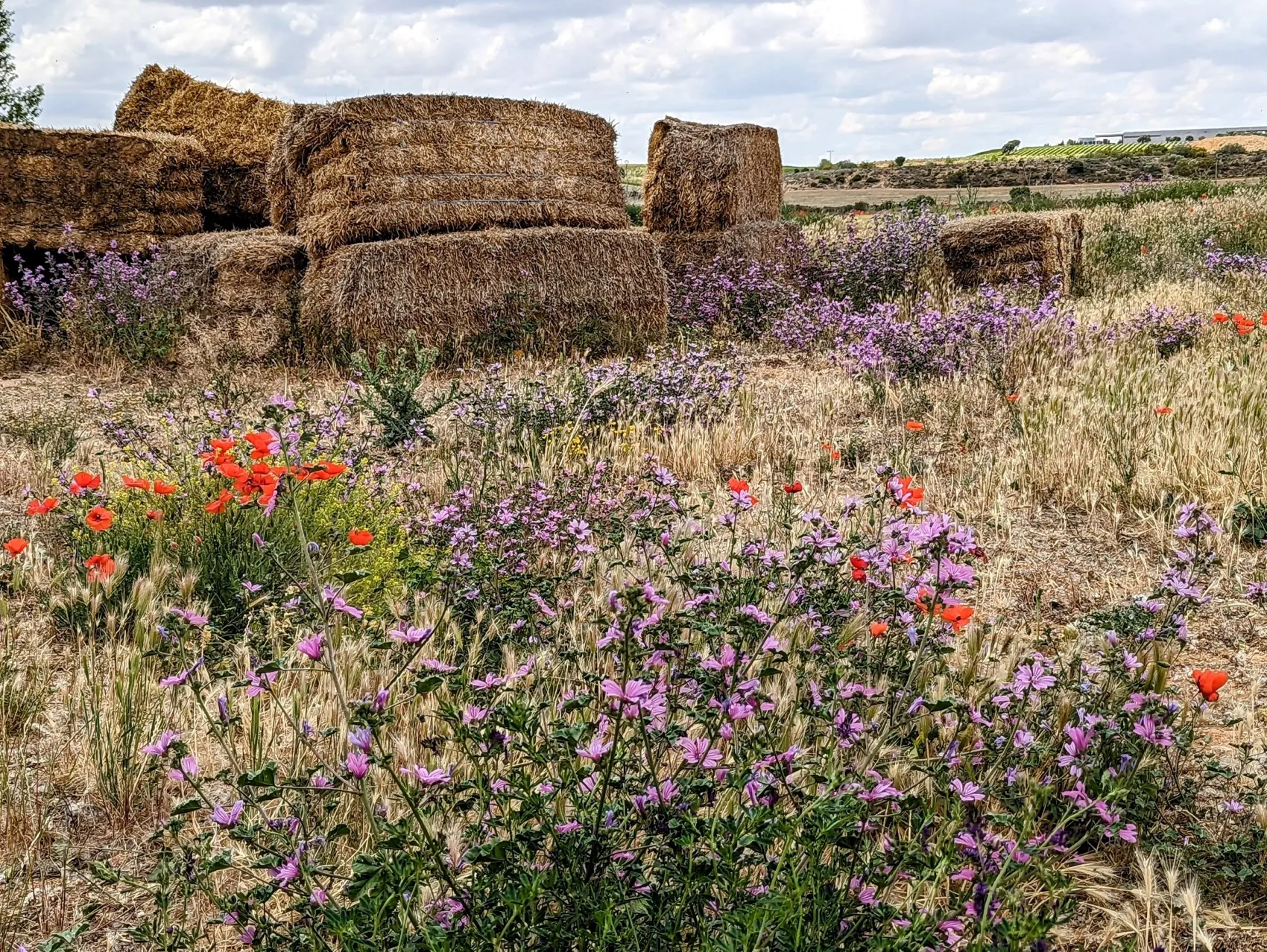
Today's stage remains pretty flat among farmland. A little over halfway, we leave the route for a break along the river. We take a long break, because we can't get to the next hotel until 3pm. And Spain has since taught us that you really shouldn't arrive at the stroke of 15 o'clock to avoid awkward situations. So we drink an extra cup of coffee at this beautiful spot. Lovely!
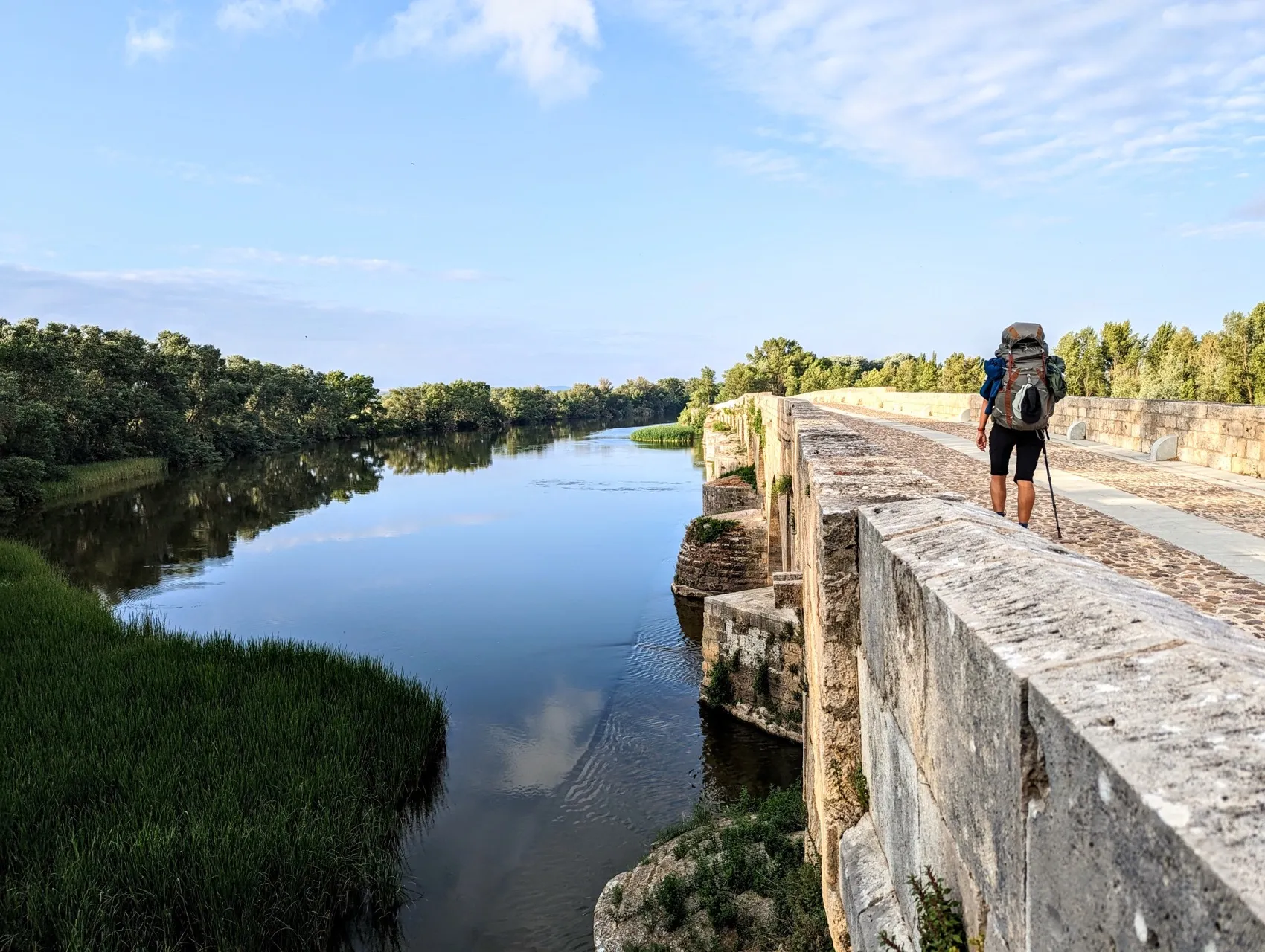
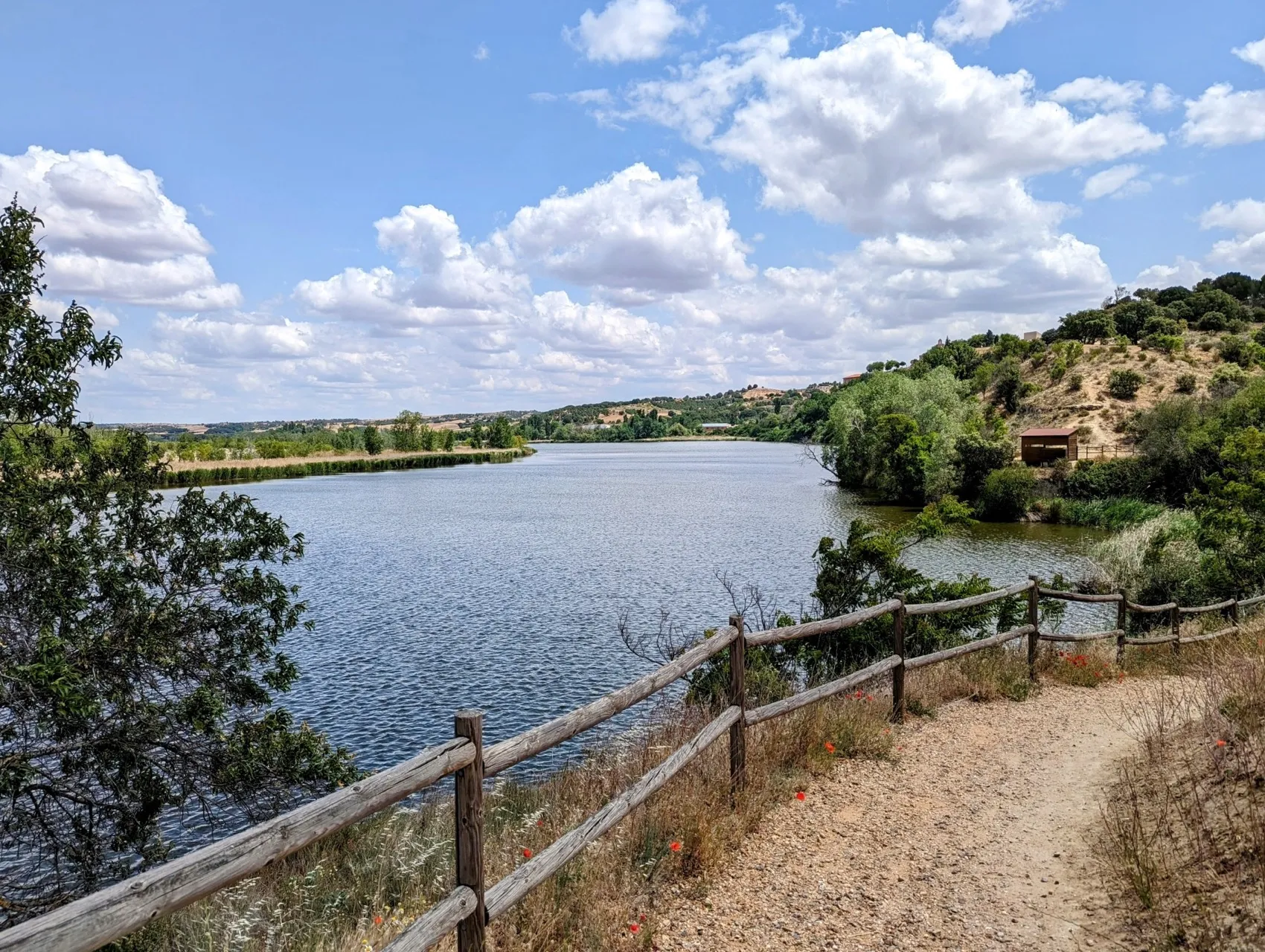
After the break, the kilometers fly by. With the river on our left, still well concealed by bushes and trees, and a bit further on our right the low hills at the edge of the river valley. This stays a bit the same until we reach a bridge over the river about two kilometers before Castronuño, the town where we'll spend the night. We will cross this bridge tomorrow, right now we continue walking along an asphalt road for a bit to the village. A dam here makes the river a lot wider and the valley a lot narrower. It's a beautiful piece of nature, especially on the other side, through which we will walk tomorrow. But even on this side we pass through a swampy forest just before the village, where we can walk on duckboards along the reeds. We haven't seen this much water in a long time. Maybe we'll go for little walk tonight to take a better look at this part, but first we head to our Casa Rural. It takes a while to find, but it turns out to be a super cosy village house. With a friendly owner who proudly gives us a tour of the house and garden. It's a nice, quiet place for a good night. Tomorrow will be a longer stage, of more than 30 kilometers, so we'll need the rest.