The two days of rain have passed. Fortunately, the precipitation wasn't as heavy as expected, allowing us ample time to explore the city. We ventured to Decathlon, the large supermarkets, but mostly the center, which is across the Ebro from where the hotel is located. It's a beautiful old center, but the many buildings from the last century reveal that there must have been considerable growth during that time. In the second half of the 19th century, a railway line was constructed here, and with the arrival of the first trains came industrialization to this area. Just outside the center, there are many apartment buildings. We are gradually entering an area with more job opportunities. Long before the common era, people lived here, or actually a bit further away. The real ancient Roman city is located a few kilometers outside the current city, where only ruins remain. Miranda was rebuilt here towards the end of the Middle Ages because a large bridge over the Ebro was constructed.
The rain has passed, but the vibrant life in the city streets doesn't seem to slow down. The center of Miranda de Ebro, newer compared to southern cities, is lively and beautiful. Much of the city's social life happens outdoors; both young and old enjoy themselves in the city parks, making it a delightful spot to sit on a bench and soak in the Spanish 'vibe'.
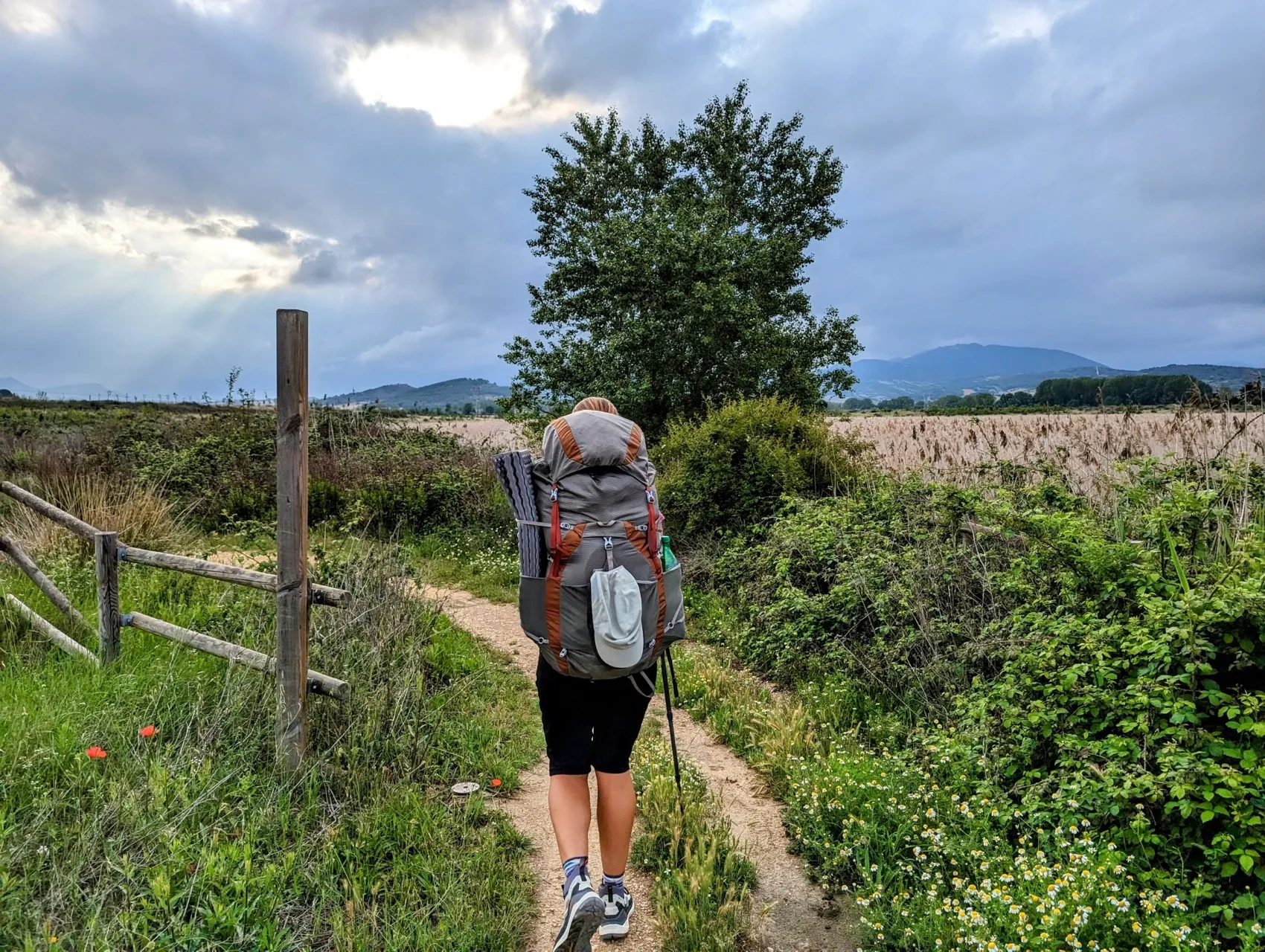
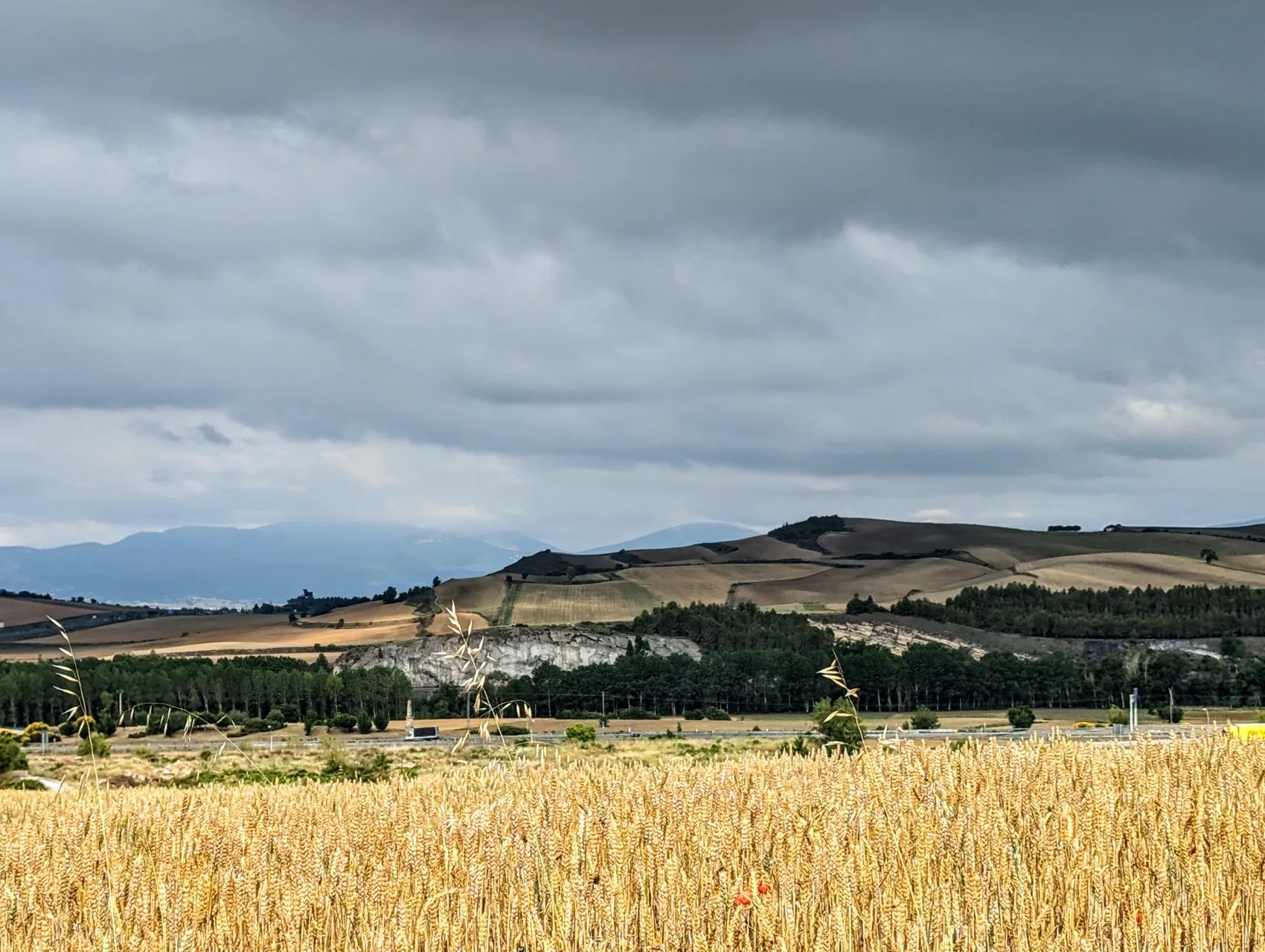
Today's leg, just shy of 18 kilometers, isn't very long, but the weather remains tempestuous. So, we make sure to be on our way, backpacks on, walking through the streets of Miranda de Ebro by 8 AM. We pass through the center and the suburbs for a while before hitting an unpaved road. While we always enjoy the urban life, stepping into the countryside in the morning feels refreshing. We walk across a large flat area, the Ebro valley, between the hills, but the landscape gradually becomes more mountainous. The map shows lakes, but as we walk by, they appear more like fields of reeds, bustling with waterfowl and frogs. We find ourselves on an old pilgrimage route, the Camino Via de Bayona, a side route of the main path often used by pilgrims from France who wanted to bypass the Pyrenees and pass along the coast. Due to its beautiful location, it's still a popular route, and we frequently encounter walkers heading in the opposite direction. However, we soon leave the route as it closely follows the highway—ironically, the highway follows the old pilgrimage route, which existed long before.
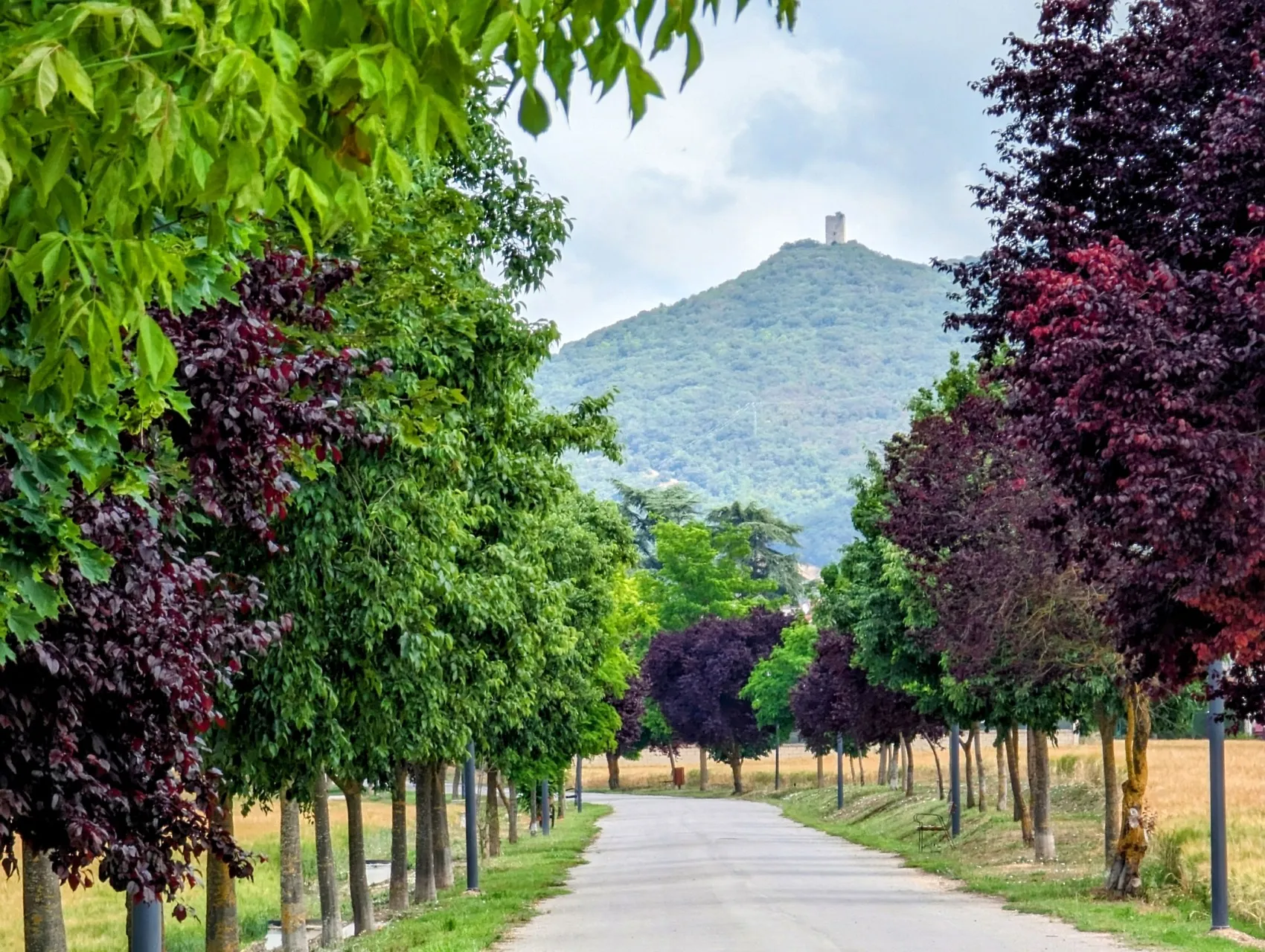
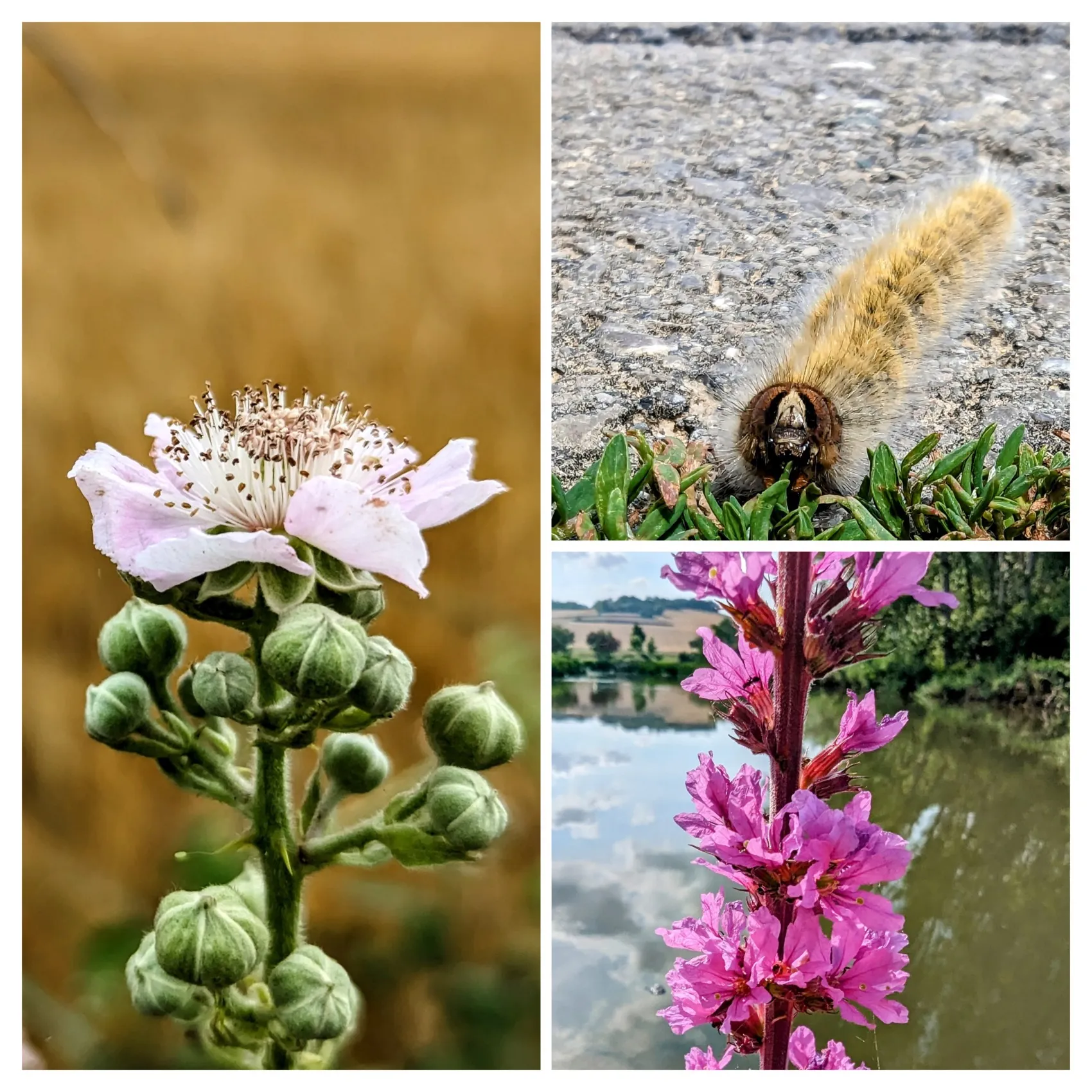
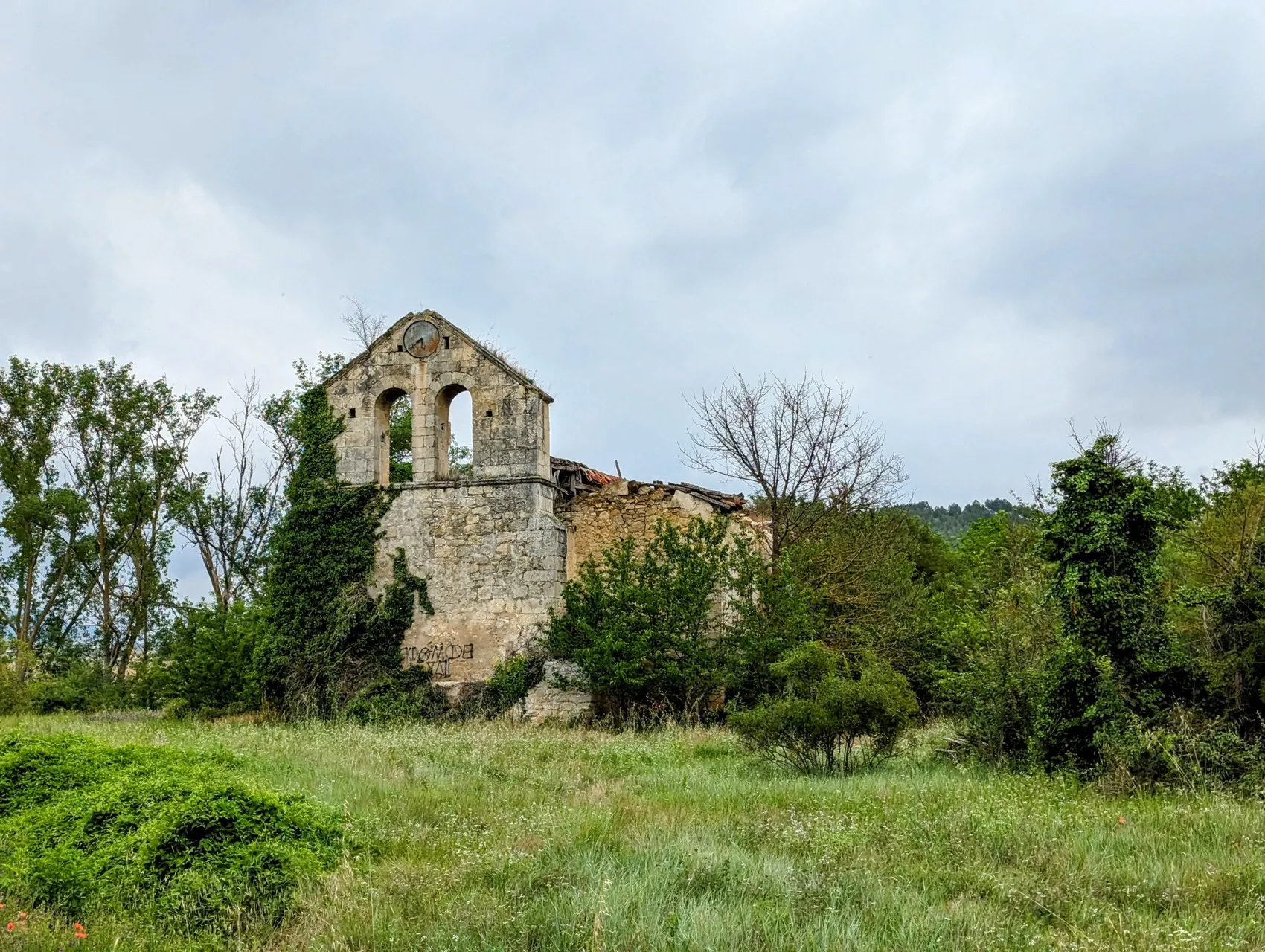
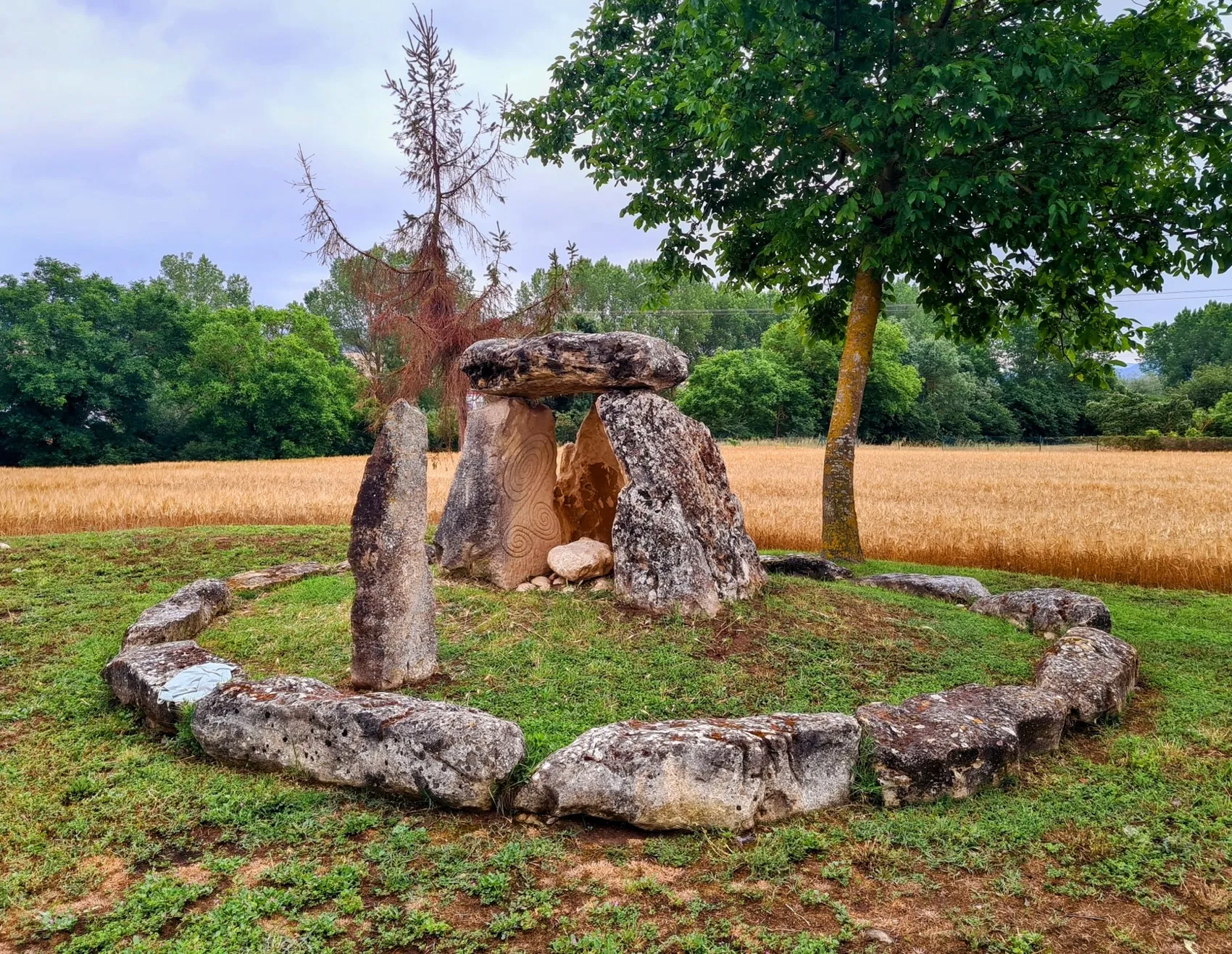
Crossing the highway, we veer north and ascend the valley's flank, still surrounded by fields and beautiful flowers. Purple and pink delphiniums, chamomile, and poppies decorate the roadsides. Between the trees, we often see beautiful ruins of old barns and houses. We even pass a deserted village with a church, a small castle, and overgrown houses. There's a temptation to peek inside, but one house is being actively renovated, so we move on. Further along, we see a structure that has withstood the test of time far better, though it's thousands of years older. On the edge of the village stand several engraved stones upright with a large stone as a canopy. Known as dolmens or tombs here, these are called trikuharria, and they could be up to 6,500 years old. One of the stones even has a beautifully carved dragonfly. A Spanish dolmen… The country continues to surprise us.
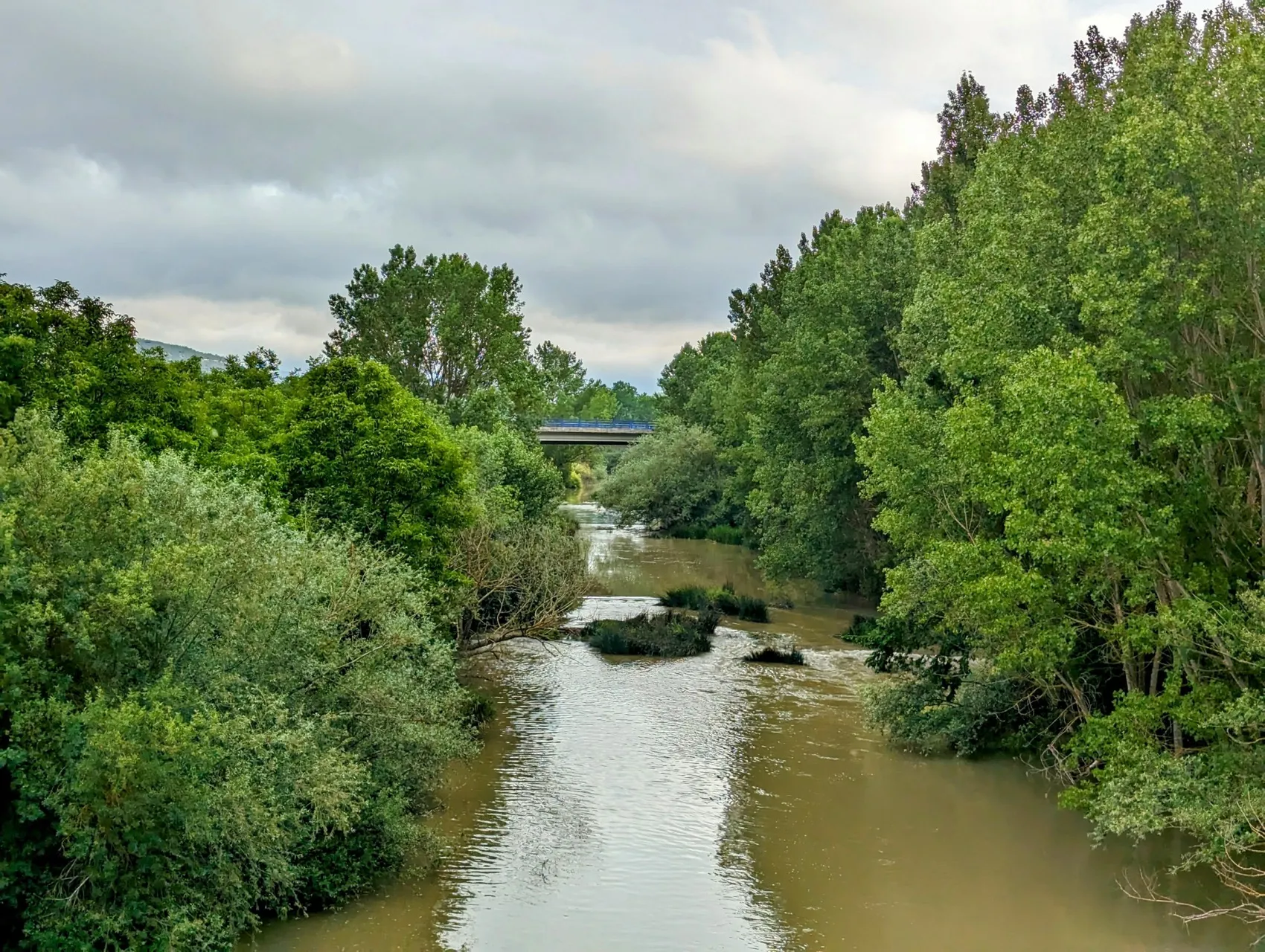
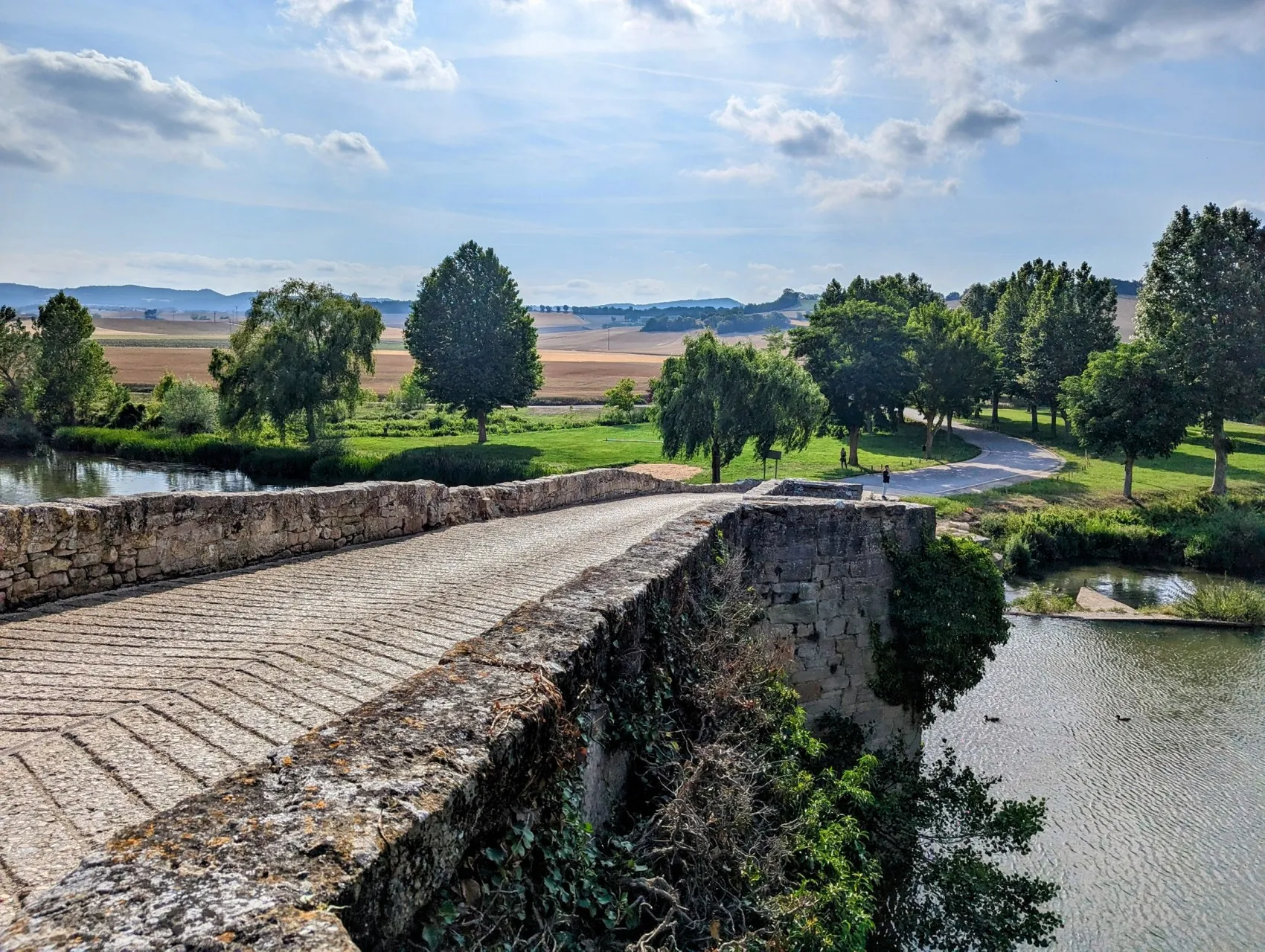
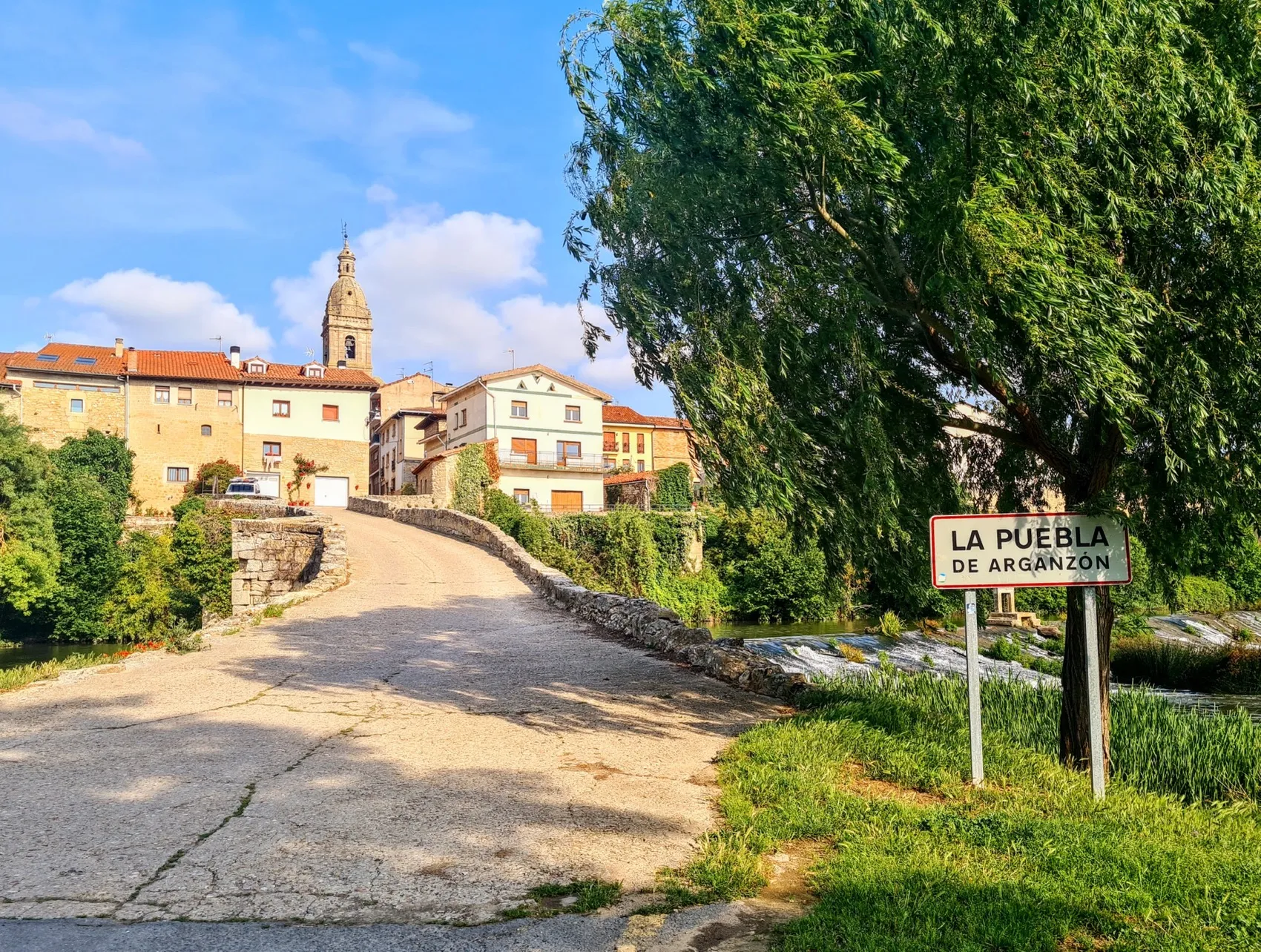
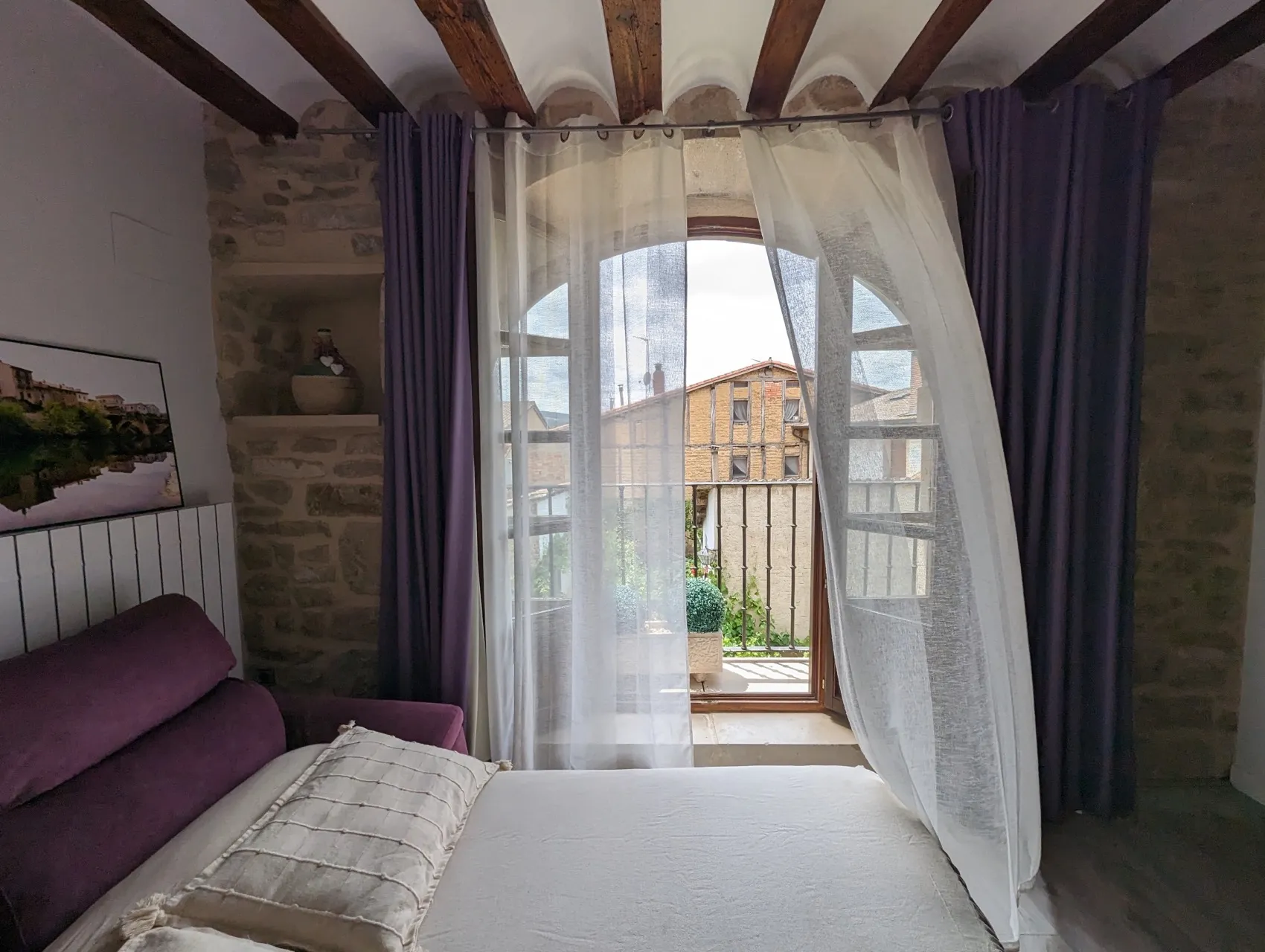
After several steep climbs in the warm, humid weather, we appreciate the beautiful scenery even more, and in the higher areas, meadows often give way to low bushes with oaks, heather, and gorse. This high point is a perfect spot for a break, overlooking the valleys. After the break, we descend quickly along a wide dirt road and, from Burgueta, a small asphalt road. We reach the highway and the railway again. Ideally, we'd follow a four-lane road for almost 4 kilometers, but after a few hundred meters, we spot the start of a dead-end road across the railway that leads towards the village where we'll spend the night. Crossing the railway, we make our way through the bushes and onto a pleasant lane, much nicer than the main road! Soon, we see La Puebla de Arganzón in the distance, and it's not long before we enter the village. The streets are lively, and beautifully maintained old stone houses with timber-framed upper stories line them. A stone bridge crosses the Rio Zadorra, and a watermill sits at the base of the settlement. Our hotel is located in Plaza Mayor, overlooking a large church and a café that also serves as a bakery, butcher, and small supermarket. It doesn't get more Spanish than this. Our room is the nicest we've had so far: set in an old building with wooden beams and worn stone stairs but stylishly renovated to include a kitchenette, bathroom, and separate living and sleeping areas. As we enter, the wind blows through curtains in front of the tall windows bathed in sunlight. A perfect place to spend an afternoon. For the first time this trip, we turn on the TV. 'La ruleta de la suerte', or 'Wheel of Fortune'. It's quite amusing, and we even pick up some Spanish! But we don't stick with TV for long. We take a stroll around the village and along the river, do some light shopping, and enjoy a wonderful afternoon. La Puebla is a charming, relaxed village.