June 27th
Kilometer 2.071
From the campsite, we walk the 2.5 kilometer to the bus stop and enjoy the scenic ride back to Irurtzun. It's nice to see the places where we walked yesterday from the bus; it's a beautiful valley. Today, we start at the other end of the valley, or actually, the beginning of it. We get off the bus, tighten our shoelaces, start the route on our phone, and set off towards Pamplona. We quickly leave the town behind and climb a steep staircase to an old railway line, which has also been converted into a Via Verde, a fairly flat hiking and biking path. We're immediately surrounded by hills, fields, and numerous flowers. The blackberry bushes lining the path are in bloom with their soft purple flowers. The Clematis, with the lovely English name 'Old-man’s-beard', from the buttercup family with its tough white flowers, twists over the bushes, and a kind of wild pea, the 'broad-leaved everlasting pea' from the legume family with its deep pink flowers, grows in between. It's clearly the season for climbing plants; they all strive to outgrow each other to catch the most sunlight. It's a beautiful path to follow. After a little over 3 kilometer, we reach a former railway bridge, the Viaducto de Gulina.
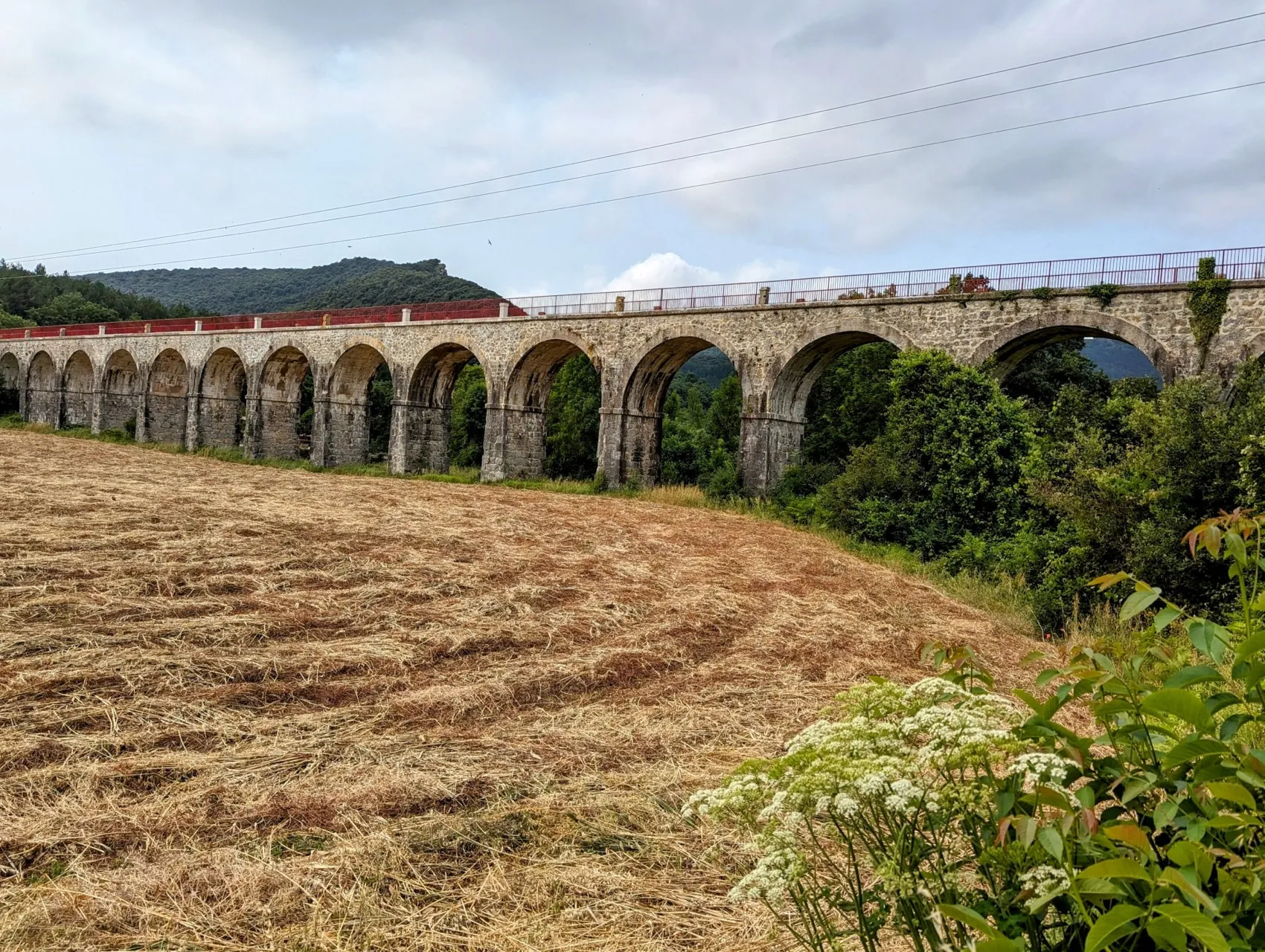
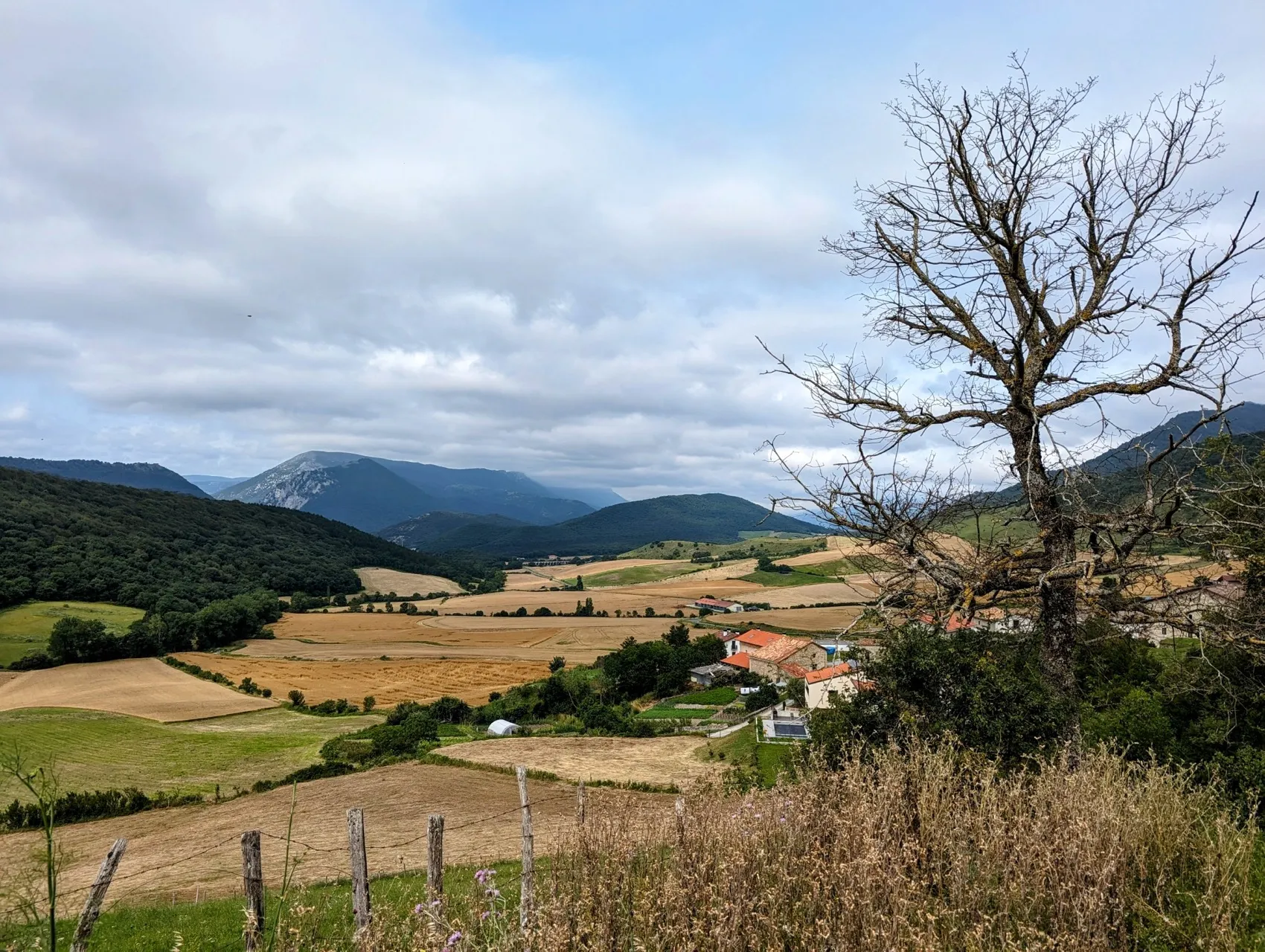
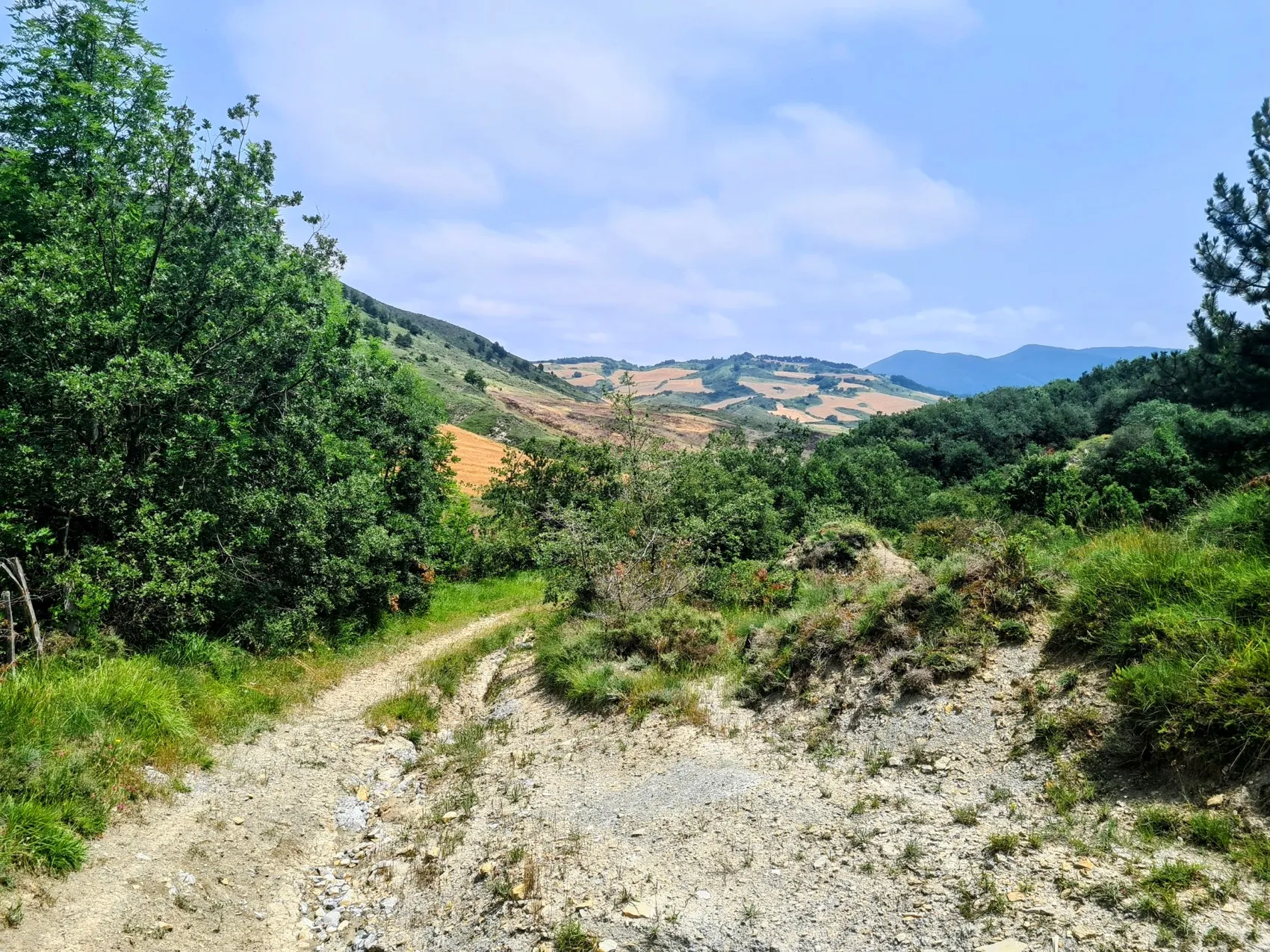
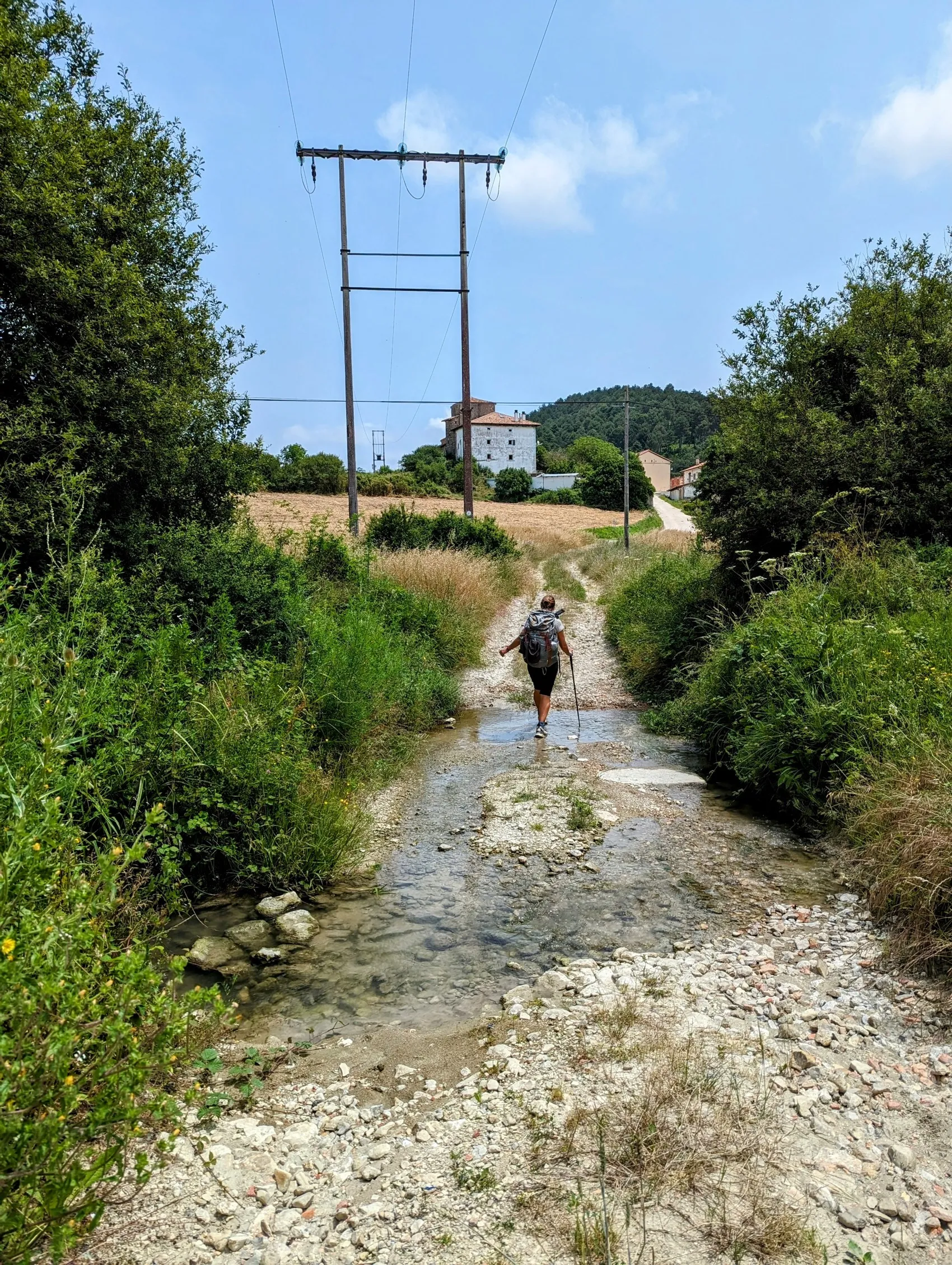
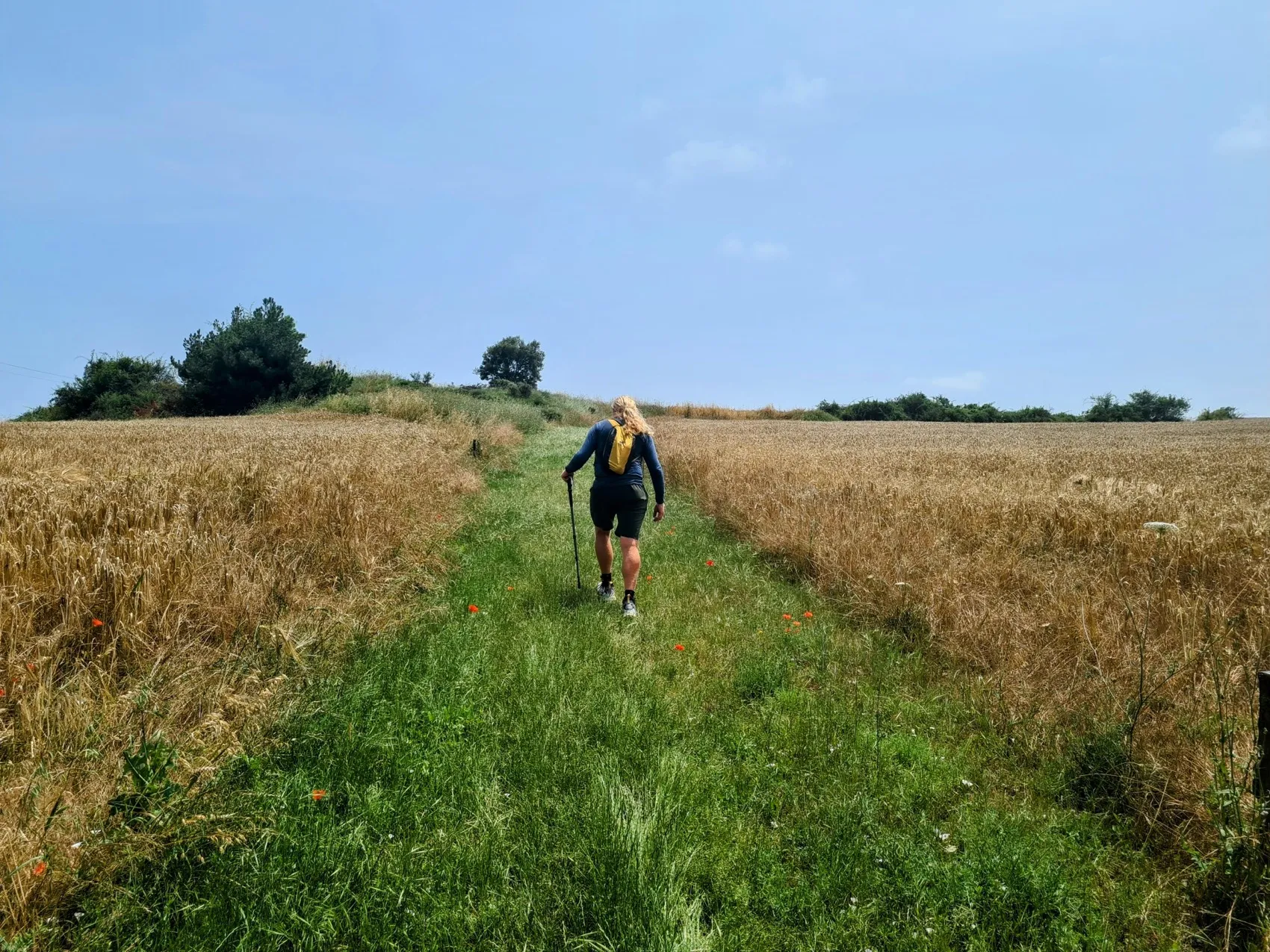
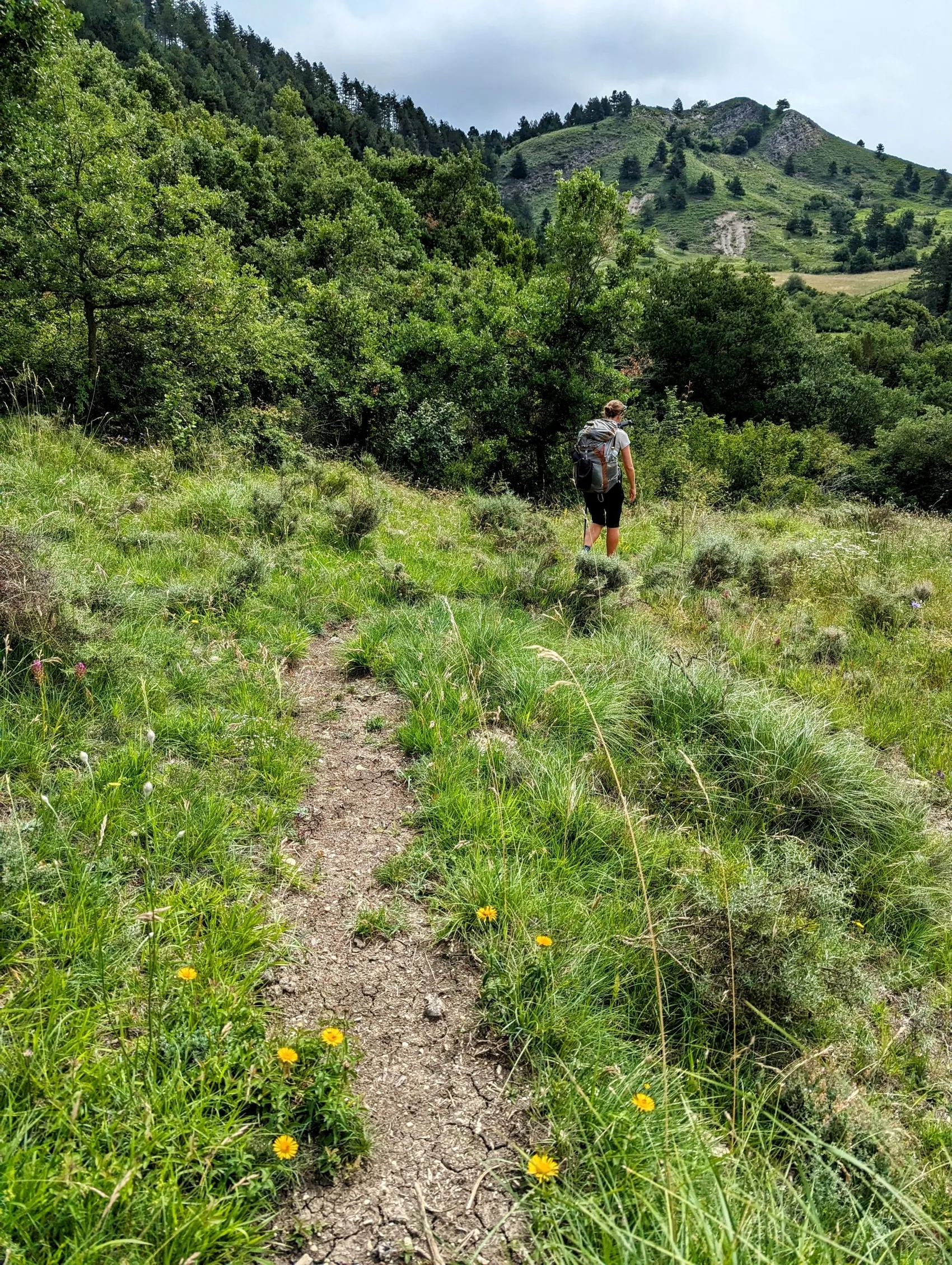
Eighteen stone arches span a valley of 185 meters. The railway line and the bridge have been crucial for the development of the countryside we've been walking through for stages. Building materials, food, and other products were transported from Pamplona to the countryside, while raw materials, agricultural products, and iron from the mines were transported back. However, no train has crossed the bridge since 1953. Severe floods damaged the bridge, and eventually, another route, the current route, was found for the train. The Via Verde continues over the bridge and then quickly heads towards the highway. Of course, we're not going in that direction; we've found another route. Over the hills and a bit longer, but even if we have to walk the first stretch to the hamlet of Larumbe along the road, it remains beautiful and peaceful. And the advantage of not walking over the bridge is that you get a magnificent view of it. It's an impressive structure that blends beautifully into the landscape. At the village, we leave the road and head into the fields. In this case, quite literally, as no path is visible in the first stretch. We briefly consider whether to continue or choose another route, but the only option would be to walk back to the bridge and still choose that road. Not an option ;-) We keep walking, and after a while, a semblance of a path becomes visible. Imprints of cow and goat hooves in the mud guide the way. It's a stunning section, occasionally passing by stacked stone walls, sometimes through forests. Sometimes through meadows where the grass is knee-high, sometimes through muddy patches and streams. It's a beautiful challenging section along one of the most rugged paths we've encountered. By now, we've ascended quite a bit. Here too, the valley ends against the mountains. We pass through a pass between two higher peaks.
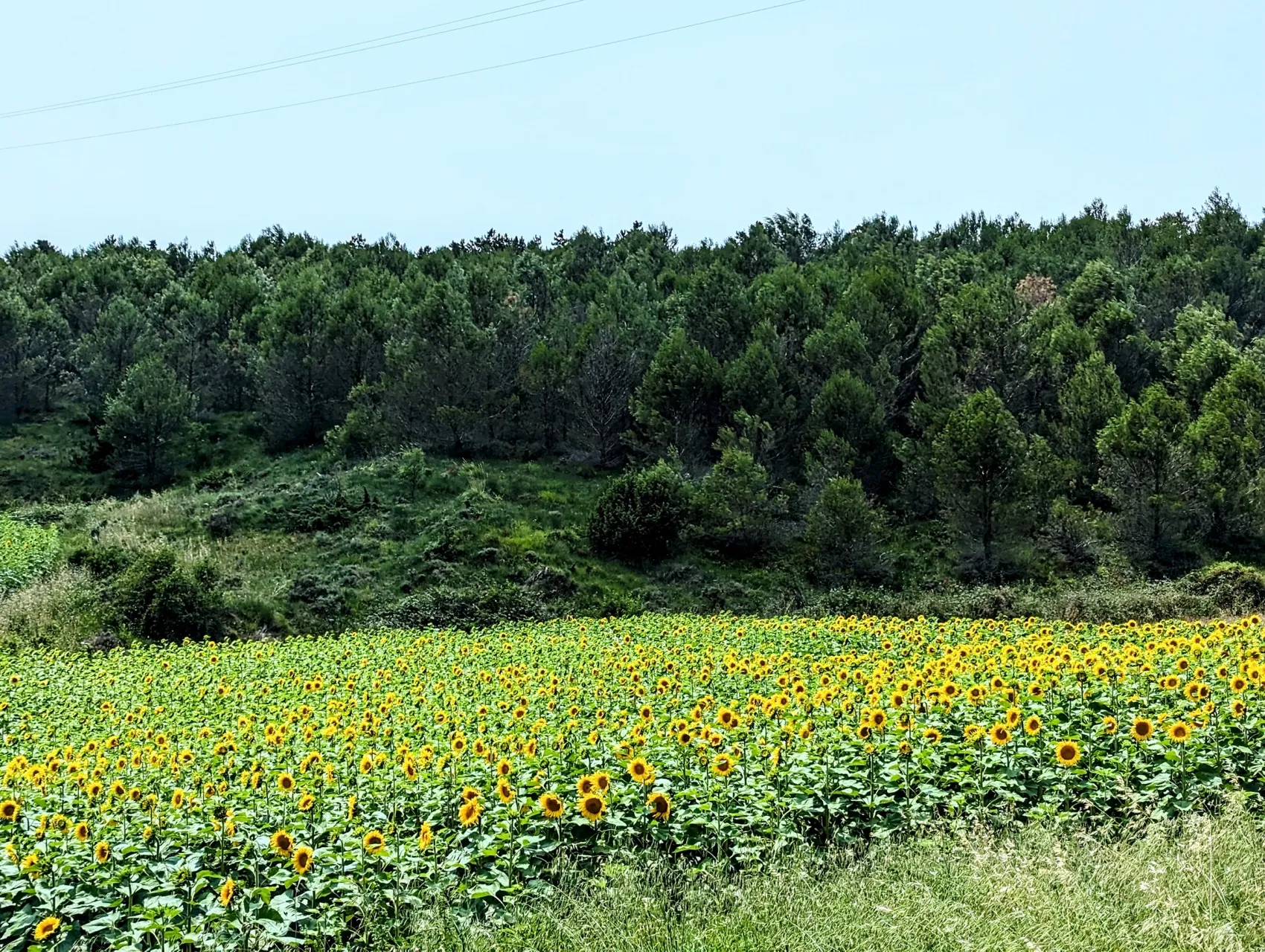
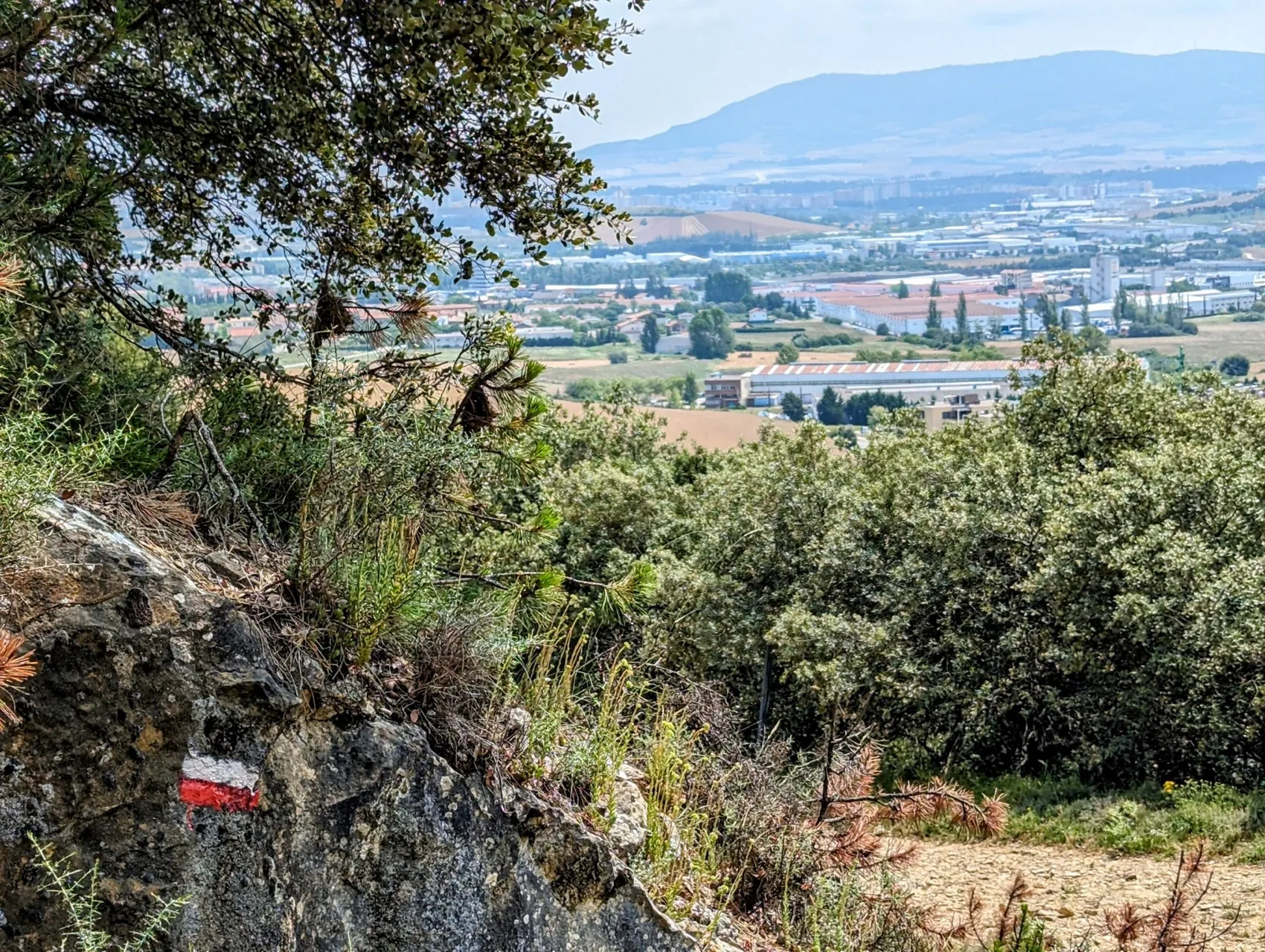
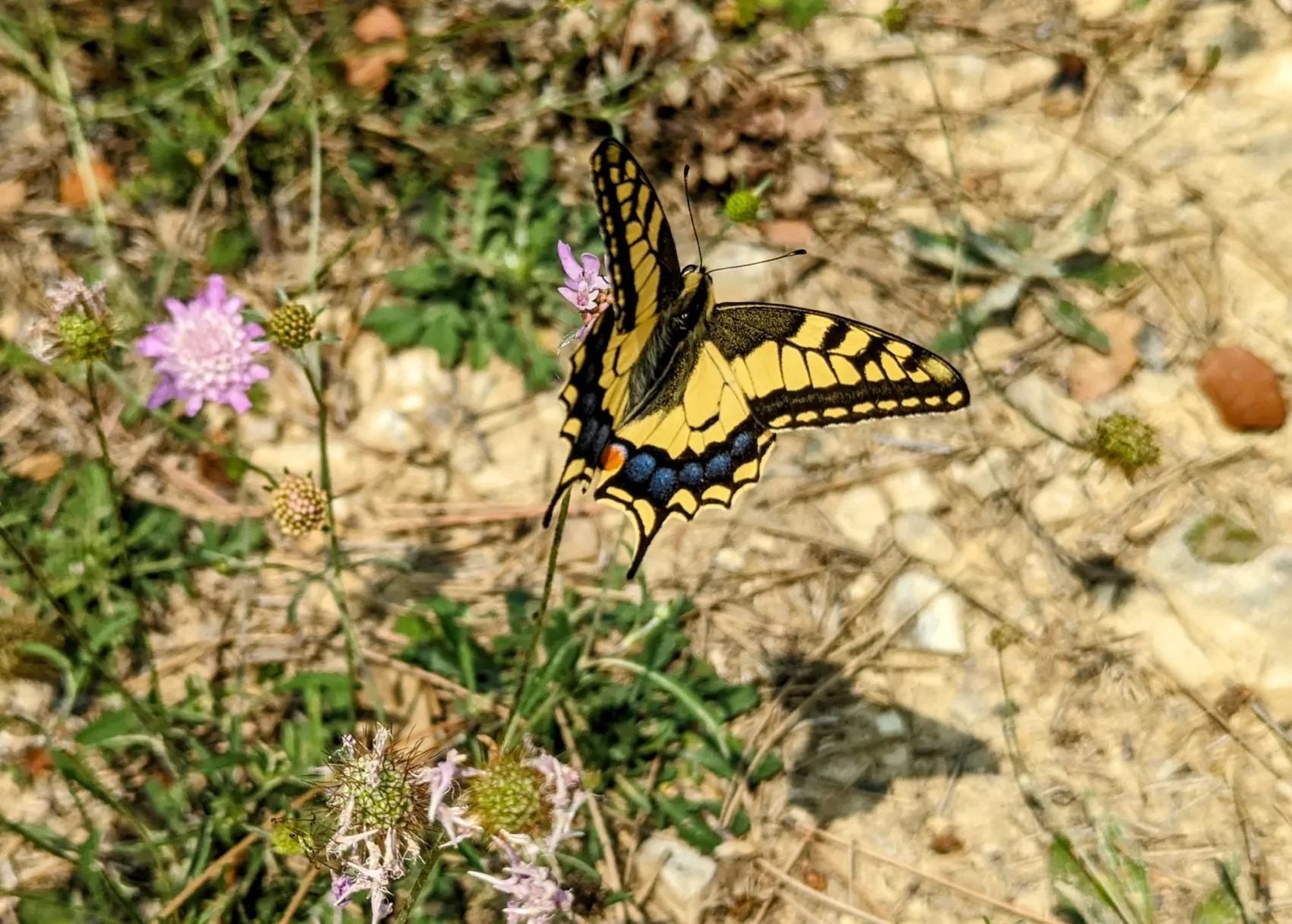
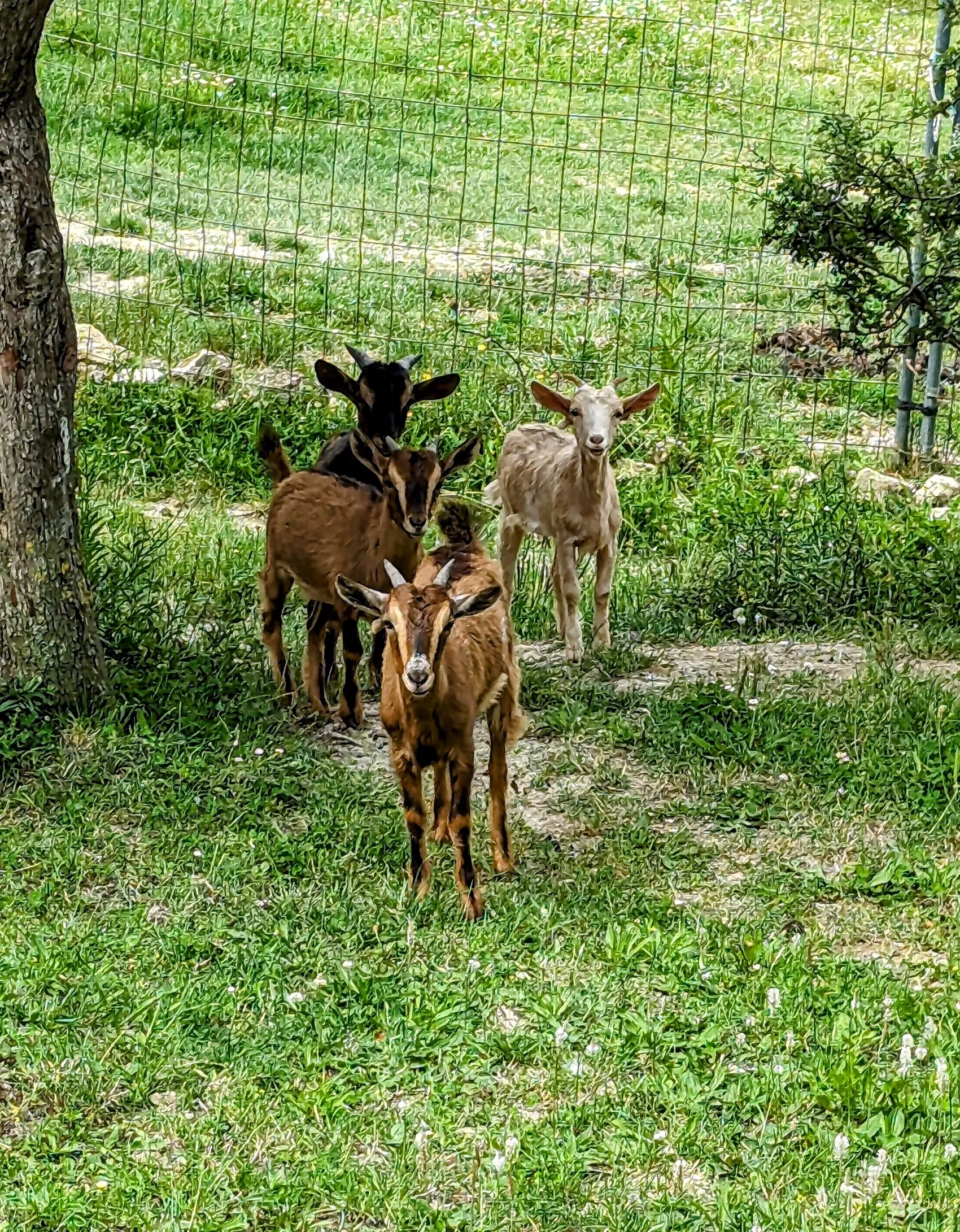
From a spot just below the pass, we see rooftops peeking through the trees. At a house nestled amidst fields and forests, there are horses, goats, geese, and chickens, and a few large dogs. They bark loudly, but thankfully, they're securely restrained. The path by the cottage is blocked by small goats that curiously approach us; these adorable creatures allow themselves to be petted. However, some of the smaller goats have large twisted horns, so for safety's sake, we walk around the biggest ones. What an idyllic spot! At the highest point, we pause, gazing at the new valley below. From the cottage, we can follow a proper path that leads lower down to a small asphalt road. It's easy going for a while on the road, and even when we leave it, we're on a broad path that's much easier to traverse than the other side of the pass, although there are often deep ruts worn by the rain. In this valley, there are fields of sunflowers. Not long ago, we were walking past plants barely 20 centimeter high; here, the flowers have just bloomed, gently coloring the fields yellow. We briefly follow a road again, then head into the fields before entering the woods for one final climb before descending into the valley where Pamplona lies. It's a steep climb along a forest path, and as we descend, we catch sight of the bustling city and the busy valley from a bend in the trail. Suddenly, we're very close. We're still deep in the woods, but in just a few hundred meters, we'll be among the rows of houses. With this view and amidst the butterflies, we take another break before descending further and exchanging nature for the well-planned urban landscape. But at the last moment, we find another path that continues to follow the slope, prolonging our journey through the suburbs, past parks, sports fields, and swimming pools. Now, we're truly in Pamplona, known by its beautiful Basque name, Iruña, but the city is more Spanish than Basque compared to the villages. We head towards the old town, crossing the River Arga via an old bridge, and at the end of the stage, we ascend the steep slope where the city center lies above.
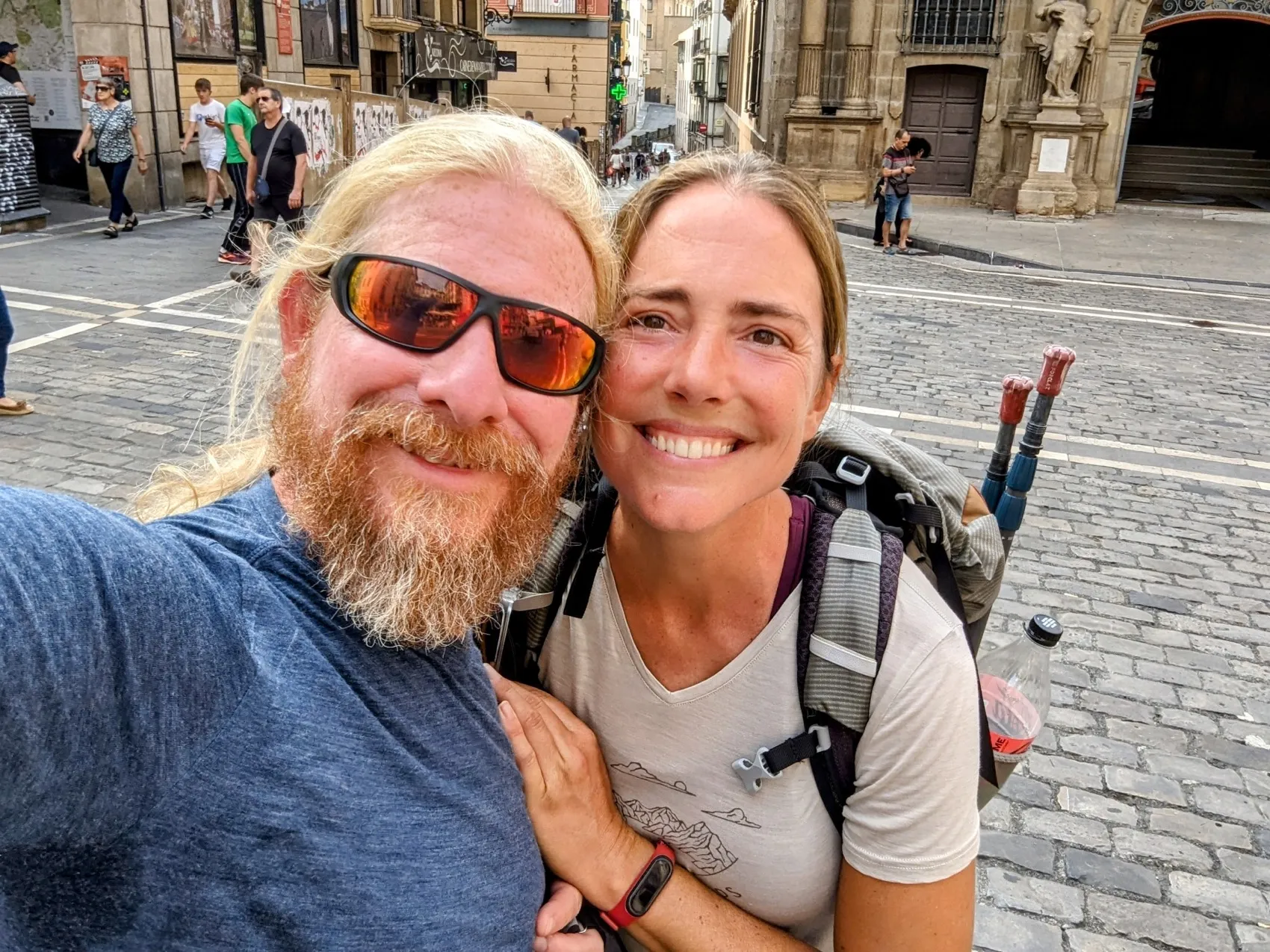
Along the streets, sturdy wooden structures are already in place for the Running of the Bulls that will take place here in 2 weeks. At the top, we reach the old part of the center of the city, more than 2,000 years old, which has seen the Romans, Visigoths, Arabs, and Christians come and go. We won't be in the history books, but after 83 stages, just over 2,022 kilometer in nearly 5 months, we've arrived here and, like everyone before us, will leave in a few days. We walked along the cliffs of the Algarve and the vast beaches of the Spanish coast. We began our journey northward from the southernmost point of Europe, Tarifa, and walked through the sierras of southern Spain with the white villages towards Seville, where we witnessed the Semana Santa celebrations in the remarkable city. We followed the Via de la Plata, where the ancient Roman road led us through the vast landscape of inland Spain, where it sometimes felt like a desert but had such unique places and nature, with such a rich culture and history that amazed us. And we walked the long journey through the slowly busier, greener, and wetter landscape towards the place where we are now: Pamplona, at the foot of the Pyrenees. A mountain range we've been looking forward to, and it feels like we're almost walking out of Spain itself. The Spain we've come to know isn't easy. It's tough and sometimes almost bitter, but also sweet, pure, and incredibly beautiful, with the kindest, most helpful people we've encountered, the most beautiful cities, and the most beautiful nature. We've grown to love it, but now it's time for the mountains. A few more days to prepare for the next part, then it's time to put on the hiking boots and continue onward.
With the farewell to Spain also comes an end to the area that offers so much to explore and so much to write about, where we've had the time to delve into the history, the surroundings, and the stages. Crossing the Pyrenees from west to east over the high parts, we'll make a mix of the GR10, the GR11, and the HRP, depending on the weather and the whims of Mother Nature. In the mountains, we'll need the time and energy to prepare for the stages, to hike them, and ultimately to arrive safely in Andorra. The stories will certainly be less detailed at the beginning than those of the stages in the Spanish hinterland. However, the photos and stories will continue to come from the mountains as well!