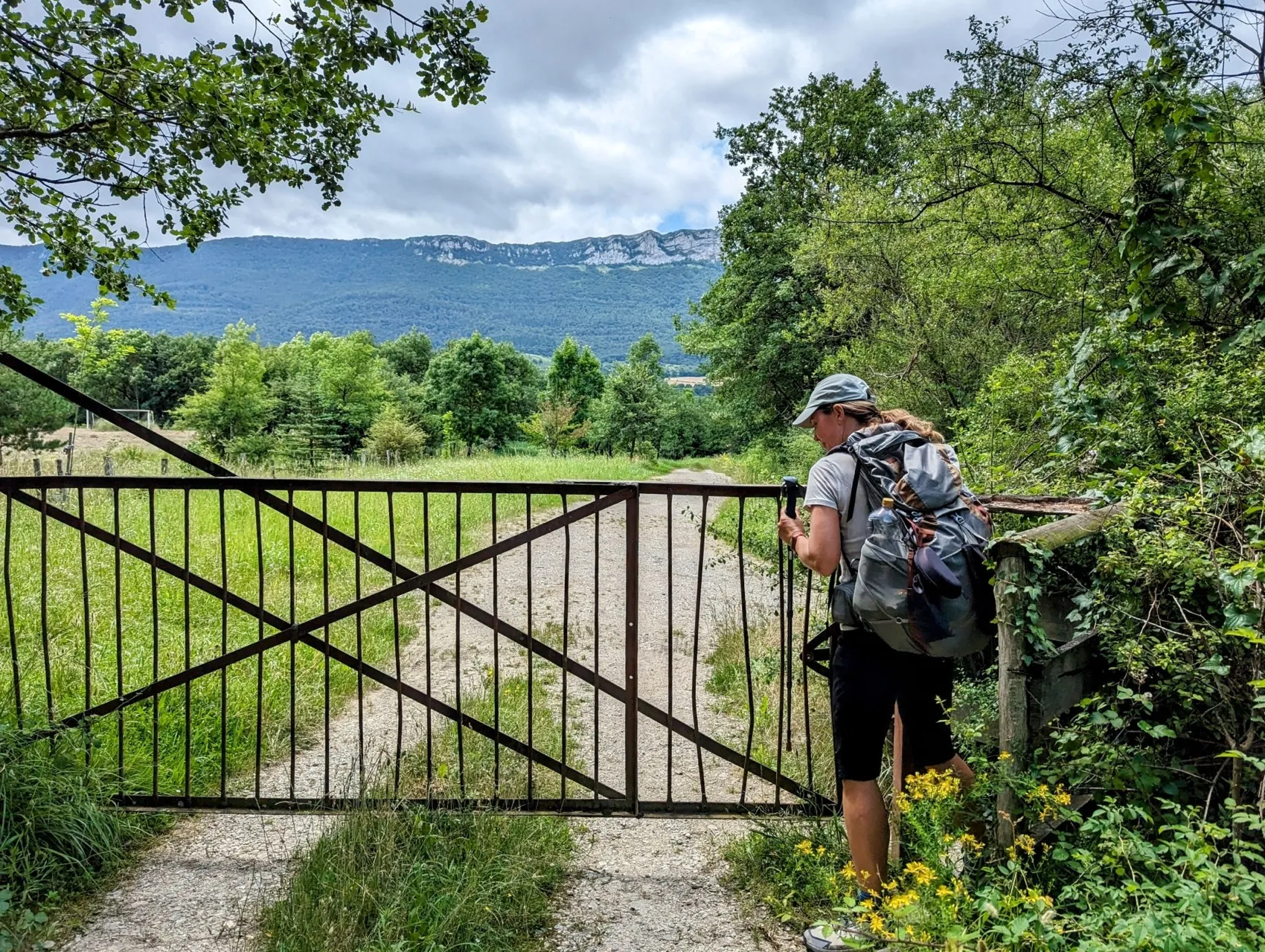
We set off this morning from the campsite at Etxarri-Aranatz. Not with our full gear; we left the tent at the campsite because we'll return here later, but with a daypack. Well, actually a daypack and a backpack that's almost completely filled… After walking so many stages where we carry all our gear on our backs, we've gotten so used to having everything with us that even on a walk like today, we bring along a bit of everything: sweaters, spare t-shirts for breaks and at the end of the walk, flip-flops for breaks because all plants in Spain tend to be prickly, a stove, a pot, plates, mugs, chairs, and before you know it, your backpack is full. But fortunately, the weight is much lighter, and that makes for a much more comfortable walk. At 8 o'clock, we leave the campsite and continue our way towards Pamplona through the 'Corredor de la Barranca'. This is the valley between the mountain ranges in the north and south.
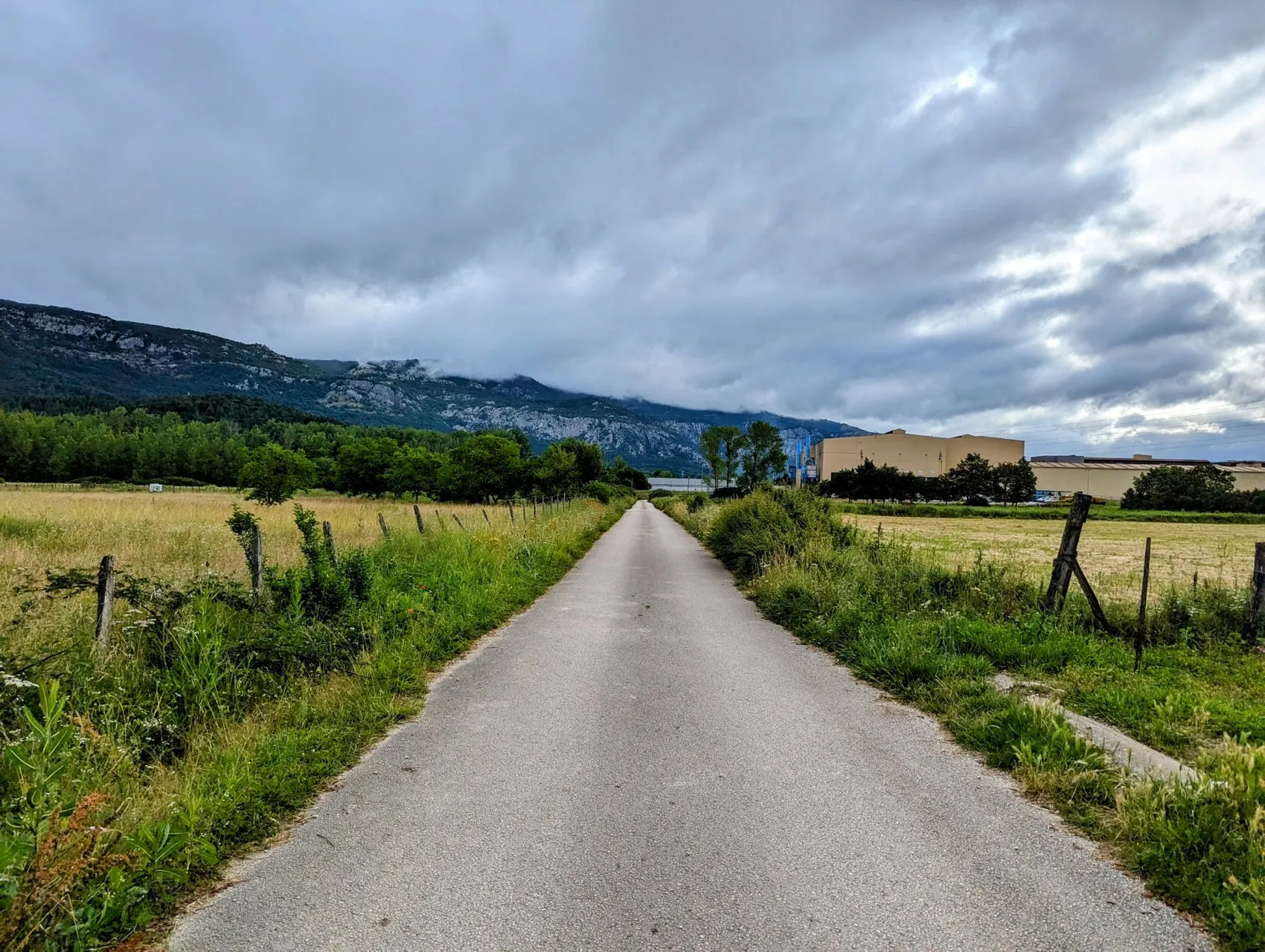
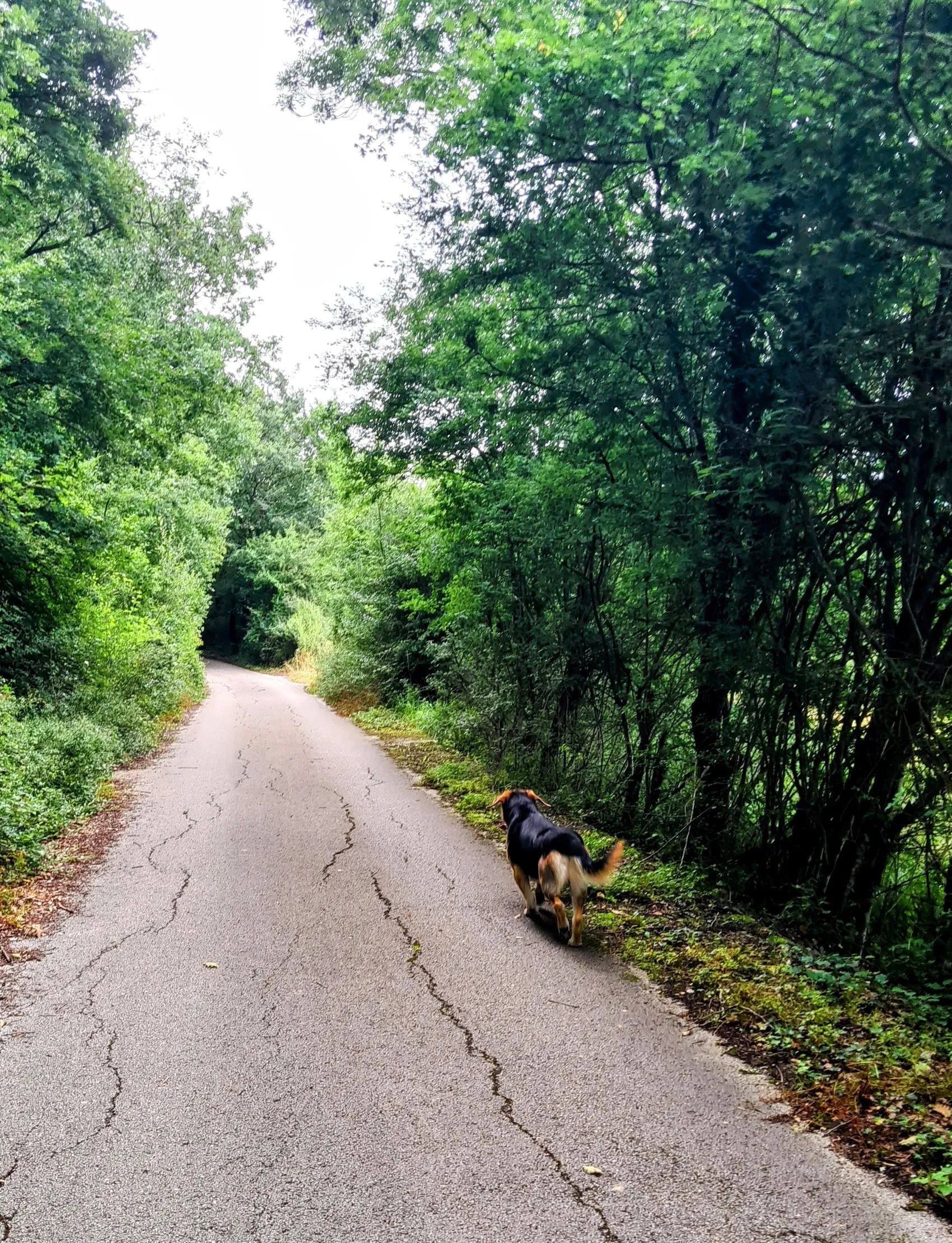
In the middle runs the River Araquil, and the valley ends in the east in large gorges near the town of Irurtzun, our destination for today. It's quite cloudy again this morning, and due to the difference in altitude between the valley and the mountain ranges, the peaks are shrouded in clouds. Across the valley from the campsite, there's a prominent peak called Beriáin, which from the side resembles the face of a gorilla. The mountain is almost 1500 meters high, and while the clouds cover the hillsides like a blanket, they cling to this standalone peak in tatters against the slope. Sky and land provide a beautiful spectacle this morning. An old Santiago route passes through this valley, but it mostly runs parallel to the highway again. So, we've chosen our own route, sticking as much as possible to the sides of the valley. We walk along a small asphalt road, but fortunately, there's hardly any traffic. We pass through meadows and occasionally through forests. After a few kilometers, a dog walks ahead of us, in the same direction. After a while, it hesitates and lingers around us until it approves and greets us, then walks with us for kilometers. Every time we think it has chosen a different path, it comes back and walks with us again. Until we reach the village of Lakuntza. At the beginning of the village is an industrial area where it immediately heads into the parking lot and towards the warehouses. Maybe its owner works there? It certainly seems like it knows the area like the back of its paw. We continue walking together, the two of us. You could quickly get used to walking with a dog…
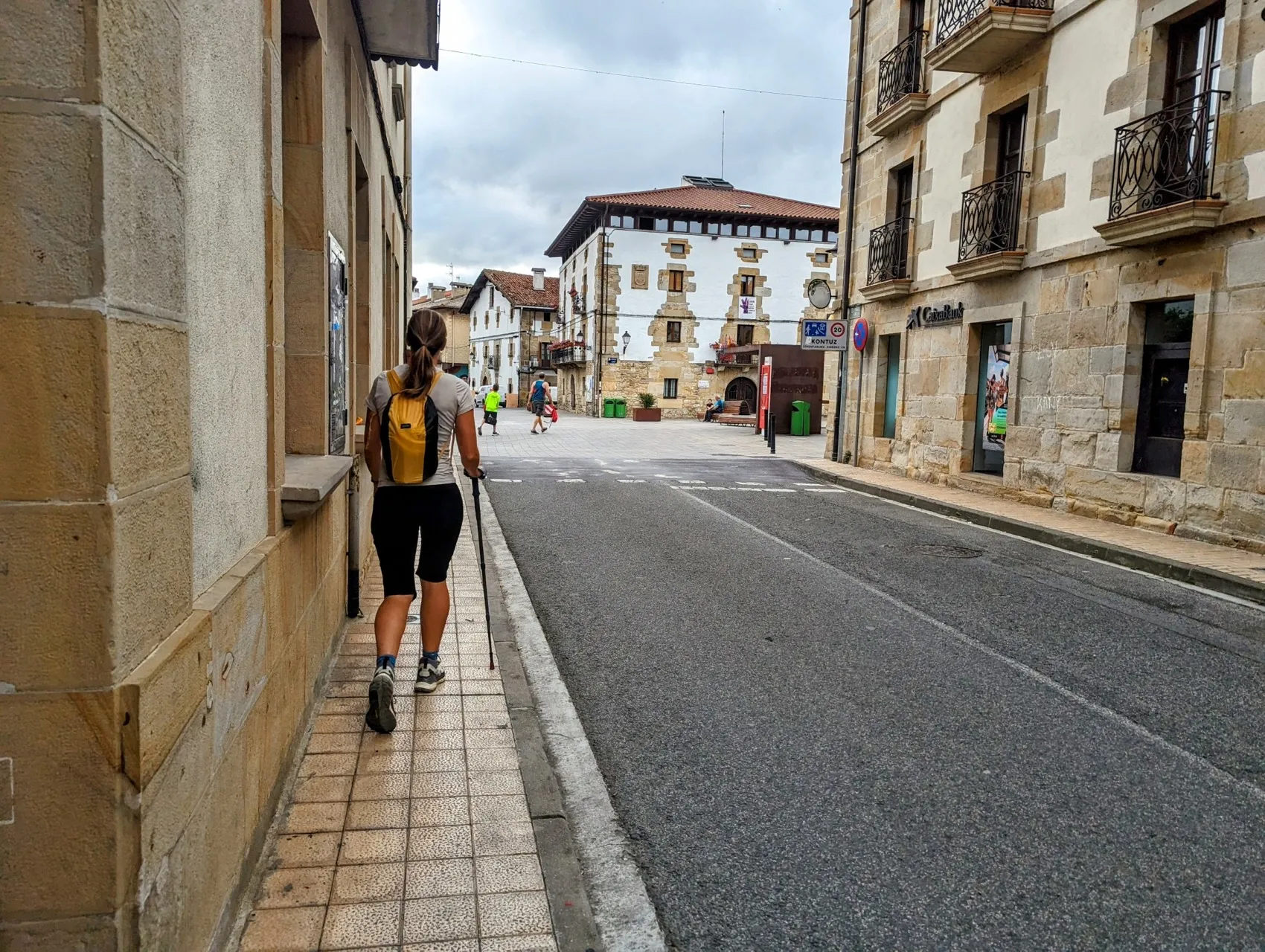
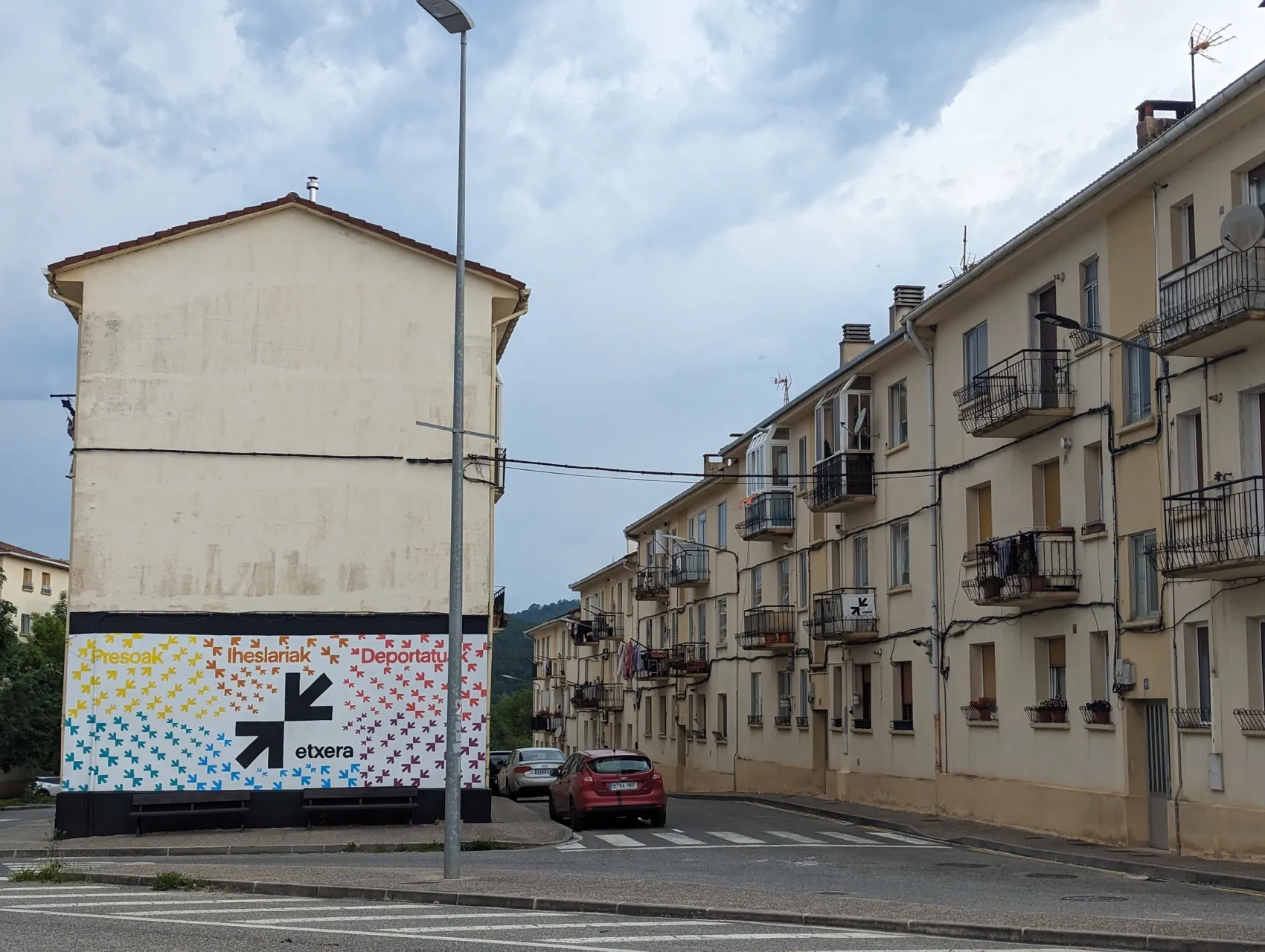
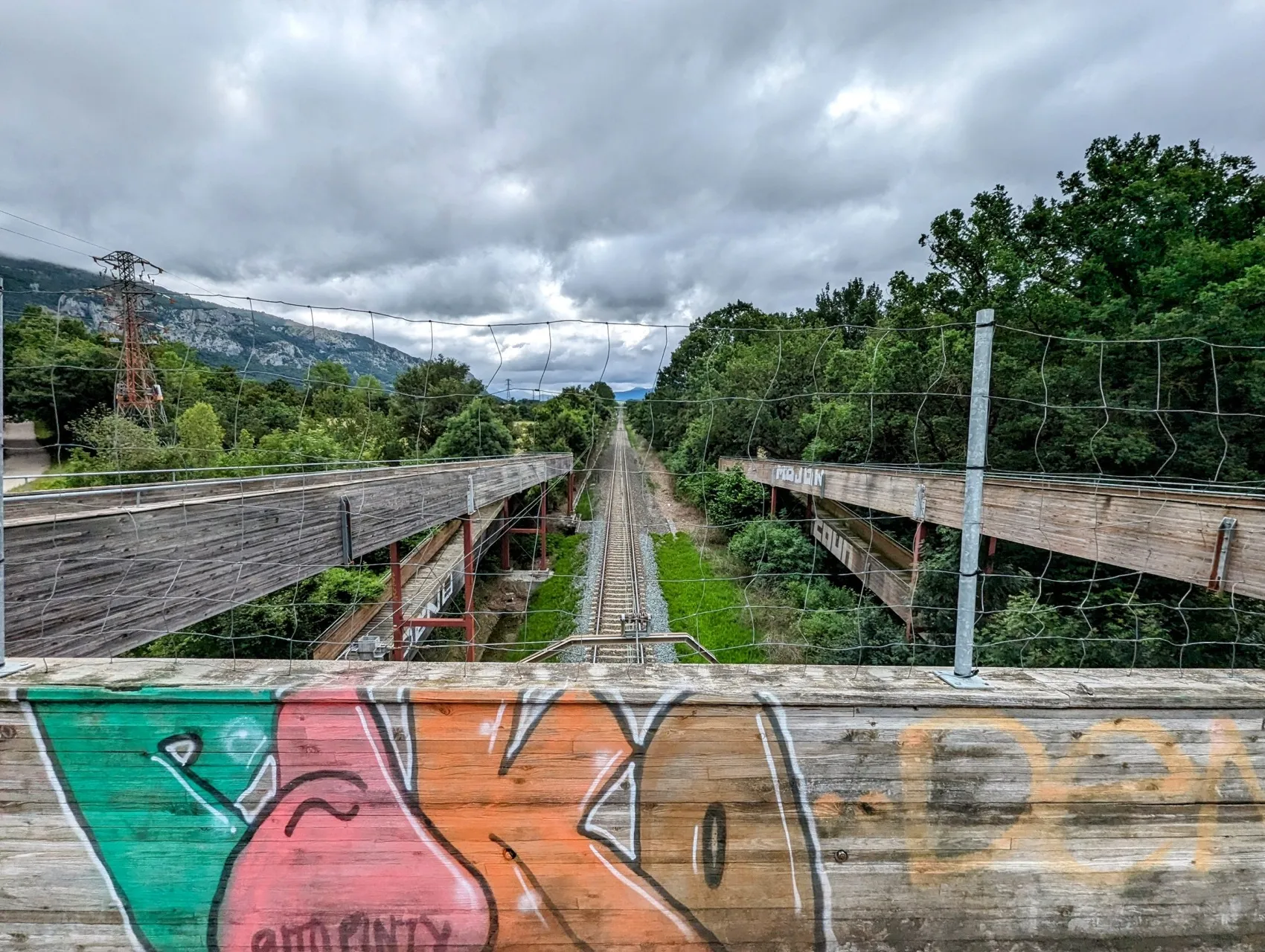
In the village, we can do some shopping for the break at a small supermarket. The village looks cheerful again with flower boxes and beautifully decorated facades. The villages, with their abundance of wood and flowers, slowly start to feel like mountain villages, very quaint. But even as we move further away from the border with the autonomous region of the Basque Country, it seems to become more Basque: street and place names are almost exclusively in Basque, people speak Basque among themselves, and there are dozens, if not hundreds, of banners in the villages with the text 'Etxera' on houses and apartments, but also along roads, bridges, and paths. We see various murals of Etxera on facades and under bridges. There are so many of them that we wonder what it stands for. It's an organization that advocates for the rights of prisoners who have been arrested, whether or not they were active members of organizations that wanted to create an independent Basque Country in a not so diplomatic way, and also supports the families of these prisoners. Spain began in the 1990s to distribute the prisoners across Spain, making it difficult for the mostly women and children to visit. There are still more than 300 people imprisoned, and about the same number have been banished from Spain. Under the term 'Basque Country' would belong the Spanish regions of the Basque Country and a large part of Navarre, as well as 3 French regions in the south of the Pyrénées-Atlantiques department. In 2018, after 60 years, the struggle largely ceased, but the consequences are still palpable here in the villages: banners read 'bring our men home'. Despite the pain that is clearly present here, everyone on the street is very friendly. People greet and wave, and joke with us more often, like when we pick a leaf from a herb garden, a man comes rushing towards us wanting to give us a 'ticket'. He laughs and after a pat on the shoulder, walks away again when we try to give him the leaf back. These are fun interactions even though we don't speak the language well. After the village, we head towards the railway, which we cross via a zigzag bridge that seems too large for a single track, and then continue for a long time along meadows towards the end of the valley.
We embark on a beautiful stretch of uphill through forests, occasionally treated to stunning views over the valley, the mountains, and the splendid gorges at the end of the valley. Towards Pamplona and northward, where the river winds its way between high cliffs. Only in the last kilometer and a half do we reach the main road again, the highway and the buildings, as we enter the outskirts of Irurtzun. It was a beautiful stage through landscapes that become increasingly mountainous. The hills are more wooded, and the meadows in the valleys are more rolling. In the town, we head towards the bus, which takes us back to the campsite. As we walk down the street where the bus stop is located, the bus is already there. It's 20 minutes earlier than the timetable at the campsite indicated, so we have to sprint a bit at the end of the journey. Luckily, the somewhat grumpy bus driver waits for us, and we arrive back at the campsite early again. Tomorrow, we'll take the bus back to Irurtzun for the final stage to Pamplona. The city that marks the starting point of the Pyrenees for us.